A Pause, Not a Solution: Inside the Short Shutdown That Revealed Deeper Fault Lines
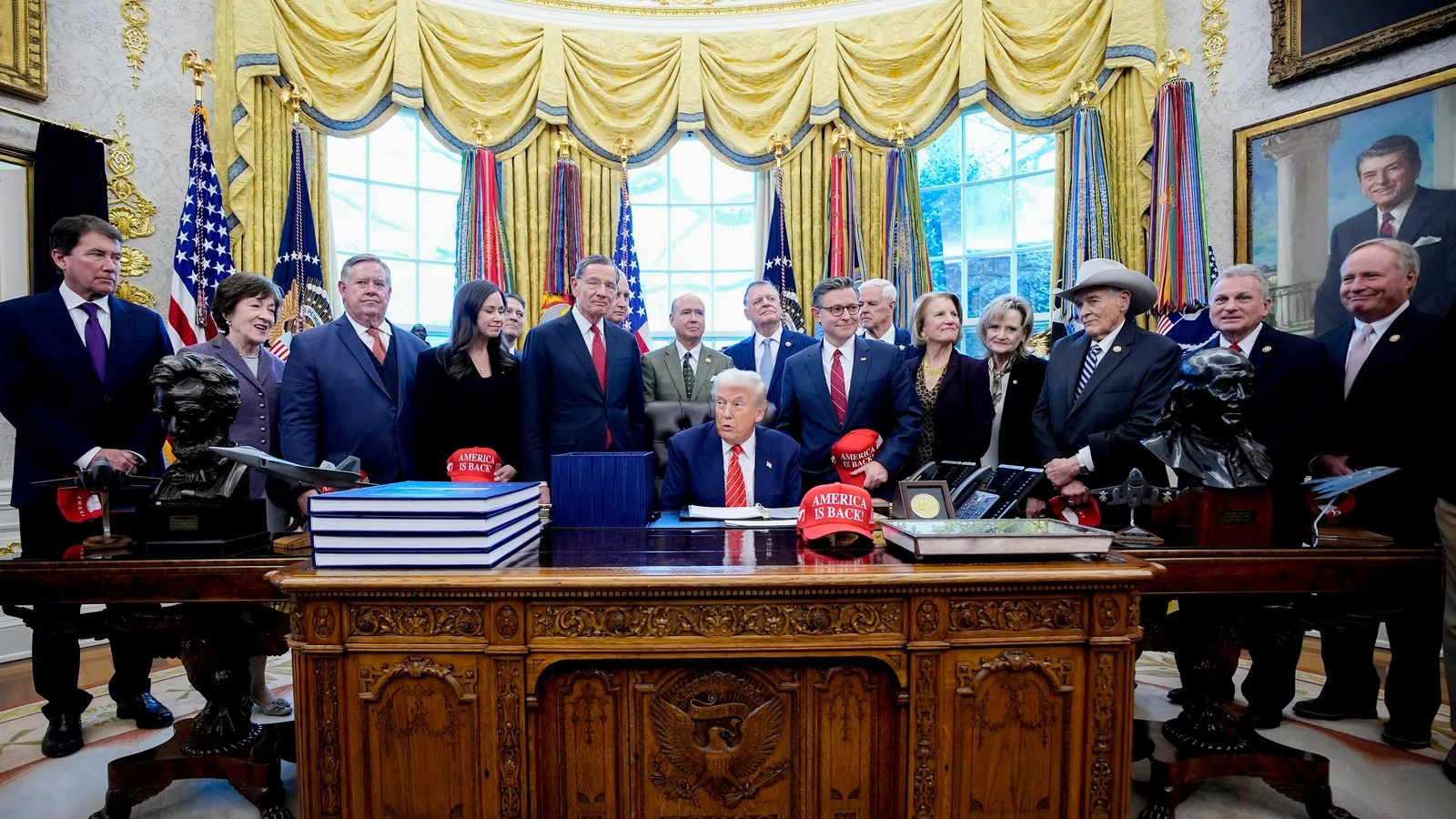
On a brisk morning at the White House, a pen scratched across paper and a four-day federal hiccup quietly became yesterday’s news.
President Donald Trump signed a spending bill that reopened much of the government, putting an abrupt end to a partial shutdown that, though short, laid bare a tangle of political crossfire: immigration enforcement, use of federal agents in American cities, and a House majority that is no longer monolithic.
The House passed the measure by the narrow margin of 217 to 214. Twenty-one Democrats joined with Republicans to move the package forward while the same number of Republicans held out, unwilling to back the bill without broader reforms to the Department of Homeland Security. The scene in the chamber could have been plucked from a tense courtroom drama—alliances shifting, demands rising, the clock ticking.
Why the shutdown happened — and why it mattered
At the center of the standoff was a dispute over funding and oversight of the federal agency that carries out immigration enforcement. Democrats insisted on new guardrails after a wave of troubling incidents involving heavily armed, sometimes unidentifiable agents conducting operations in American cities. The flashpoint came after a pair of fatal encounters in Minneapolis that many say crystallized public unease.
“People are afraid to open their doors when they don’t know who’s knocking,” said Maria Hernandez, a Minneapolis resident who lives a few blocks from where protests have swelled. “We want to be safe. We want accountability. That’s not too much to ask.”
Congressional leaders in the Senate threaded together a compromise: five outstanding appropriations bills would be cleared through September to keep most agencies running, and a short, two-week continuing resolution would keep DHS funded while lawmakers hashed out a longer-term agreement. The stopgap buys time—but it is hardly a cure.
Body cameras, concessions, and continuing controversy
Under pressure from lawmakers and national outrage, Homeland Security officials announced an immediate policy change: federal agents involved in city operations would begin wearing body cameras, with plans to expand the requirement more broadly. For many activists and families of the victims, the pledge is only a first step.
“Cameras don’t fix everything,” said Jamal Carter, a community organizer in Minneapolis. “But they change the narrative. When you can’t name the person who detained your neighbor, you lose a basic sense of justice. These measures are overdue, but they’re also small. Real reform isn’t just about footage—it’s about rules, training, and consequences.”
The stakes feel high. Government shutdowns, even brief ones, cascade through communities: national parks close, small vendors lose weekend revenue, scientists pause critical work, and thousands of federal employees either get furloughed or must work without pay. In the 2018–2019 federal shutdown—the longest in modern history—about 380,000 federal workers were furloughed or worked without pay for 35 days, and the Congressional Budget Office later estimated the economy lost roughly $11 billion in output, with about $3 billion considered permanently lost.
Politics, policy, and the price of pause
President Trump framed the bill at his signing as a victory for fiscal restraint and public safety. “This package trims wasteful spending and backs programs that protect the American people,” he said in brief remarks before signing the legislation.
Democratic leaders, however, warned that the short-term funding merely postpones an inevitable clash. “We bought two weeks to continue a fight that must be resolved in a way that protects civil liberties and ensures federal agents are accountable,” said a senior House Democrat. “This should not be a reset button for business as usual.”
Conservative opponents who voted against the deal did so for a different reason: several argued the bill did not go far enough in rolling back federal overreach or in enacting the stronger border controls they favor. “We will not support a temporary bandage when long-term security is at stake,” said Representative Evan Cole, who opposed the measure.
Inside Washington, the calculus is grimly familiar. Short-term continuing resolutions allow the government to keep running, but they also prolong uncertainty for agencies that need reliable, year-long budgets to plan staffing, contracts, and community programs. For cities dealing with the fallout from high-profile enforcement actions, the uncertainty is immediate: will Congress mandate body cameras? Will it limit how and where federal agents operate? The clock now ticks down 14 days.
Voices from the street
At a corner cafe two blocks from the Minneapolis precinct where protests have been most visible, conversations mix grief with weary skepticism. “You see the cameras and the press, and then things settle back into normal,” said Elijah Boateng, a nurse who volunteers at a veterans’ clinic. “We keep asking: who is watching those who watch us?”
For immigrants and asylum seekers, the threats feel personal. “Every time there’s a raid, my heart stops,” said Rosa, who moved to the U.S. from Guatemala and asked that her last name be withheld. “I don’t know what the law says. I know I have a son. I know I wake up scared.”
What comes next — and what to watch for
Over the next fortnight, lawmakers must negotiate a full-year DHS funding bill. Key items to watch include:
- Oversight measures: Will Congress require more detailed reporting of federal operations in cities and more transparent identifiers for agents?
- Body-camera policy: Will the initial announcement be formalized into binding requirements, including data storage, access, and public transparency?
- Funding priorities: How will money be allocated between border security, immigration processing, and community-based programs?
These debates are not merely procedural; they are about the character of state power in daily life. They ask whether the tools of enforcement can be wielded in ways that preserve public safety without eroding civil liberties—and whether bipartisan compromise is still possible in an era of deep polarization.
So what should you, the reader, watch for? Look beyond the headlines to the details: the language of any compromise, the oversight mechanisms included, and the voices left at the margins. Ask whether the temporary fix strengthens institutions or simply postpones the hard choices. And consider this: when a government pauses, communities keep moving. The question is whether lawmakers will use that pause to heal a fracture—or to paper over a crack until it widens again.
In the end, the pen that ended the shutdown did more than reopen offices and reopen parks. It reopened a negotiation about power, accountability, and what kind of country Americans want to be. For those directly affected—from workers who lost pay in the brief closure to families seeking answers after deadly encounters with federal agents—the next two weeks will matter in ways beyond spreadsheets and soundbites.
“We all want safety,” Maria Hernandez told me as she folded a protest sign into the back of her car. “But not at the cost of our dignity. That’s the line we have to defend.”