A Desert Plea: The Search for Nancy Guthrie and a Family’s Quiet Desperation
On the outskirts of Tucson, beneath the stoic arms of saguaros and a sky that seems too big for small human dramas, a family lives in the thin, bright limbo between hope and dread.
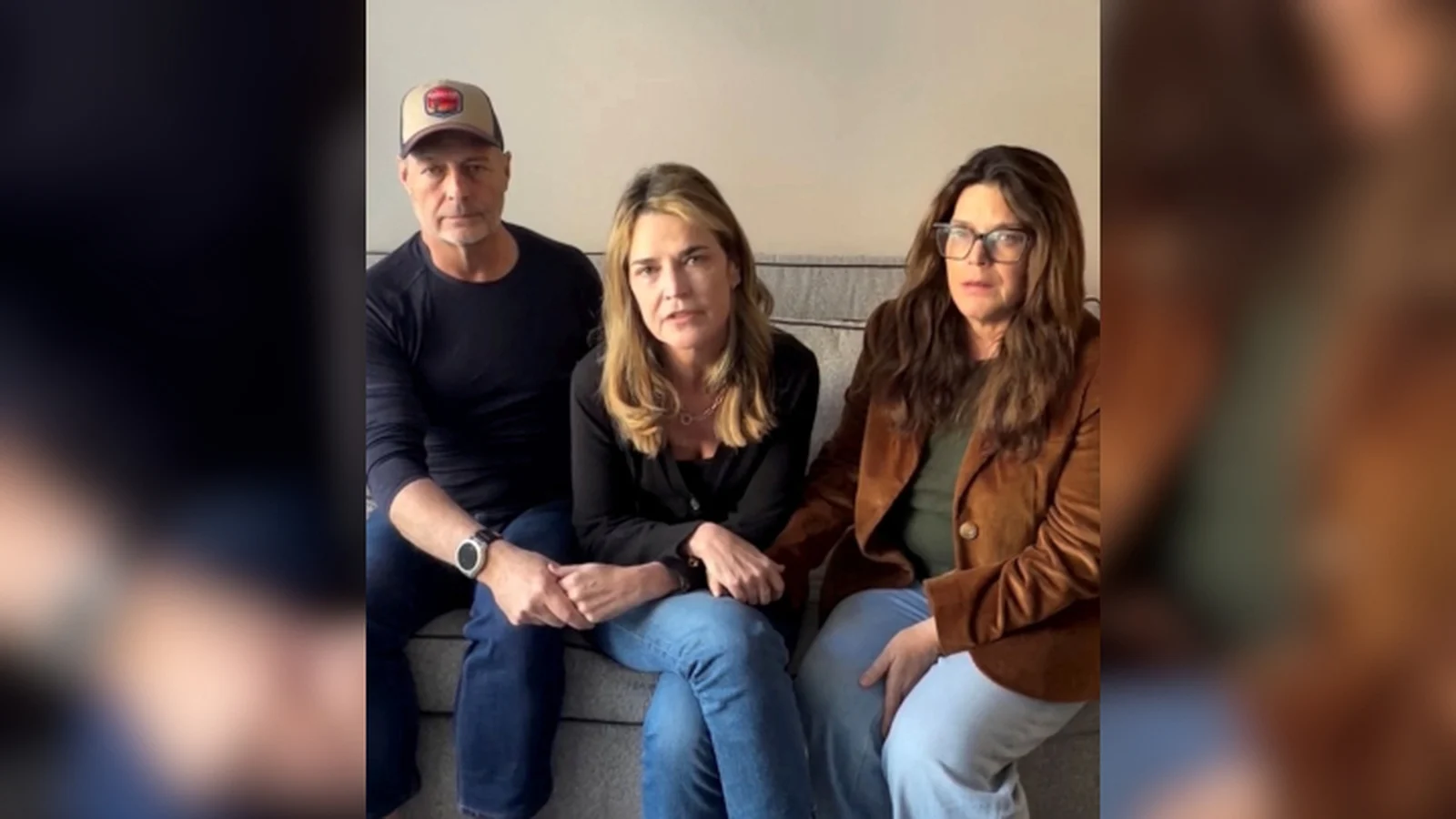
Savannah Guthrie—familiar to many as the steady, early-morning anchor on NBC’s Today—appeared on social media this week with a plea that felt, in its private grief, startlingly public. Flanked by her brother and sister, she posted a short video asking for help in finding her mother, Nancy Guthrie, 84, who vanished after being dropped off at home on the evening of January 31.
“This is the only way we will have peace,” Savannah said, the words carrying an urgency that outshrieked the clip’s quiet. “This is very valuable to us and we will pay.” Those were the lines that made headlines; the context that hums behind them is a portrait of an aging parent, limited mobility and a family suddenly confronting the worst-case scenario.
What authorities have said — and what remains unknown
Local and federal investigators have responded to the case. The Pima County Sheriff’s Department, working alongside the FBI, has concluded that the circumstances point toward an abduction. Sheriff Chris Nanos has characterized Nancy Guthrie as frail, with extremely limited mobility, and has said officials do not believe she could have left her residence unassisted.
Despite the breadth of the response, detectives have not publicly identified suspects or persons of interest. The FBI has offered a $50,000 reward for information leading to Nancy’s recovery or the arrest and conviction of anyone responsible. President Donald Trump, who has been publicly briefed on the matter, said this week: “I think we could have some answers coming up fairly soon.”
Timeline at a glance
- January 31: Nancy Guthrie is dropped off at her residence near Tucson by family after dinner.
- February 1: Relatives report Nancy missing at around noon.
- Investigators determine the circumstances indicate a kidnapping; no suspects publicly identified.
- FBI announces a $50,000 reward for information.
Neighbors, prayer vigils and the hum of a small city
In the neighborhoods that slope down from the Rincon foothills, where winter mornings hold a crystalline hush, people say they’ve noticed an unusual quiet. “She used to walk her dog down the block,” a neighbor who asked not to be named told me. “You could see her on the porch in the afternoons, knitting or reading. It didn’t seem possible.”
At the corner church, a woman folding bulletins said the congregation had already begun lighting candles. “We brought casseroles,” she said. “When something like this touches a family, the whole block feels it.” The community in Tucson is a weave of traditions—Sonoran breakfast joints, Spanish-language radio, and a public square where strangers become sharing faces. That intimacy makes the uncertainty sharper.
Vulnerability and a larger pattern
What makes this case particularly wrenching is not only the celebrity of one of the family members, but the extreme vulnerability of the missing woman. National data make this more than a local story: the FBI’s National Crime Information Center regularly logs hundreds of thousands of missing-person reports each year, and a notable fraction involve older adults or people with cognitive or physical impairments.
The Alzheimer’s Association estimates that millions of Americans aged 65 and older live with conditions that can make them vulnerable to getting lost or being exploited. When mobility is limited, a person cannot simply walk away from danger; they depend on others for movement, care and protection. That reality alters the calculus of danger and diminishes the margin for error.
Money, morality and the role of public attention
Savannah Guthrie’s statement that her family is willing to pay to secure her mother’s return crystallizes a fraught ethical and practical question: when a loved one is taken, does money speed a reunion—or does it make a bad situation worse?
“Paying a ransom can be the quickest path to getting someone back, but it also can incentivize more kidnappings,” an investigator — speaking on background — told me. “Law enforcement has to weigh short-term relief versus long-term public safety.” The FBI and local law enforcement typically discourage paying ransoms, both because it may fund criminal activity and because it can complicate ongoing investigations.
At the same time, the reality of a family whispering “we will pay” in a video for the nation to see is visceral. It tells you how raw grief can be when the person you love has become prey, and how the usual channels—police, neighborhood networks—sometimes feel painfully slow.
Why the spotlight matters—and how it changes things
When a case involves a public figure, attention intensifies. That can be a double-edged sword: tips may increase, resources may be redirected, but so can misinformation, speculation and unwanted commentary. For the family, there is the ordeal of living grief on a public stage. For investigators, there is the challenge of managing leads, separating signal from noise.
“The media attention helps, but it also makes every rumor a public event,” a retired detective who has worked missing-person cases told me. “You have to filter. You have to work.”
Questions this case forces us to ask
How do communities protect their most vulnerable? How should families balance the need for immediate action against the longer arc of justice? What does it mean when wealth and fame make a private agony very public, and does that spotlight help or hinder recovery?
Those are not questions with easy answers. But they are questions worth asking as we watch this story unfold. The image that lingers is simple: three siblings on a video, making a human, private offer—money, bargaining, the soft plea for a mother to come home—set against a rugged, indifferent landscape.
If you have information that could help, law enforcement asks you to contact the Pima County Sheriff’s Department or the FBI immediately. Small acts—an overheard detail, a memory of a passing vehicle, a scrap of neighborhood gossip—can shift a case from cold grave to warm hope.
And for everyone watching from afar: how would you act if a loved one vanished in the middle of the night? It’s a startling, humbling question—and Nancy Guthrie’s disappearance demands more than headlines; it demands our attention, our empathy and, perhaps, our action.