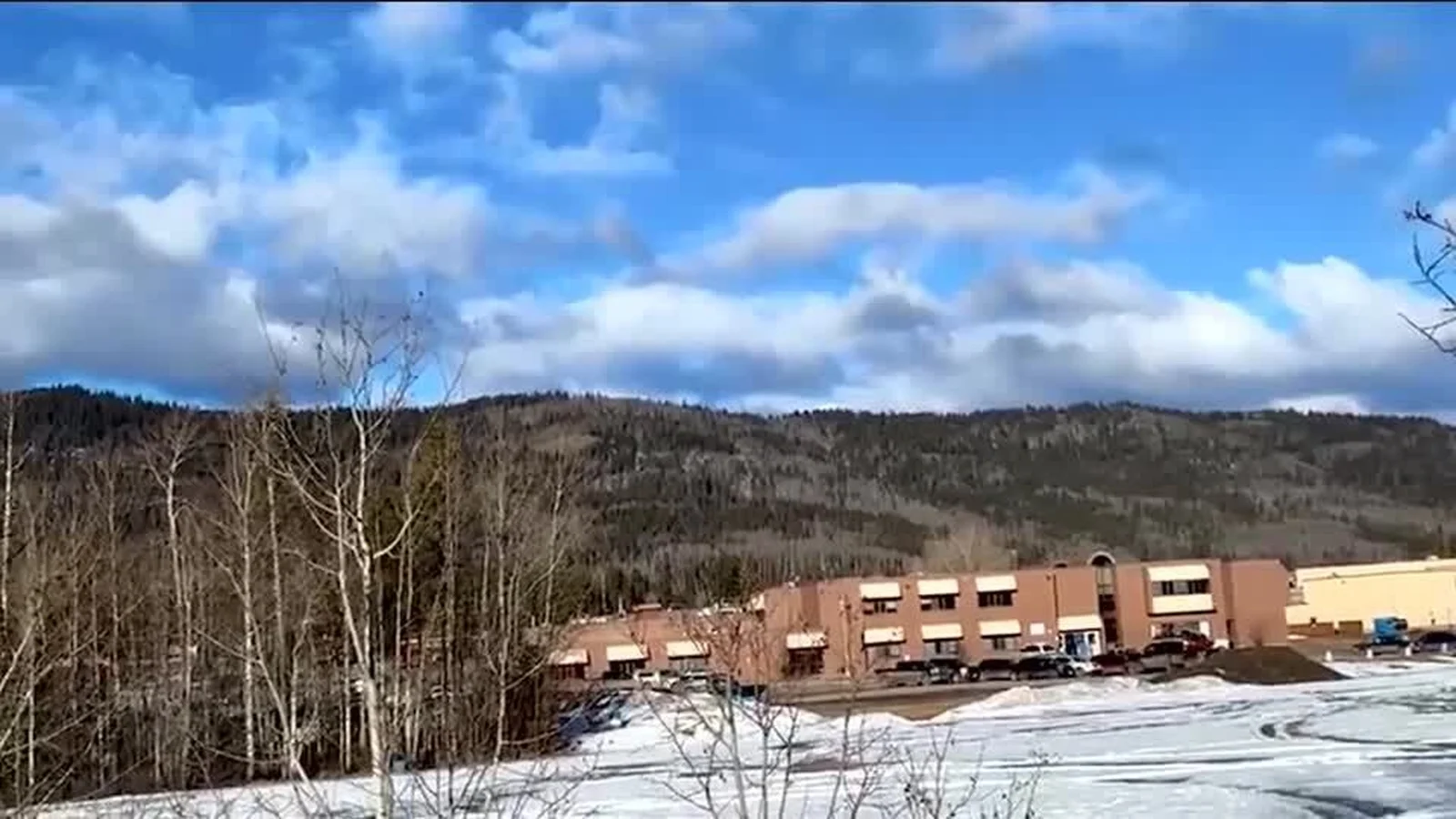
Tumbler Ridge: When a Quiet Valley Lost Its Silence
They call it a picturesque place for a reason: pine-scented mornings, a slow ribbon of highway through foothills that roll into the Rockies, and a tight knot of people who know one another’s children by name. Tumbler Ridge is the sort of town where the barista remembers your order and the high-school teacher is also the hockey coach. It has roughly 2,400 souls and an ordinary rhythm—until, on a winter afternoon, that rhythm was torn open.
By evening, nine people were dead and 27 more wounded. Seven of the dead were found at Tumbler Ridge Secondary School; two others were discovered at a nearby residence that police say may be connected. The Royal Canadian Mounted Police said two injuries were serious and 25 were non-life-threatening. The suspected shooter appears to have taken their own life at the school, authorities said, but they refused to release identifying details.
The scene
Imagine a mechanics classroom with the smell of oil, tools hanging on the wall, and a row of students bent over projects. That’s where, according to accounts emerging from the town, lockdown announcements crackled through speakers and then a surreal waiting—not knowing, then a terrifying realization. “At first I thought it was an exercise,” one student later recalled. “Then my phone blew up with photos. That’s when it hit me—this was real.”
Residents described police moving methodically through the school, ordering hands up before guiding students outside. Elsewhere, officers found two more bodies in a home believed to be linked to the rampage. The northern district commander, RCMP’s Ken Floyd, called the situation “rapidly evolving and dynamic” and acknowledged the emotional toll on a community that had to watch as the worst possible thing happened in a place where worst-case scenarios were usually discussed at kitchen tables with a shake of the head and a laugh.
Voices from the valley
“There are no words sufficient for the heartbreak our community is experiencing tonight,” the town’s municipality said. That official sorrow was echoed in messages from the highest offices: Prime Minister Mark Carney said he was “devastated,” postponed a planned trip to an international conference, and offered condolences to families and friends. British Columbia Premier David Eby called the violence “unimaginable,” while federal opposition leader Pierre Poilievre described it as a “senseless act of violence.”
Amid statements from politicians and police, the everyday voices of Tumbler Ridge gave the tragedy texture. A parent waiting at a school parking lot described the moment they learned: “I ran to the school like a fool, shoes half on. You want answers and there aren’t any. You want to see your kid and you can’t.” A teacher, still in shock, said, “We teach kids how to read and write and dream. Tonight we had to teach them how to get to a safe corner.”
On the police force’s social channels, condolences poured in: “We are thinking of the community of Tumbler Ridge… Our hearts are with the victims,” the RCMP wrote, a brief message carrying the weight of an entire city’s grief.
More than numbers: the ripple of trauma
Statistics reduce lives to a ledger—and yet statistics matter. Nine lives lost, 27 people wounded. For a town of 2,400, that is not an abstract percentage; it is a ripple that sweeps through nearly every household. The cafeteria where students once traded jokes will now be a place where memories of laughter jostle next to images of sirens. The grocery aisle where someone once bumped you and said, “Sorry,” will become a corridor of shared sorrow.
How do you grieve when your community school, the place that hosted graduation photos and science fairs, is now a crime scene? Experts in trauma recovery say rural places face unique challenges: fewer mental health resources, long travel distances for specialized care, and a cultural tendency to keep pain private. “Small towns feel these losses more deeply because everyone is connected,” said an academic who studies community trauma. “The map of grief includes that entire town.”
What happens next?
Police say they will continue searching other homes and properties in the area, looking for any additional sites connected to the incident. Investigators are piecing together how the violence unfolded, why it happened where it did, and whether anything could have prevented it.
In the meantime, the community must reckon with immediate needs: medical care for the injured, counseling for students and families, and the practicalities of funerals and financial support. Local churches, volunteer groups, and neighbors have already mobilized—offering shelter, hot meals, and rides for people who feel like their foundations have been rearranged overnight.
- 9 dead, including 7 at the school
- 27 wounded (2 serious, 25 non-life-threatening)
- 2 additional dead found at a residence believed to be linked
- Suspected shooter reported to have died by apparent suicide at the school
Context and questions
Mass shootings are rare in Canada, a country that has far lower rates of gun violence than some of its neighbors, but rare is not the same as impossible. In April of a recent year, Canada was shocked when 11 people were killed in a vehicle attack in Vancouver that targeted a cultural festival—an event that, even years later, is still being mourned and learned from.
What should communities and policymakers learn from tragedies like this? Are there ways to shore up safety without turning schools into fortresses? How do we balance privacy, mental-health care, and preventative measures? These are thorny, urgent questions that will now be part of an already difficult conversation across BC and the country.
As night fell over the valley, the stars burned their indifferent fires. Yet in living rooms and corners of cafés, people gathered to talk, to cry, to remember. A local volunteer coordinator summed it up in a voice that trembled but remained steady: “We will get through this because we have to—and because we always have. But the way we come together afterward will shape who we are for years.”
To the reader
What would you offer a town after a blow like this? What does safety mean in a small community? Take a moment to breathe for the families who have lost people they loved, and to consider how public policies, mental-health services, and community ties might be strengthened so fewer towns have to learn this lesson the hard way.
Tumbler Ridge will hold vigils, plans for memorials will be sketched, and, in many small ways, life will try to resume. But this valley will carry new scars, and the sounds of its silence will be a call to understand, prevent, and heal.