When the Smoke Rose: A Mexico Night That Felt Like an Earthquake
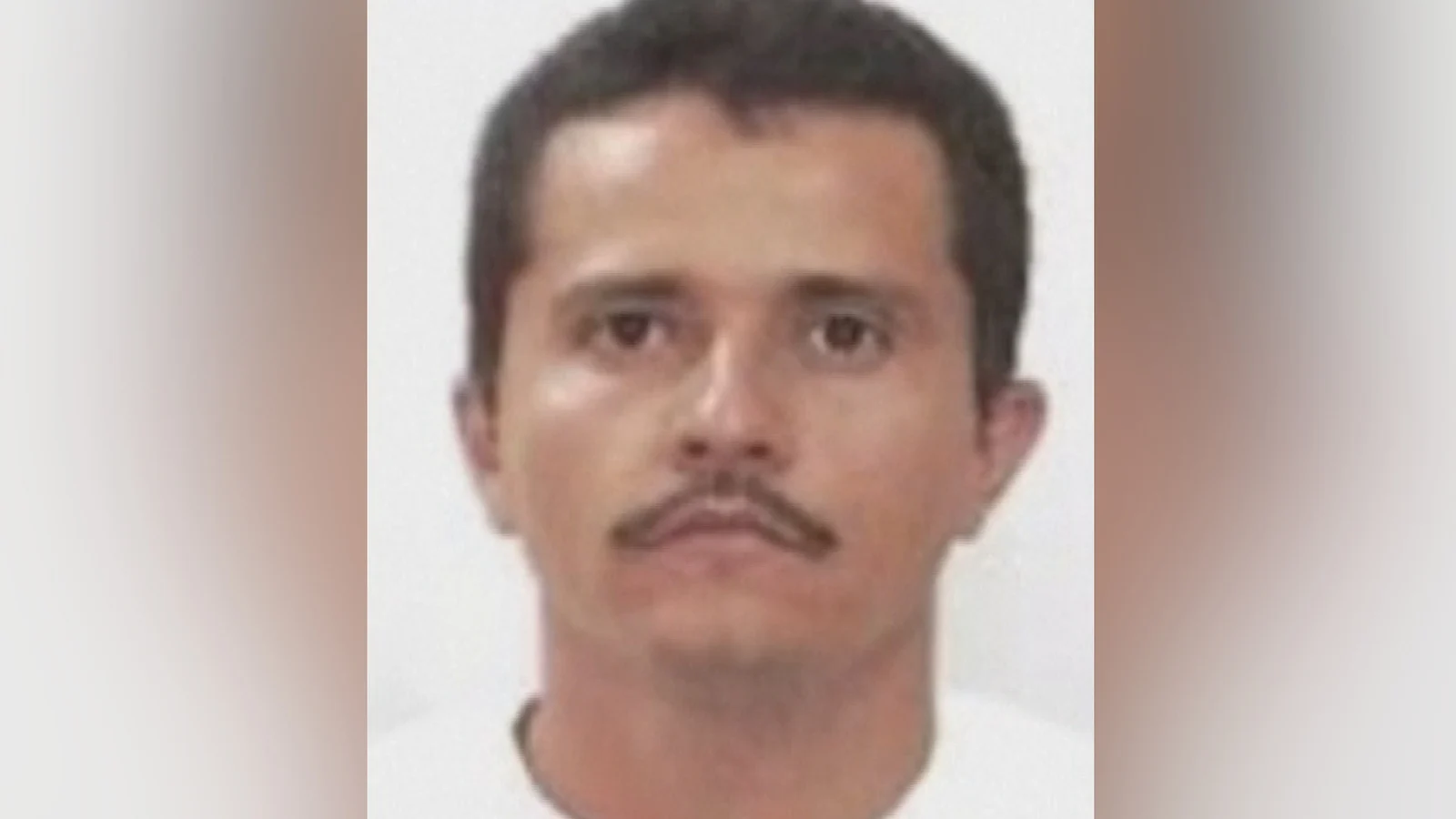
They arrived as if to mark the end of an era—and the beginning of something else entirely. A heavily guarded convoy of National Guard trucks rolled into Mexico City with the lifeless body of Nemesio Oseguera, better known by the name that once made governors, businessmen and tourists flinch: El Mencho.
The defence ministry said the 60-year-old leader of the Jalisco New Generation Cartel, CJNG, had been wounded during a special forces operation in Tampalpa, Jalisco, and later died in custody. Within hours the country’s arteries—highways, airports, seaside boulevards—felt the shock.
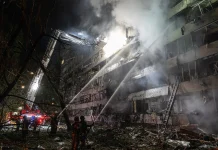
“It looked like a war zone,” wrote one tourist from Puerto Vallarta on a social feed as black smoke curled over the bay and videos showed flames licking at charred cars and a burning bus. “We just wanted to see the sunset. We got something else.”
Scenes from the Front Lines: Roadblocks, Flames, and Frayed Nerves
Across multiple states, men believed to be cartel fighters set fire to vehicles, torched storefronts and blockaded highways. Schools in some areas shut down for the day. Airports grounded flights; airlines including United, American, Southwest and several Canadian carriers suspended routes into Puerto Vallarta, Guadalajara and Manzanillo. Some flights turned back mid-journey.
“We woke to the sound of shouting and then the sirens,” said María López, who runs a small taquería in a suburb of Guadalajara. “Customers didn’t come. People are scared. We don’t know if this will pass tonight or if the calm is just another pause.”
For a nation where cartels have long woven themselves into the social fabric—through violence, through extortion, through the jobs they both create and crush—the sudden eruption of violence after the raid felt like a seismic shift. Yet the battlegrounds were familiar: Jalisco and neighboring states that have seen the cartel footprint expand, retract, and expand again in recent years.
Who Was El Mencho—and What Did His Death Mean?
El Mencho, a former municipal police officer who rose through the underworld to found CJNG, transformed a regional gang into one of the hemisphere’s most formidable criminal enterprises. Under his direction, the cartel diversified from narcotics trafficking into fuel theft, extortion, human smuggling and financial fraud. CJNG also pioneered brutal tactics—public executions, the use of improvised explosives, and the tactical deployment of weaponized drones in remote regions.
“He wasn’t just a trafficker,” said security analyst Carlos Olivo, a former assistant special agent in charge with the US Drug Enforcement Administration. “He built an organization that mirrored a corporation—aggressive expansion, vertical integration, and ruthless suppression of competition. Taking him out matters, but it won’t erase the structures he built overnight.”
In the eyes of U.S. officials, the seizure—backed by intelligence assistance—was a significant blow against a cartel that is accused of pouring fentanyl and other synthetic opioids into North America. “We commend and thank the Mexican military for their cooperation,” White House press secretary Karoline Leavitt wrote on social media, acknowledging American support for the operation.
Where This Fits in a Broader Story
This is not a standalone chapter. In the past decade, Mexico has watched rival drug lords fall into hands—Joaquín “El Chapo” Guzmán and Ismael “El Mayo” Zambada were ultimately captured and extradited to the United States. But removing a leader does not automatically dissolve a machine. Experts warn of fracturing, of splinter groups, of revenge.
“There will definitely be skirmishes between various factions, and these spasms of violence could last for years,” Olivo said. “When a titan falls, vultures circle. Sometimes those vultures fight over the corpse.”
The Human Toll—or the Narrow Escape of One
Remarkably, despite the spread of arson and chaos across at least half a dozen states, officials reported no civilian deaths directly tied to the immediate flare-ups. Still, the economic and emotional toll is heavy: shuttered shops, tourists cancelling their stays, commuters rerouted, and a renewed churn of fear that communities have learned to live with.
“We are tired of living like this,” said Jorge Martinez, a fisherman from a small pier outside Puerto Vallarta. “You go out to work and you wonder if today will be the day something happens. You can’t plan. No one can sleep easy.”
Fentanyl, Borders, and the Pressure from Washington
Behind the raids and the smoke is a sobering statistic: synthetic opioids, particularly fentanyl, have driven a steep rise in overdose deaths across North America. According to U.S. public health agencies, tens of thousands of deaths each year involve synthetic opioids—an epidemic that has pushed policymakers to intensify cross-border security cooperation and pressure on Mexico to disrupt supply chains.
President Claudia Sheinbaum said her government would deepen cooperation with the United States, while also asserting Mexico’s sovereignty and warning against unilateral foreign military action on Mexican soil. The delicate dance between security partnership and national autonomy was thrust into the spotlight—as it always is when the frontier between two countries blurs in the name of countering transnational crime.
Travel Warnings, Flight Cancellations, and the Ripple Effect
In the immediate aftermath, the U.S. State Department advised American citizens in parts of Mexico to shelter in place. Canada issued similar guidance, asking its citizens to keep a low profile and heed local authorities. Airlines scrambled, passengers were stranded, and hotel lobbies filled with worried faces and luggage tags from across the continent.
- Some carriers canceled flights to Puerto Vallarta, Guadalajara and Manzanillo.
- Roadblocks disrupted supply lines and regional airline operations.
- The Mexican military and national guard increased patrols in key urban centers.
What Comes Next?
So what should we expect in the days, months and years after El Mencho’s death? One possibility is fragmentation—CJNG could splinter into rival factions, each fighting for territory. Another is consolidation—an internal lieutenant could step up and keep the enterprise intact. Or the vacuum could invite other cartels to expand, intensifying conflict.
“Leaders are visible; systems are resilient,” reflected Ana Rivera, a sociologist studying organized crime in western Mexico. “You can remove a captain, but the currents that sustain the trade—demand, corruption, economic inequality—remain.”
For the resident who locks their doors at night, for the small-business owner who depends on tourism, and for the parents anxiously checking their children’s schools, the question is practical and immediate: will today be safer than yesterday? For policymakers, it is existential: can a balance be found between enforcement, respect for sovereignty, and long-term social policies that address the root drivers of organized crime?
Looking Beyond the Headlines
In the smoky light of that night, Mexico’s crisis revealed itself in microcosm: a convoy in the capital, a burned bus in a coastal town, a worried shopkeeper, and the distant pressure of a neighboring country demanding results. The narrative is at once local and transnational, brutal and bureaucratic, immediate and structural.
What do you think—does the fall of a cartel kingpin represent a turning point, or a pause in a much longer struggle? How should nations balance urgent security needs with the patient work of social transformation? The answers won’t come in a single sweep of special forces. They’ll be written, slowly and often painfully, in courtrooms, classrooms and kitchen tables across the region.
For now, the ash settles but the questions remain. The convoy has left Mexico City; the smoke will fade from the skyline. But in the neighborhoods and the boarding houses, in the seaside resorts and the mountain towns, people will watch, wait and remember how tenuous peace can be.