Morning in a City of Screens: How a Day of Strikes Became a Day of Questions
Yesterday began like a thousand other mornings in Washington — the sun climbing over the Mall, stove timers clicking off in kitchenettes across the city, and anchors cueing up their scripts — but by midmorning the rhythm had been broken. Word of a coordinated assault known in official channels as Operation Epic Fury had spilled beyond classified rooms and into living rooms, newsfeeds and the mouths of late-night commentators.
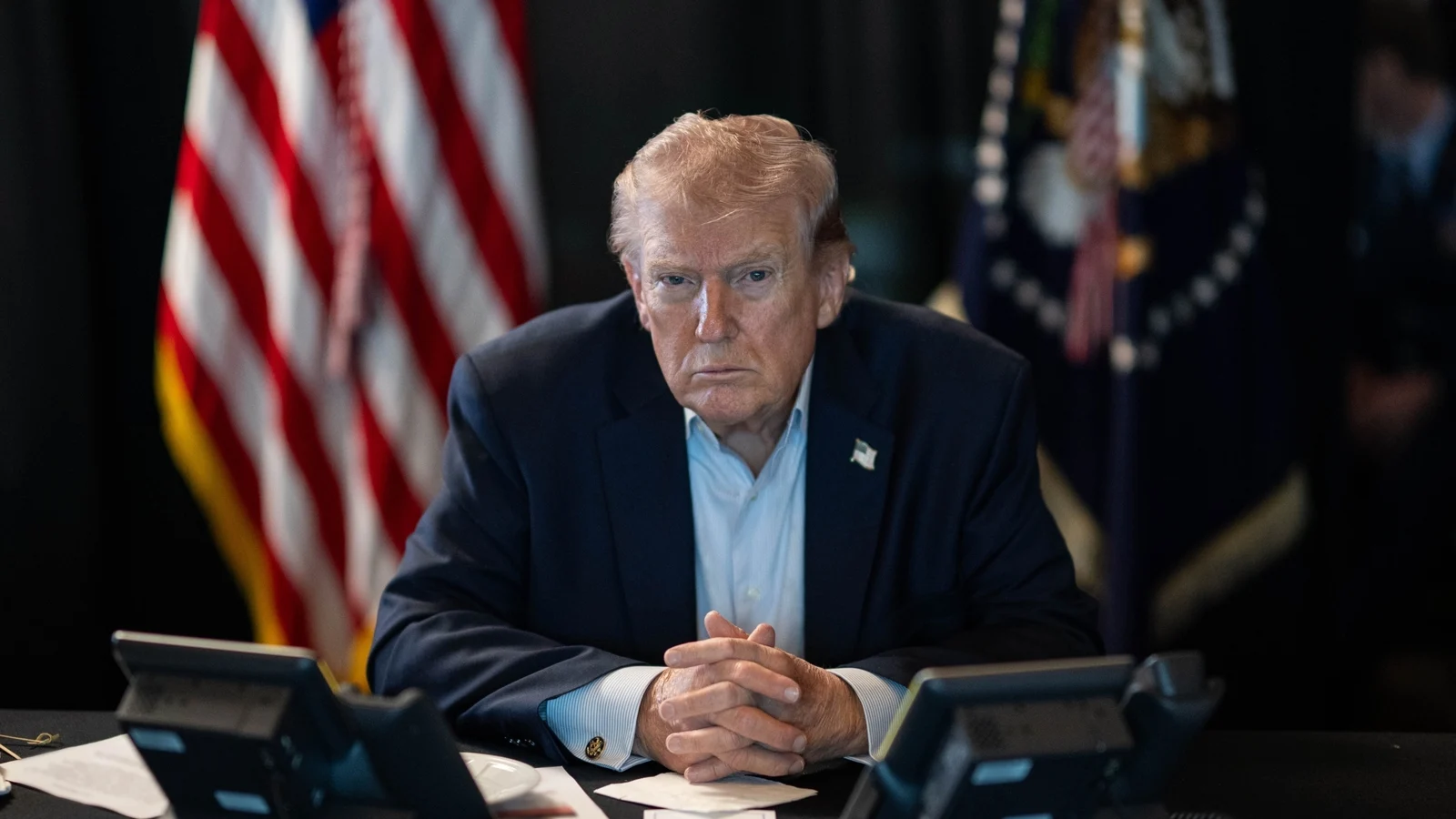
From a private residence in Florida to the polished podiums of TV networks, the president moved quickly to shape the story. He surfaced on multiple cable channels before lunch, offering crisp certainties that would, by the day’s end, fray at the edges. At times the campaign to explain the operation sounded like a carefully choreographed briefing; at others it felt improvised, a series of stopgaps and recalibrations aimed at a public trying to reconcile a show of force with a torrent of mixed messaging.
Changing Timetables, Growing Doubts
In the space of a few interviews the timeline for victory slid and stretched. One moment, officials suggested the military effort might be brief — wrapped within days — and the next the same leaders acknowledged the contingency for a campaign lasting weeks or longer. “We have the ability to go further if we must,” a senior administration official told reporters, voice steady but eyes betraying fatigue. Such phrases offered comfort and alarm in equal measure.
That uncertainty has real political consequences. A new CNN survey — released as smoke plumes were still visible over Tehran’s skyline — showed a majority of Americans voiced reservations about the strikes and doubts about whether a coherent, long-term plan exists. “It’s not just the polls,” said Dr. Miriam Alvarez, a public-opinion analyst in New York. “It’s the narrative. People expect clarity when lives and dollars are at stake.”
The Pentagon’s Threefold Aim
By midday the Department of Defense had stepped into the frame. Standing beneath the flags in the Pentagon briefing room, the defense secretary sketched out a mission in three parts: degrade offensive missile systems, blunt seaborne threats, and stall nuclear ambitions. His words were measured. His tone was, at times, impatient — snapping at questions from reporters who pressed him on objectives, endgames, and exit strategies.
“This is not another endless deployment,” the secretary insisted, palms flat on the lectern. “We have a clear mission, with defined targets.” Yet defined missions are different from finished plans. “How we translate ‘defined’ into a durable outcome — that’s where the political work begins,” observed retired General Laila Hamid, who spent decades studying deterrence in the Gulf.
Pre-emption, Partnership, and the Politics of Blame
Inside Capitol Hill, the top intelligence and defense officials met behind closed doors with the so-called Gang of Eight: party leaders and committee chairs charged with oversight of the nation’s most sensitive operations. The administration’s message — that pre-emptive strikes were necessary to blunt retaliatory actions after an anticipated Israeli move — introduced a new rationale to the public record.
“We believed, based on the intelligence we had, that failure to act would mean higher risk to our forces and allies,” a defense spokesman told the group. For some Democrats, the explanation read like a rationalization for escalation. “Decisions of war deserve more than a press tour,” snapped Representative Nia Robinson (D–PA), who has called for a fuller congressional debate.
Across the aisle, some lawmakers were eager to rally. “The president acted to remove an imminent threat,” said Senator Mark Evers (R–OH), his voice threaded with resolve. “When the safety of our troops is in question, hesitation is not an option.”
Silence and Support: The Vice-President’s Calculus
Perhaps more revealing than what was said was what went unsaid. The vice-president — a figure known for hawkish caution and a public ambivalence toward long entanglements abroad — was notably quiet over the weekend. Pictures later emerged of him in the Situation Room, but his public voice remained muted until late-night television, where he framed the action as targeted and finite: “We will not be dragged into a grinding conflict,” he told a conservative host.
His restraint fueled speculation in political circles. “He’s built a brand as an anti-interventionist,” said Hanna Youssef, a foreign-policy commentator in London. “The calculus of endorsing a strike, and then standing beside it publicly, is rough. It reveals the fissures in the coalition that carried this administration into office.”
On the Ground: Smoke, Markets and Mornings That Do Not Feel Normal
Far from the marble halls of Washington, Tehran’s morning was punctuated by the sound of explosions. From the bazaar alleys where merchants barter over piles of saffron and embroidered rugs, to the rooftop tea-sipping clusters where neighbors exchange news, people watched smoke coil above the city’s silhouette.
“We heard the planes and then the tremor,” said Mahmoud, a carpet seller in the Grand Bazaar, fingers tracing a familiar pattern. “My son called and asked if we would leave. I told him: life goes on. What else can we do?”
As dusk fell, the city’s minarets still called the faithful to prayer, a persistence of routine in the face of extraordinary events. Human rhythms resist being wholly consumed by geopolitics, even as geopolitics reshapes them.
What This Means for the World
Beyond the immediate human toll — lives disrupted, markets jittering, diplomatic cables burning — the strike raises larger questions: about the durability of deterrence, the calculus of pre-emption, and the way modern democracies narrate the use of force.
- Are shifting timelines an unavoidable byproduct of rapidly changing battlefield conditions, or a symptom of a broader communication failure?
- Do targeted, multi-domain operations truly prevent protracted wars, or do they risk drawing countries into cyclical retaliation without a clear exit plan?
- And globally, how will allies and adversaries interpret a campaign that blends parsimony with bravado?
“We are living in an age where perception and reality can diverge dramatically,” said Dr. Julian Park, a professor of international security. “A strike can be surgically precise and still politically messy. The question is whether political institutions can absorb that messiness without letting it metastasize.”
Closing Questions, Open Streets
As night deepened, Washington’s streets quieted, and Tehran’s markets dimmed their lamps. Both capitals stayed awake in their own ways: leaders reviewing classified updates, families scrolling briefings on their phones, communities trying to make sense of a world that feels simultaneously more dangerous and more connected than ever.
For readers around the globe, this moment asks something simple and hard at once: how do you judge the use of force when facts, motives and outcomes are contested in real time? When timelines change — from days to weeks to “as long as needed” — what do we ask of our leaders, and what do we demand of ourselves?
We’ll be watching the aftermath: the diplomatic threads, the humanitarian effects, and the economic ripples that follow any military action. In the meantime, look around you. Ask someone from a different side of the debate what they fear, and what they hope. It’s only by listening — closely, patiently — that we begin to answer the larger question of how democracies wage war in an age of immediate information and enduring human consequence.