When the Strait Went Quiet: How a Spike in Tensions Sent Tankers, Traders and Portside Tea Sellers into a Tailspin
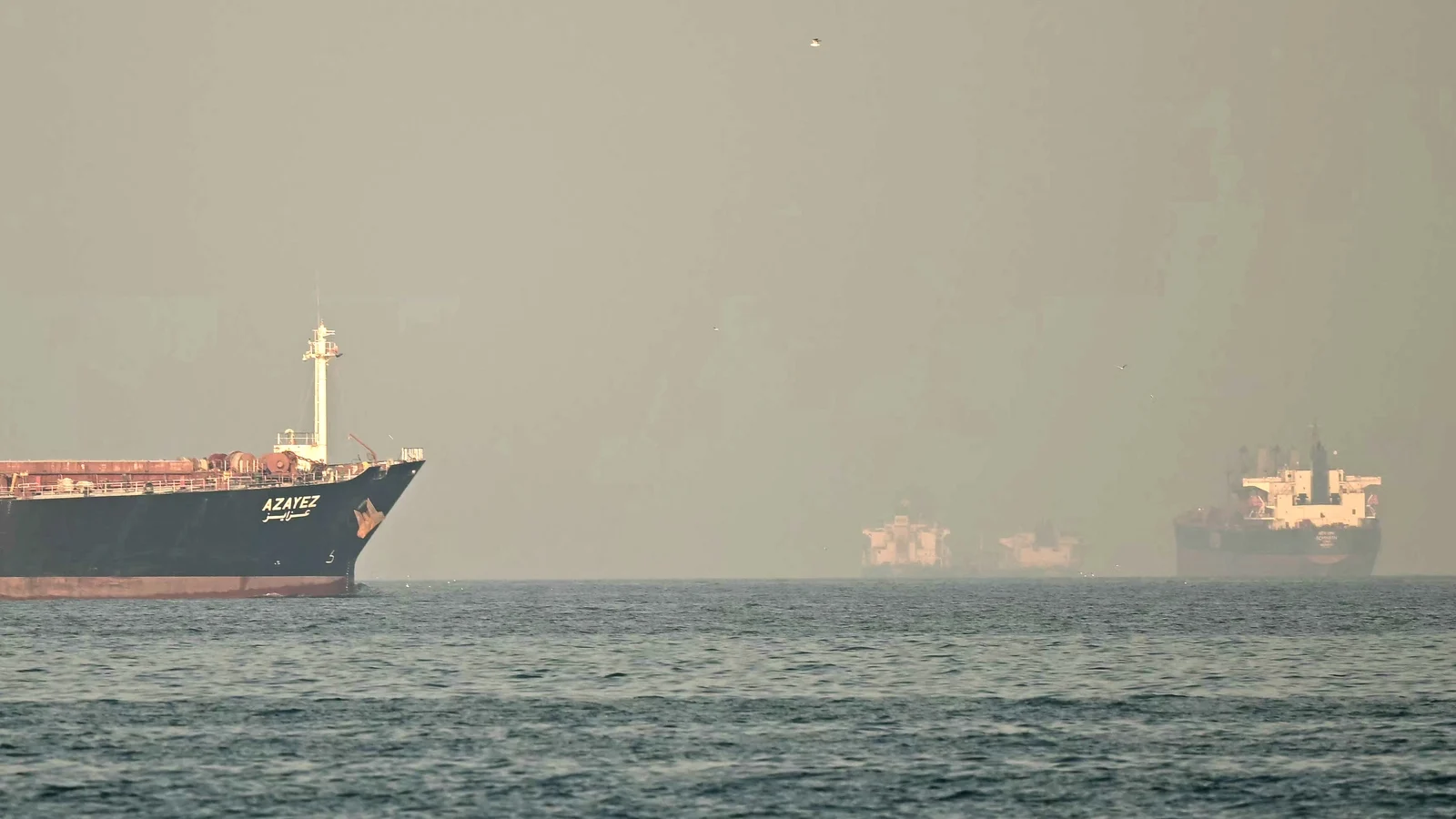
There are places where the sea speaks in engines and smoke—lines of tankers that look like floating cities, the soft thud of cargo-handlers, the cry of gulls over a busy choke point where the world’s energy lifeline squeezes. The Strait of Hormuz is one of those places. This week, it fell eerily still.
I walked the docks in Bandar Abbas and the scene felt like a city holding its breath. A fisherman in a salt-streaked cap watched the horizon and sipped strong tea from a chipped glass. “We’ve seen storms and wars before,” he said, “but when the tankers stop, the whole country notices.” His voice was steady; his eyes were not.
The anatomy of a stoppage
The Strait of Hormuz is not a dramatic natural wonder; it is a narrow, vital artery—less than 60 miles at its widest point—that funnels roughly one-fifth of the world’s seaborne oil and large volumes of liquefied natural gas. When traffic slows here, it ripples through everything from refinery planning rooms in Rotterdam to household heating bills in Seoul.
In recent days, a wave of attacks and counter-attacks across the Gulf and the Strait—attacks that included strikes against commercial vessels—has prompted many shipowners to halt voyages and port operators to suspend loading. The result has been an abrupt freeze in the mechanics of maritime energy trade.
Markets that feel like quicksilver
Financial markets responded the way they always do when something fragile snaps: with a lurch. Brent crude futures surged almost 10% this week as traders priced in possible prolonged disruptions to Middle Eastern flows. That’s not just a number on a screen; for ports and households, it can mean higher costs and heightened uncertainty.
Shipping costs, meanwhile, exploded. The benchmark freight rate for very large crude carriers (VLCCs)—the gargantuan tankers that move roughly 2 million barrels to markets like China—climbed to an unprecedented W419 on Worldscale, which industry sources translated into roughly $423,736 per day, according to LSEG shipping data. To put that in human terms: the cost to move a single VLCC now exceeds what many families would earn in several lifetimes.
LNG shipping felt the shock as well. Daily spot rates for LNG carriers surged by more than 40% after a major Qatar producer halted output as a precaution. Atlantic routes rose to about $61,500 a day—up 43% from Friday—while Pacific runs jumped to roughly $41,000, up 45%, per Spark Commodities’ assessments. Wood Mackenzie’s global LNG analyst warned that tightness could push spot sailing rates north of $100,000 a day if the situation persists.
Voices from the decks and the sidelines
An anonymous shipbroker, speaking from a quiet office in Singapore, described the mood in blunt terms: “Owners are locking their hatches. No one wants a phone call that begins with ‘we’ve been hit.’ It’s impossible to price the unknown.”
A crewman on a medium-sized tanker, who asked not to be named, said: “We trained for fires and leaks, but not for being told to wait in international waters because someone said the Strait is closed. There’s fear—practical fear. We can’t deliver if we can’t sail, and we can’t sail if our insurer won’t cover us.”
Meanwhile, an Iranian Revolutionary Guard official told state media that the Strait would be closed and that Iran would fire on any vessel that tried to pass. The declaration raised alarms around the world. U.S. Central Command responded that the Strait was not closed, underscoring the fog of competing claims and the reality that legal declarations and on-the-water behavior can diverge sharply.
Operational and diplomatic aftershocks
Practical responses began to form almost immediately. South Korean shipper Hyundai Glovis announced contingency planning—seeking alternative routes and ports. Seoul’s maritime ministry issued a notice discouraging South Korean operators from sailing in the Middle East and convened meetings to discuss strengthened safety measures.
At the port café I visited, a young logistics coordinator—her hands inked with port paperwork—summed it up: “You can hedge price risk with contracts and options. You cannot hedge a missile.”
Why this matters beyond the Gulf
Think about how many goods in your life depend on uninterrupted movement: electronics, fertilizer, plastics, jet fuel. When one strategic maritime chokepoint is threatened, the shocks ricochet across supply chains. Energy price spikes not only raise consumer costs but also sharpen the geopolitical bargaining cards of powerful producers and consumers.
There’s another layer. This crisis is a reminder of an uncomfortable truth about the current phase of globalization: the infrastructure we assume is dependable—shipping lanes, fuel supply, data cables—rests on geopolitical stability. When that tilts, the consequences are immediate and often regressive, hitting poorer nations and consumers the hardest.
What could happen next?
- Short-term volatility: Expect more price swings as traders react to real-time developments and shipping availability.
- Rerouted flows: Some shipments may take longer, more expensive routes around Africa’s Cape of Good Hope—adding days or weeks to delivery and increasing costs.
- Insurance and legal issues: P&I clubs and insurers may impose war-risk premiums or refuse cover, effectively grounding vulnerable vessels.
- Political maneuvering: Diplomatic channels may intensify as import-dependent nations pressure for assurance of safe passage.
Looking past the headlines
When the immediate flare cools, there will be analysis and blame, committees and debates. But on a late afternoon by the docks, all that mattered was the next twelve hours: a tanker waiting, a truck driver whose schedule was upended, a family paying a little more for heating. Those small impacts accumulate.
So I ask you, reader: how do we build resilience in a world where a few decisions or misfires in a narrow sea can unsettle global markets? Is the answer more diversification, faster moves to renewables, stronger international legal frameworks for maritime security, or something else entirely?
For now, the Strait is a reminder of both our interdependence and our fragility. The engines that usually hum there are a daily act of faith that diplomacy will hold. When that faith frays, we all feel the tremor.