The Gulf on Edge: Tanker Horns, Closed Lanes and a Market Holding Its Breath
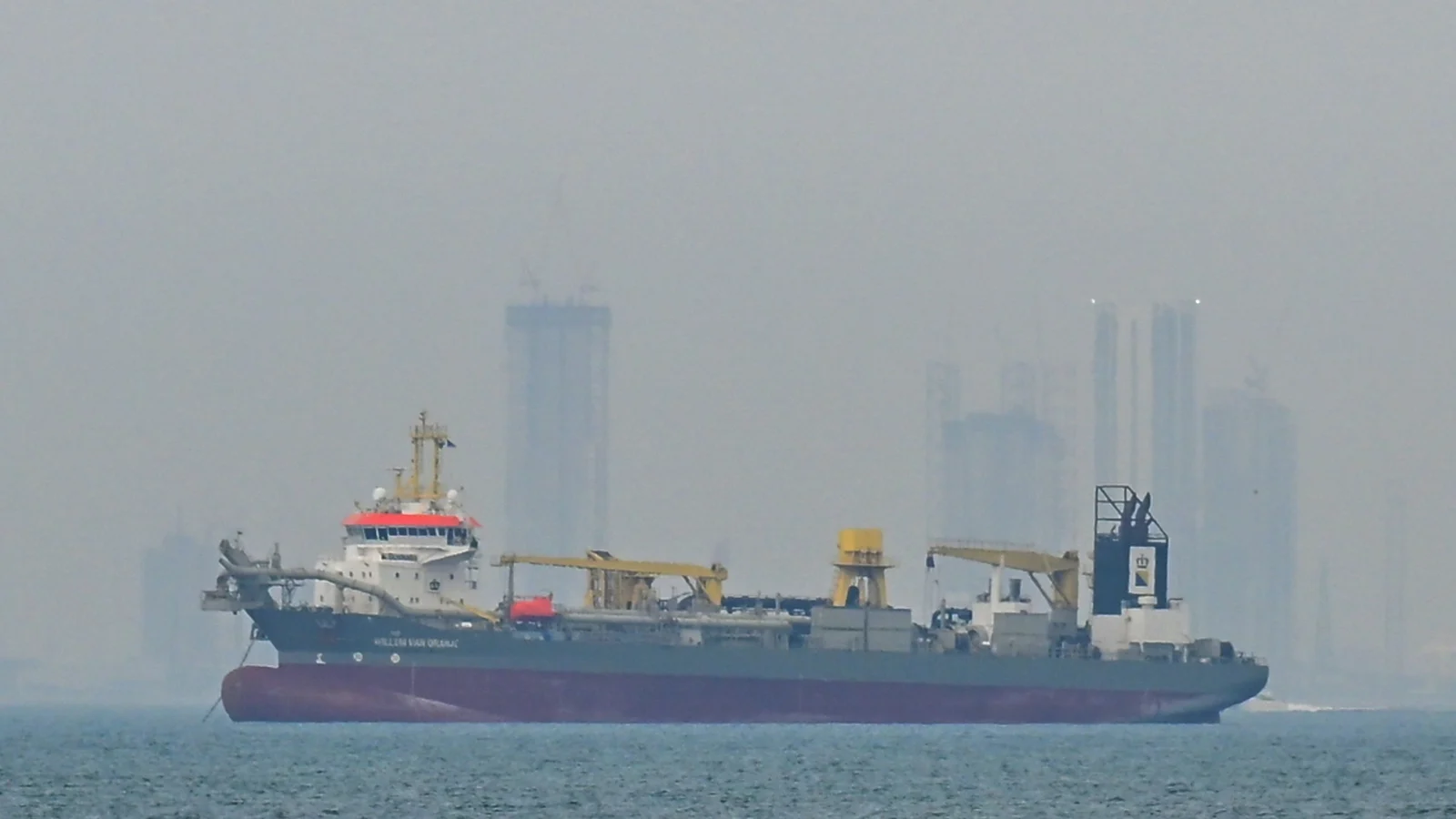
There is a sound that has returned to the Strait of Hormuz this week — not the steady thrum of commerce, but the hollow echo of engines idling and horns sounding into empty water. For sailors, traders and the communities that live by the sea, that noise feels less like a maritime pause and more like the slow inhale before a storm.
Against that uneasy backdrop, oil prices have been strangely calm. Brent crude traded near $81.13 a barrel late Wednesday, down modestly after a morning surge toward the mid-$80s. West Texas Intermediate sat around $74.30. Numbers, in this moment, are less a portrait of the market than a measure of its mood: jittery, expectant, and uncertain.
What’s happening at sea
For five days the Strait — the narrow choke point through which roughly a fifth to a quarter of seaborne oil historically moves — has been effectively closed to routine traffic as a cascade of strikes and counter‑strikes shook the region. Ships are diverting, insurance costs are spiking, and ports that once hummed with activity now watch tankers drift like islands on the horizon.
“I’ve been navigating these waters for twenty years,” said Captain Ahmed al‑Sayegh, a veteran tanker master sheltering off Muscat. “This is not a storm you can navigate around with charts. It’s politics and fear. We wait for a firm word that it’s safe to move.”
The practical consequences are already visible. Iraq — OPEC’s second‑largest producer — has reported cuts of about 1.5 million barrels per day because it has nowhere to send the oil it pumps; storage tanks are full and export routes are blocked. Officials warn that if exports do not restart, as much as nearly 3 million barrels per day could be forced offline within days.
Markets coping, for now
Traders were caught between two impulses: panic and pragmatism. On the one hand, the region at the center of the turmoil accounts for close to a third of global oil and gas production — a reality that could push prices higher if the flow remains interrupted. On the other, floating storage — tankers holding petroleum at sea — is near record levels, giving buyers and sellers a buffer.
“There is cash and crude moving on the water,” said Dr. Leila Farzan, an energy risk analyst at the Institute for Global Energy Studies. “That so‑called ‘on the water’ inventory is acting like spare capacity. But it’s a temporary cushion. If the strait remains closed, the cushion becomes a cliff.”
US crude inventories have also played a role in tempering immediate price spikes. The Energy Information Administration reported a 3.5 million‑barrel rise in domestic crude stocks last week — the highest level in roughly three and a half years — while gasoline supplies fell by 1.7 million barrels and distillates (diesel and heating oil) climbed by about 429,000 barrels.
Politics, protection and the scramble for alternatives
Diplomatic signals and military posturing have alternated throughout the week. Washington has said its navy could escort commercial tankers through the strait if necessary, and there are reports of talks behind closed doors that could lead to localized de‑escalation. Yet in the markets, traders prefer measurable flows to promises.
“Words matter less than tankers moving under their own power,” said Sophia Mendes, a commodities strategist in London. “An announcement that escorting is on the table will reduce headline risk, but it will not instantly restore cargoes or undo the bottlenecks that have formed in ports.”
Across Asia, refiners and policymakers are moving from contingency to action. India and Indonesia, two major importers of crude from the Gulf, have begun looking broadly for alternative supplies. Some Chinese refineries, wary of prolonged disruption, have accelerated maintenance shutdowns — a decision that has ripple effects on global product availability.
“We are talking to suppliers in West Africa and Latin America,” said Ravi Menon, procurement head at a refinery complex in Gujarat. “It’s costly and slower, but right now certainty of supply has a premium.”
Who pays the price?
In the ports and towns that feed on fuel flows, the impact is immediate and human. Dockworkers who load and unload crude worry about layoffs if exports slow for weeks. Small shipping agents who arranged the paper trails for cargoes see their phone lines fall silent. And further down the line, there are consumers: higher transport costs, potential bumps at the pump, and regional strains on heating and diesel supplies.
“We can tighten belts, but the working generator doesn’t ask for a budget meeting,” said Fatima Al‑Hashimi, who runs a logistics firm in Basra. “We need the oil to move for people to keep working.”
Reading the broader map
What’s unfolding is not just a short‑term commodity shock. It is a vivid reminder of how geopolitics, aging infrastructure and shipping chokepoints can still rattle a world that is often told it has moved beyond fossil fuels.
Consider these broader threads:
- Energy Security vs. Energy Transition: Nations are acutely aware that diversification — both in supply sources and energy types — can blunt shocks. Yet transitioning away from oil and gas is a multi‑decade project; in the near term, the world depends on flows that can be disrupted overnight.
- Supply Chains and Insurance: The cost of moving cargo — already rising due to labor, regulation and post‑pandemic frictions — will likely climb further as insurers recalibrate risk premiums for voyages through contested waterways.
- Local Economies at Risk: Producers with limited storage and export options, like Iraq, face immediate fiscal and social stress if production must be curtailed for an extended period.
What comes next?
No one can promise certainty. Diplomacy could yet open a safe passage; operational fixes in Iraqi ports could restore flows; on‑the‑water inventories might be drawn down without a price shock. Or the closure could linger, nudging prices higher and accelerating geopolitical alignments and market hedging.
“Markets are acknowledging two truths at once,” said Mark Teller, a veteran commodity trader. “There’s enough oil to go around for now, but resilience is thin. If the war of nerves becomes a war of attrition, prices will reflect that.”
So what do you, the reader, take from a scene where a few miles of water can unsettle the world? Perhaps a reminder: the systems that power our lives — the ships, the ports, the refineries, and the fragile diplomacy that keeps them moving — are both marvels and vulnerabilities. We count on them until one day their absence makes every mile harder, every commute more expensive, and every policymaker a little more hurried.
And as you check the price at the pump or read the morning headlines, ask yourself how prepared we are — as communities, companies and countries — to weather the storms that geopolitical friction will continue to bring.