The Thin Thread of a Promise: How One Interview Reignited a Global Argument
There are moments in politics when a single interview does more than report words: it reshapes the map of possibility. That’s what happened recently, when an Oval Office conversation—part pep talk, part admonition—ambled from the pages of a magazine into living rooms across the world and landed like a glass bauble on the table of diplomacy.
I was struck by the image of it: a president, leaning back, telling a story that reorders alliances and expectations. “Zelensky, he has to get on the ball, and he has to get a deal done,” he told reporters, his tone equal parts frustration and counsel. The underlying refrain—Ukraine’s leader as the primary obstacle to peace—ripples far beyond a soundbite. It nudges, even steers, the conversation about who makes concessions, who holds out, and what the United States’ role should be in a war that has carved up Europe’s sense of security since 2022.
Ground Truths: What’s at Stake
Since Russia’s full-scale invasion in February 2022, Ukraine has been the crucible for debates about security, sovereignty, and the cost of standing with partners. The fighting has displaced millions, flattened neighborhoods, and reshaped energy markets. It has also, crucially, exposed fissures in Western unity and domestic politics in donor countries.
Meanwhile, the U.S. has provided significant military, economic, and humanitarian support to Kyiv, a commitment that has become a partisan touchstone at home. Skeptics argue that the money and materiel have political as well as strategic consequences; advocates insist they are investments in deterrence. Whichever side you land on, the deeper question remains: how do you translate battlefield realities into a sustainable peace?
“He’s asking the wrong questions,” said Maria Kovalenko, a schoolteacher in Lviv, when I reached her by phone. “We want peace, of course. But not at any price. Compromise without guarantees is just another siege.”
Her words echo across Ukraine: a weary, watchful nation weary of war, not of the idea of negotiations. The nuance is crucial. For many Ukrainians, to “get a deal done” carries the weighty implication of territorial concessions—ceding land for a promise. For them, a deal brokered under the threat of continued aggression is no true peace.
Portraits of Power: Putin, Zelensky, and the Man Between
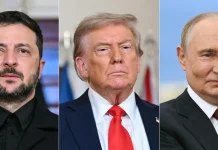
In the interview, the president painted a picture of the Russian leader as willing to negotiate—“I think Putin is ready to make a deal,” he said—while casting the Ukrainian president as the reluctant gatekeeper. It’s a striking inversion of the more familiar narrative in which the invader is the one refusing meaningful withdrawal.
Vladimir Putin’s negotiating posture is, of course, layered with strategy. For years, analysts have warned that authoritarian leaders use talks as both a battlefield tactic and a public relations tool—buying time, testing reactions, or seeking legitimacy. “Negotiations are a weapon,” said Dr. Amina Raj, a lecturer in international conflict at the London School of Economics. “They can freeze fronts, create political divisions, and ease economic pressures without truly resolving grievances.”
For his part, Volodymyr Zelensky has navigated a loop of expectations: a wartime leader defending territory, a global symbol asking for help, and a pragmatic politician who must consider what is negotiable and what is not. To many in Kyiv, the idea that he is the impediment feels like a misreading of history and of the balance of power on the ground.
Voices From the Ground: The Human Cost of Headlines
In a market square outside Kharkiv, vendors who survived shelling now haggle under tarpaulins. “We trade eggs and stories,” laughed Olena, flipping a battered coin. “But if someone says we should ‘get a deal’ now, are they offering to return my home? My brother who is missing? Or just the cost of their patience?”
Her skepticism is not cynicism; it’s a ledger of losses. Peace that doesn’t account for justice, restitution, and security is fragile. It’s also why many Ukrainians recoil when powerful outsiders suggest a quick fix—because quick, in this context, can mean unequal.
Domestic Politics and the Global Ripples
This conversation is not only about capitals and commanders; it is soaked in domestic politics. Back at home, the president’s posture on Ukraine has long been tied to a broader critique: that American resources are stretched thin and that foreign conflicts should be resolved through negotiation, even if that means dealing with adversaries who are not always trustworthy.
“We must be pragmatic,” said Senator Ava Martinez, a centrist voice on foreign policy. “But pragmatism without principle is acquiescence. The question for policymakers is how to balance diplomacy with deterrence—how to talk while ensuring the other side doesn’t exploit the conversation.”
Across party lines, there’s a simmering debate: continue heavy support and risk domestic backlash, or push a diplomatic shortcut that could leave allies exposed. Both choices carry political and moral costs.
What a Deal Might Look Like—or Not
No one can say definitively what a negotiated settlement would look like. Would it include security guarantees, international peacekeeping forces, or phased withdrawals? Would it protect civilians and restore displaced communities? Or would it bind Ukraine to constraints that leave it truncated?
- Any meaningful settlement would likely require third-party verification mechanisms.
- International guarantees—perhaps under NATO or a coalition of states—would be needed to assure Ukrainian sovereignty.
- Humanitarian reparations and reconstruction funding would be required to stabilize affected regions.
“Deals aren’t just signatures,” added Lucia Hernandez, a conflict resolution adviser who’s worked in several post-conflict zones. “They are institutions you build: courts, monitors, roads, schools. Otherwise, old grievances become new wars.”
Global Themes: Trust, Power, and the Limits of Negotiation
This episode raises questions that go beyond one war and one interview. In an era of resurgent great-power competition, how do democracies maintain credibility while facing the allure of transactional politics? When does negotiation become capitulation, and when does principled resistance become untenable?
We live in a time when foreign policy is not just decided in the Situation Room but in soundbites and cable loops. That means leaders’ words have outsized power. They shape markets, morale, and the decisions of soldiers and civilians alike.
So I ask you, reader: when a leader suggests shortcuts to peace, what are you willing to trade for it? Safety? Territory? Trust? The answers are never neat, and they belong to more than officials and generals—they belong to the people who will live with the outcome.
Where Do We Go From Here?
No single interview will close this chapter. The war in Ukraine will ultimately be shaped by many small acts: the choices made by local leaders, the resilience of communities, the unity or fracture of international coalitions, and yes, the rhetoric from powerful capitals.
For now, the most useful posture may be one of cautious skepticism: press for talks, but insist on accountability; pursue diplomacy, but prepare for hard realities. That balance—between idealism and hard-nosed realism—is what will determine whether words become a path to sustainable peace or a pause that leaves the world riskier than before.
Listen to the people on the ground. Watch the mechanisms states propose. Demand guarantees that can be verified. And remember: the true arbiter of any deal is not a headline, but the lives rebuilt—or not—after the ink dries.