Day Seven: Smoke, Sirens and the Strange New Geography of a Regional War
On a raw morning that could have been lifted from any cemetery of old empires, sirens slipped through cities and coasts that—until a week ago—believed themselves comfortably distant from the frontlines.
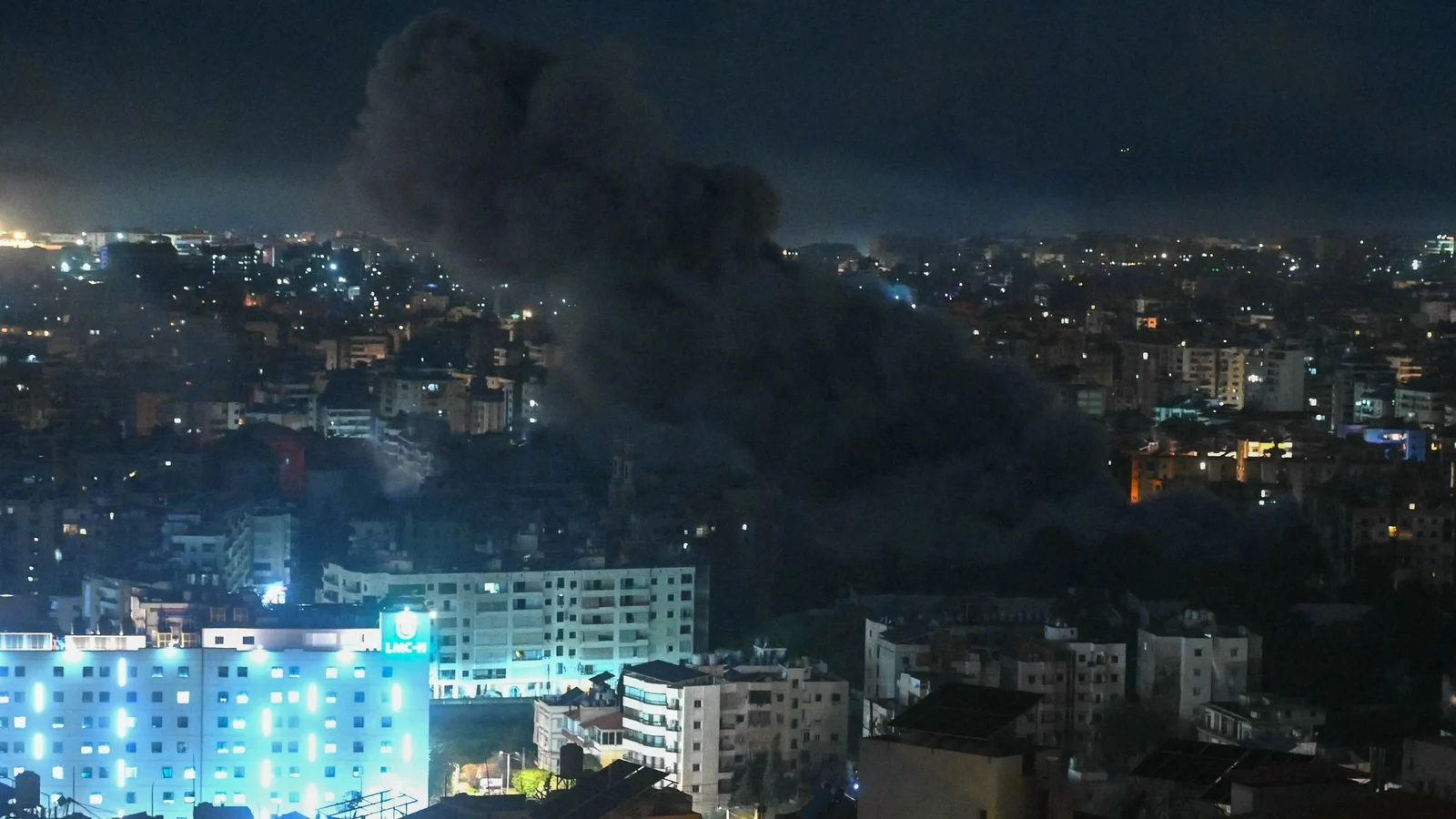
In Beirut’s southern suburbs, where cafés spill into narrow streets and older women still hang sheets from balconies like sunscreens, a blackout of smoke replaced the familiar late‑afternoon glow. In Tehran, a faraway thunder was reported in neighborhoods that were trying to return to ordinary rhythms after years of political turbulence. In the blue Sri Lankan water off Hambantota, a skeletal navy vessel sat under the eyes of sailors who had just been taken aboard by a nervous island state.
Welcome to Day Seven of a war that has already redrawn maps in people’s heads even as diplomats scramble to keep the borders on paper.
Maps that mean less than the people on them
The week’s cascade of attacks and counterattacks has blurred an old distinction: where the guns are isn’t the only place the damage happens. An unprecedented evacuation order—“save your lives and evacuate your residences immediately”—sent neighborhoods in Lebanon fleeing in panic after Israeli forces warned of imminent strikes. AFP reporters later heard blasts in parts of Tehran as Israel said it had targeted what it called “regime infrastructure” in Iran’s capital. The reality of those words on a map matters little when the ground smells of smoke.
“We had minutes,” said Nadim, a shopkeeper in Beirut’s southern suburbs who asked that his surname not be used. “I left my keys on the counter. I thought I would be back the same day. There is nowhere to put fear. Only to carry it.”
The Lebanese health ministry says at least 123 people have been killed and 638 wounded since the country was drawn into hostilities—a grim tally that officials warn will climb as rescue teams pick through collapsed homes and burn sites.
A conflict spilling across seas and alliances
Beyond the Levant, the war’s reach has turned small harbors and distant coasts into unexpected chapters of this story.
- Sri Lanka: A US submarine torpedoed an Iranian navy ship off the southern coast, an attack that Prime Minister Anthony Albanese later said involved three Australian personnel aboard the American vessel under AUKUS training arrangements. Sri Lanka’s navy subsequently offloaded 208 sailors from the IRIS Bushehr and assumed custody of the ship—a sign of how non‑regional states now find themselves caretakers of the conflict’s aftermath.
- Bahrain and Manama: Authorities in Bahrain reported that a hotel and residential buildings were struck in the capital—after a previous missive had listed two hotels and a residential block. A day earlier, an Iranian missile reportedly sparked a blaze at the kingdom’s main state‑owned oil refinery, underlining how strategic economic targets are increasingly vulnerable.
- Saudi Arabia: The kingdom said it intercepted and destroyed three ballistic missiles en route to Prince Sultan Air Base. Western embassy staff in Riyadh were told to shelter in place after recent attacks near diplomatic compounds—small acts that feel very large when your life is measured in steps from your embassy gate.
- Azerbaijan and Turkey: A drone strike on an airport in Azerbaijan produced threats of reprisal, and NATO reported a missile launched toward Turkey was shot down—events that reminded everyone this is not a localized quarrel. The alliance said it has strengthened its ballistic missile defence posture in response to what officials described as indiscriminate attacks across the region.
“When a missile arcs over and is intercepted, that’s not theatre; it’s a rebuke to the illusion that borders are walls,” said Dr. Leila Haddad, a Geneva‑based analyst of Middle Eastern security. “This is modern warfare’s geography: it ignores lines drawn on old maps, and it forces global systems—insurance, shipping, alliances—to react.”
Voices you could hear if you listened
On the streets of Tehran, a man who runs a bookshop described the sound of distant blasts. “Books don’t stop the noise,” he said, half laughing, half crying. “But they remind you that words outlast missiles. For now, we listen to both.”
In Manama, a nurse at a hospital that received wounded said, “There’s a rhythm to treating burns, to stitching lives back together. But it’s different when those burns were caused by a missile. The city feels violated—like a private space opened to violence.”
And in Colombo, fishermen who saw warships on the horizon were both bewildered and pragmatic. “We are not soldiers,” said Sunil, a 48‑year‑old who had fished the south coast for three decades. “But the sea takes and gives. Today it gives us ships and fear.”
Political theatre and the struggle for legitimacy
Political leaders have not shied from spectacle. President Donald Trump—who remains a dominant figure in American politics and foreign policy debate—dismissed the idea that Mojtaba Khamenei, son of the late supreme leader, could succeed his father, calling him a “lightweight” and insisting he should have a role in the appointment—comments that blend showmanship with geopolitics. Trump also voiced support for a Kurdish offensive into Iran, saying, “I think it’s wonderful that they want to do that, I’d be all for it.”
Back in Cairo, President Abdel Fattah al‑Sisi warned his country was in a state of “near‑emergency,” speaking at a military academy and promising to crack down on price gouging—an acknowledgement that wars far away can materialize at home through runaway inflation and markets gone awry.
“Leaders know how to turn external wars into domestic policy,” noted Professor Omar el‑Nashar of the American University in Cairo. “It’s a familiar, if dangerous, pattern: securitize the economy, tighten control, and blame forces outside. Citizens are left with less room to breathe.”
What happens next?
“You can read the maps,” said a retired NATO commander, “but history will be written in hospitals, on ships, and at markets. These are the places where ordinary people live and die.”
What if this conflict spreads slower than the fears, but more deeply into institutions? What if global supply chains buckle and commodities spike? Oil markets—already jittery—could react sharply; shipping lanes in the Gulf and Red Sea are sensitive to even the hint of danger. Refugee flows and humanitarian needs are likely to rise; Lebanon’s wound, already raw, may prove hardest to stitch.
There are no easy answers. There are only choices: restraint, escalation, diplomacy, or something that everyone says they want but too few pursue with seriousness.
On the ground, amid the ash
For those living through this week, the war is measured not in geopolitics but in small necessities—having water, finding a cousin’s phone number, keeping a child warm. “We are tired,” said Amal, a woman who packed her family’s essentials into a plastic crate. “We are tired of being pawns. We only want to sleep without listening for sirens.”
As the global community watches—nations aligning, alliances flexing, analysts drawing new scenarios—the human question remains stubbornly simple and immediate: how many lives will be reshaped before someone writes a different headline?
Read this and ask yourself: when distant conflicts become local crises, who do we expect to stand in the doorway and say ‘enough’? And what are we willing to do to make sure that voice is heard?