A night of music that turned into a country’s wound
It was supposed to be an evening of nostalgia: a concert by Picnic, a band whose chords have threaded through Soviet and post‑Soviet lives for decades. Instead, on 22 March 2024, the bright lights and familiar riffs at Crocus City Hall were pierced by gunfire, then by smoke and flame. By morning a community was grieving, and a nation was left with questions that sounded louder than the guns.
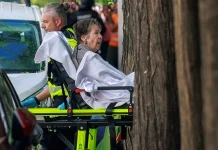
For weeks the images replayed in the global mind: crowds spilling into the cold Moscow night, emergency lights strobing like a harsh punctuation, people hauling the wounded down stairwells. In the end, 149 people were dead, more than 600 injured, and six children among the victims—numbers that turned private tragedies into a civic scar. It was the deadliest attack on Russian soil in roughly two decades, a calamity that the state and the world could not ignore.
The verdict: sentences handed down in a closed courtroom
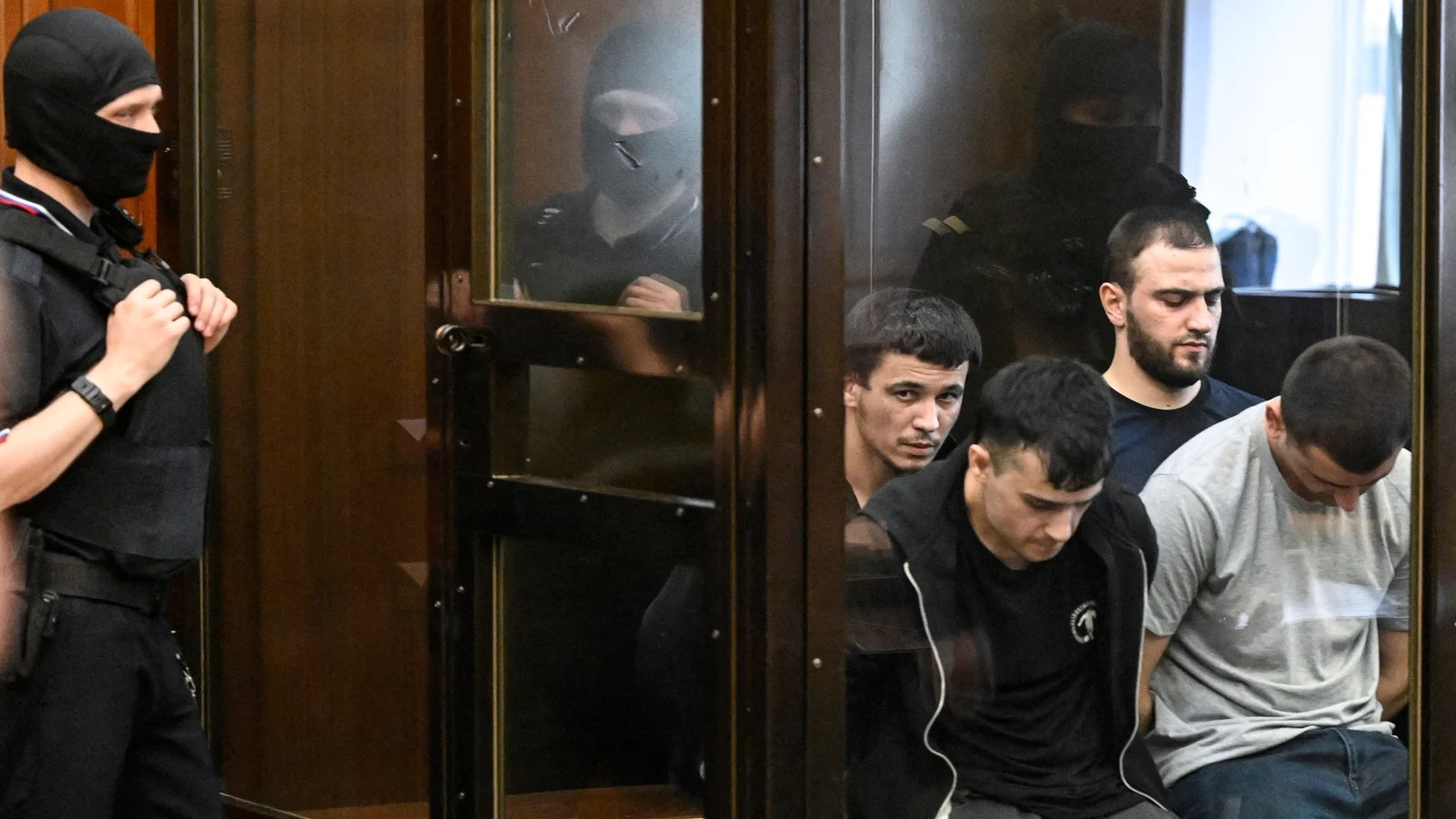
On a gray morning months later, a Russian military court handed down what the state press called a decisive judgment. According to the TASS news agency, four men from Tajikistan and 11 accomplices received life sentences for their roles in the Crocus City Hall assault. RIA Novosti reported that the remaining four defendants were each given prison terms ranging from 19 to 22 years.
Nineteen people had been charged in total. Some of the accomplices were Russian nationals; others came from abroad. Families of victims sat through the hearing, according to state reports, clutching the fragile relief that a verdict can sometimes bring—though relief in these moments often feels incomplete.
The trial, like many such cases in Russia, was conducted behind closed doors. The absence of public scrutiny only thickens the air of mystery around what happened and why. For relatives, victory in court is seldom equal to the loss they face every day when they reach for a hand that is not there.
Voices from the courtroom and the street
“No sentence brings my daughter back,” said a woman who identified herself as the mother of a victim, her voice raw. “They told us justice would be done. We will live by that… somehow.” Her words were echoed by others who came to watch the courtroom drama and carry the memory of their lost loved ones forward.
A lawyer who has worked on terror cases, speaking on condition of anonymity, noted: “Closed trials are sometimes defended as necessary for state security, but they also make it harder for the public to trust the outcome. Transparency matters for healing.”
What unfolded inside Crocus City Hall
Witnesses say the assailants entered shortly before the concert began and opened fire on the waiting crowd. Panic metastasized instantly; people ran for exits that were quickly blocked by smoke. At least some attackers set parts of the hall alight, turning the building into a trap. Emergency services raced to the scene, but in a space designed for sound and celebration, the geometry of stairways and doors turned into a hazard.
Survivors’ memories of that night read like shards. “The music stopped. The lights went out. I remember a smell—like burning plastic—and then my friend pulling me toward the exit,” said one man, his jacket still bearing a stain from where he had dragged himself across a burned floor months later. “People were yelling. Some were trying to help. Some were… not moving.”
Paramedics and firefighters who responded described scenes of extraordinary difficulty: corridors thick with smoke, bodies in alcoves where people had sought refuge, and the simple cruelty that comes when an entertainment venue transforms into a battlefield. “It felt like a war zone,” a first responder said. “You learn to steady your hands. You don’t learn to steady your heart.”
Who claimed responsibility — and the politics that followed
The Afghan affiliate of so‑called Islamic State, known as IS‑K (Islamic State Khorasan), claimed responsibility for the assault. That claim changed the tenor of public debate. Terrorism specialists quickly noted that IS‑K has been active in the region since at least the mid‑2010s and has carried out brutal, high‑casualty attacks in several countries.
Russia, for its part, pointed fingers in another direction as well. The Investigative Committee publicly stated that the attack had been “planned and committed in the interests of” Ukraine—a charge that was repeated in official statements and fed into a broader wartime narrative. Moscow has for months pushed back against international warnings that an attack was imminent, even as security services investigated.
“This intersection of terror and geopolitics is dangerous,” said Dr. Elena Korol, a terrorism analyst based in Moscow. “Groups like IS‑K seek to create fear and chaos. States, in turn, can instrumentalize those acts for political aims. The victims—ordinary people—get lost in both narratives.”
Context and cold facts
- Confirmed deaths: 149
- Injured: more than 600
- Number charged: 19
- Sentences: 15 defendants received life terms (four Tajik nationals plus 11 accomplices, per TASS); others received 19–22 years, per RIA
- Claimed responsibility: IS‑K (Islamic State Khorasan)
Local color: a community’s subtle grief
Crocus City Hall sits in Krasnogorsk, a town on the northwestern edge of Moscow’s sprawl, where shopping centers and office parks meet suburban apartment blocks. The venue was not only a landmark for the capital’s music scene; it was a place where families celebrated anniversaries, teenagers saw their first live shows, and older generations returned for familiar hits. After the attack, makeshift memorials sprung up along the avenue: candles melted into pools of wax, bouquets laid on benches, handwritten notes taped to lampposts.
“We are a place that loves public life,” said Yuri Petrov, a café owner near the hall. “People come to eat, to dance, to remember. That’s what makes this hurt so deep—it was an assault on the ordinary joys.”
Beyond the headlines: bigger questions for a global audience
As readers around the world scroll past the story in a feed of tragedies, what should they take away? Is this another isolated act in a troubled region, or a symptom of broader shifts: the spread of extremist networks, the fracturing of information ecosystems, and the political uses of terror? How should societies protect open public spaces—concert halls, markets, sports arenas—without turning them into fortresses that feel unwelcoming to the very citizens they aim to protect?
These are painful, practical questions. Security will cost money and will impose new routines. But there is also a human cost to a permanent state of siege: the slow erosion of trust among neighbors, the suspicion of strangers, and the politicization of grief.
A call to reflection
When courts hand down sentences, they enact the law. When communities mourn, they enact memory. Both are necessary. But neither can alone restore what was lost at Crocus City Hall: the presence of remembered voices, the warmth of small rituals, the ease of entering a hall for music without thinking of the worst.
So, as you put down this piece and return to your own habits and routines, consider this: how can societies hold both safety and openness in their hands without crushing one under the other? What does justice look like when lives are not only counted but remembered? And how do we, across borders and languages, learn to grieve together—without letting grief be used as the lever of politics?
For the families who left the courtroom, for the survivors still in recovery, and for the empty seats at future concerts, the answers will have to be more than legal motions or official statements. They will need remembrance, transparency, and a collective will to ensure public spaces remain places of life, not of fear.