When the lights go out in Havana: power, politics and an island on edge
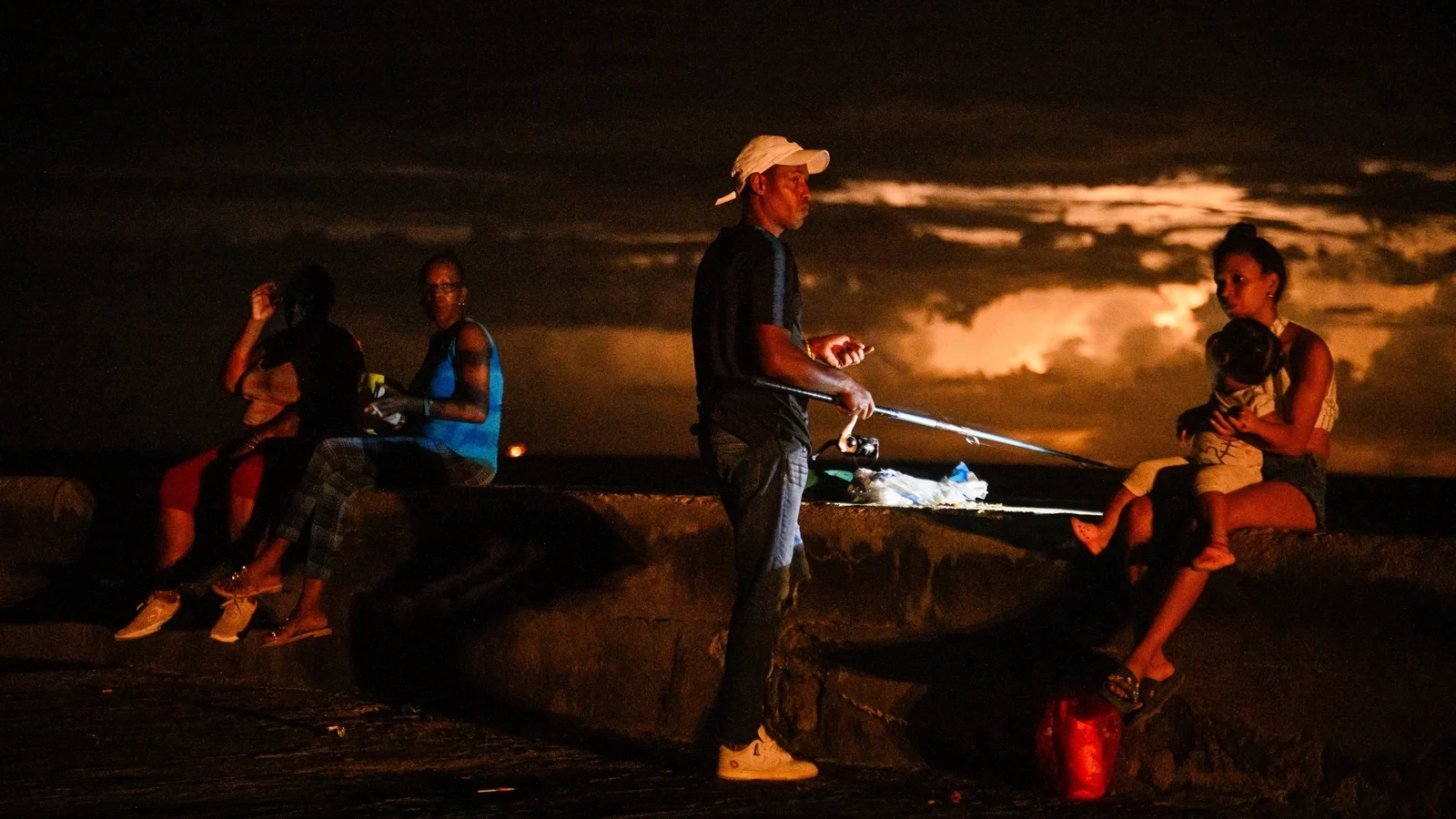
There is a special hush to a city when the lights go out: the hum of refrigerators falls silent, streetlamps blink into darkness, and Havana’s layered soundtrack — radio boleros, the clack of dominoes, a distant rumble of old Chevrolets — is stretched thin like a string about to snap.
Last night that hush arrived all at once. Families threaded candles through doorways; neighbors shouted across courtyards to check that everyone was all right. By morning, the government said roughly two-thirds of the country had power restored. But the words were thin comfort to people who have learned to live with recurrent blackouts and the brittle economy they expose.
More than a technical failure
The cause of the latest island-wide outage was not specified. Officials offered assurances about restoration work; engineers were pictured in state media clambering over turbines and transformers. But for many Cubans the blackout was less a single event than an expression of a longer decline: an ageing electricity grid, chronic fuel shortages and a vulnerability to the geopolitical winds that buffet a nation of about 11 million people.
“It is never just the lights,” said Elena Rodriguez, a market vendor in the Vedado neighborhood. “Without power, the phones die, the water pumps stop, the little food we have in the fridge goes bad. It is the ripple you feel in your pocket. We cope, yes — but coping has a price.”
Cuba’s power system has been limping for years. In parts of the island, rolling blackouts of many hours — sometimes reported to extend up to 20 hours in a stretch — have become a grim routine. Diesel and fuel shortages mean that even when plants are functional, they often lack the fuel to run. The shortage is economic and political: an island that once relied on subsidized Venezuelan oil saw those lifelines fray when diplomatic and financial pressure on Caracas intensified.
Earth tremors and political tremors
Adding to the unease, a 5.8-magnitude earthquake jostled the waters off Cuba’s coast the same day. There were no immediate reports of injuries or significant damage — but an earthquake’s tremor is not only geological. It also becomes an uncanny metaphor: an entire nation rattled by events beyond its control.
At the same time, diplomatic rhetoric from Washington has escalated in stark, personal terms. “I do believe I’ll be … having the honour of taking Cuba,” President Donald Trump told reporters — words that landed like an old wound being reopened in Havana. For an island whose modern history has been forged against the shadow of a superpower just 150 kilometers away, such proclamations revive memories and fears.
“We don’t need speeches. We need diesel for the plants; we need parts for the grid,” said Jorge Alvarez, a technician at one of Havana’s thermal plants, wiping grease from his hands. “You cannot ‘take’ a country with slogans. You either help it breathe or you let it die.”
Lives in the balance: ordinary people, extraordinary strain
Walk through a Havana neighborhood and you’ll see how politics becomes the matter of daily survival. Olga Suárez, a 64-year-old retired schoolteacher, squints into the sun on a stoop as if measuring the light.
“We are used to it,” she told me. “We go to bed and sometimes we wake up without lights. But the fear now is that the outage will last and the food will spoil — the pantries are small, the refrigerators small, and everything is expensive.”
In the tourism sector, the blackout lands like a blow to an already bruised industry. Before the pandemic, Cuba welcomed millions of foreign visitors a year; tourism has been a crucial source of hard currency. Jet fuel cutbacks and flight reductions, tied to broader oil and financial disruptions, have further hollowed out that sector.
“I used to earn enough from my casa particular to send remittances back to my family in Santiago,” said Luis, a private host who asked that only his first name be used. “Now bookings are thin, and when there is a blackout, guests are uneasy. You can feel the hesitation.”
Policy shifts and promises
In the wake of the power crisis, Havana’s leadership announced a surprising economic olive branch: senior officials declared that Cuban exiles would be allowed greater leeway to invest and own businesses on the island. For decades, the relationship between the Cuban state and its diaspora has been fraught — full of pain, politics and a flow of money that has at times propped up families and, indirectly, the national economy.
“We are trying to open channels to secure investment and technology,” a Cuban economic official told state media. “We need to modernize our energy sector and stabilize supplies.”
Whether such openings will translate into meaningful capital, or merely offer rhetorical cover in a moment of crisis, is unclear. The diaspora remains wary; investors are cautious. And any foreign capital that arrives will face structural obstacles: bureaucratic constraints, U.S. sanctions that complicate international banking, and an economy still organized around state control.
Context: a small island at the intersection of bigger forces
Cuba’s vulnerability is not only domestic. It is a case study in how global geopolitics shapes life in instant and intimate ways.
- Cuba’s population: roughly 11 million people spread across an island of 110,860 km².
- Energy profile: an ageing grid, reliance on imported fossil fuels and limited domestic generation capacity have long made Cuba susceptible to shortages.
- Economic lifelines: remittances, tourism and a trickle of foreign investment — all of which have been disrupted by sanctions, pandemics and shifting alliances.
These data points read like lines on a map of vulnerability. Add to that climate change — rising seas, more intense storms — and the picture is one of an island that must quickly modernize to survive, but which lacks the cash and political breathing room to do so easily.
What does “taking” a country even mean?
When a world leader utters dramatic phrases about conquest and liberation — “I will take Cuba,” for example — it forces us to ask: what does power look like in the 21st century? Military occupation? Economic dominance? The ability to choke a supply chain with sanctions?
“Soft power is not soft when its impacts are felt in a kitchen sink,” said Ana Méndez, a political analyst based in Madrid who follows Caribbean affairs. “Sanctions and isolation are forms of pressure that have real consequences for ordinary people. Any discussion of sovereignty needs to reckon with that human cost.”
Those consequences are visible in the queues for water and bread, in the hush of a blackout, in the anxious scroll of news on battery-powered phones. They are the everyday arithmetic of survival that does not fit neatly into the rhetoric of superpower grandstanding.
After the lights come back on: what then?
When the electrical current returns and the incandescent bulbs bloom in tenement windows, the island will breathe for a moment, and people will reheat whatever can be salvaged. But the deeper questions will remain: how to modernize infrastructure, how to secure reliable fuel and energy diversification, how to navigate relations with a neighbor that has alternated between hostility and engagement for more than half a century.
Will policy shifts toward diaspora investment bring meaningful change? Can Cuba diversify its energy mix — solar farms on its sun-rich plains, offshore wind where the sea allows — to break the cycle of dependence? Or will geopolitical jockeying continue to make the lights an uncertain commodity?
As you read this, consider your own assumptions about power: not the electrical kind alone, but the power that shapes the fate of nations — economic leverage, diplomatic might, the simple, stubborn resilience of communities. What does responsibility look like in a connected world where a blackout on a Caribbean island can be traced back to a web of policies, markets and politics far beyond its shores?
In the courtyard where Olga guards her little refrigerator, a neighbor cracks a joke to lift spirits. They laugh, briefly. It is an island’s small defiance: people making light against the dark, keeping vigil until the lights come back on.