A Palm Sunday Interrupted: When Faith Meets Fear in Jerusalem’s Old City
Sunlight spilled over Jerusalem’s ancient stones on a day that is, for Christians, meant to be full of balm and procession — olive branches, the scent of incense, the clack of pilgrims’ shoes against worn thresholds. Instead, this Palm Sunday unfolded like a scene from a strained parable: two senior clerics stopped short on a narrow alley, not by the weight of history but by the firm hand of modern security.
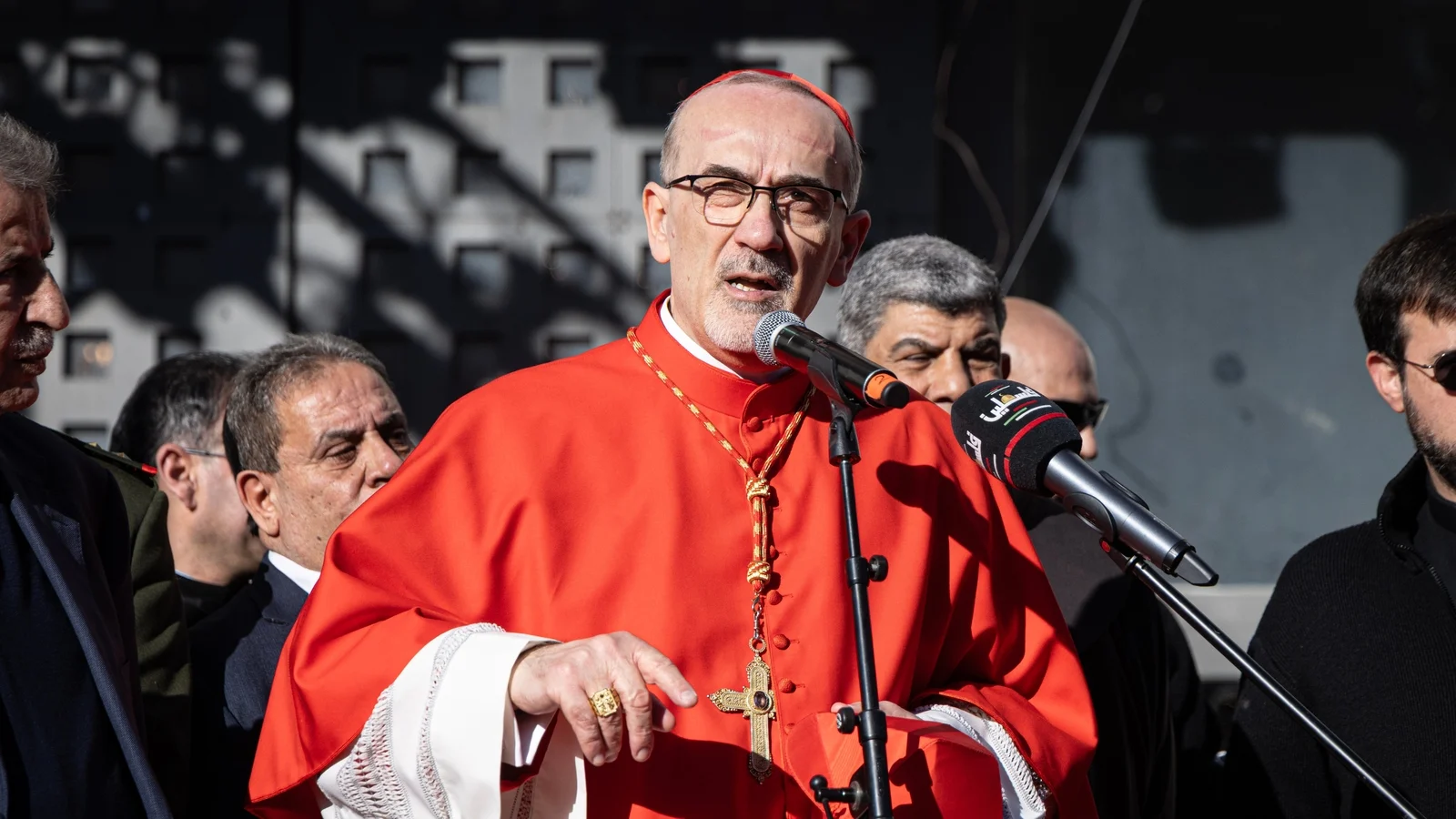
Cardinal Pierbattista Pizzaballa, the Latin Patriarch of Jerusalem, and Friar Francesco Ielpo were prevented from entering the Church of the Holy Sepulchre to celebrate the Palm Sunday Mass — “for the first time in centuries,” the Patriarchate said — after Israeli police said they were acting out of concern for safety amid an escalation linked to Iran. The brief, sharp announcement rippled beyond the Old City, igniting diplomatic rebukes and aching questions about access to sacred spaces.
The Holy Sepulchre: a building that holds the prayers of millennia
The Church of the Holy Sepulchre sits at the crossroads of history and devotion: a labyrinth of chapels, the massive wooden doors that have swung open for pilgrims for generations, and the stone believed by many to mark Golgotha. During Holy Week, it normally swells with worshippers from across the globe — Roman Catholics, Orthodox Christians, and pilgrims of many stripes adding their footsteps and prayers to the chorus.
“We told the police the Mass would be private, behind closed doors,” Farid Jubran, a spokesperson for the Patriarchate, said. “But still they insisted on acting this way.”
The Israeli government, and Prime Minister Benjamin Netanyahu personally on social media, insisted there was “no malicious intent”, framing the decision as precautionary. “Out of special concern for his safety, Jerusalem police prevented the Latin Patriarch Cardinal Pizzaballa from holding mass this morning at the Church of the Holy Sepulchre,” Mr. Netanyahu wrote, adding that “there was no malicious intent whatsoever, only concern for his safety and that of his party.”
Security or Selective Access? The contradiction on the ground
Police explained that the Old City and its holy sites had been closed to worshippers where there are no adequate bomb shelters and where emergency vehicles would face physical constraints. “The Old City and the holy sites constitute a complex area that does not allow access for large emergency and rescue vehicles,” they said, citing real concerns about response capabilities in the event of a mass-casualty incident.
Yet residents and religious officials said enforcement has been uneven. They point to moments earlier in the week when Muslim Waqf preachers accessed Al-Aqsa during Ramadan and cleaners were allowed to tend to the Western Wall ahead of Passover. Franciscan friars and worshippers were also permitted into another Old City shrine a short walk from the Holy Sepulchre to mark Palm Sunday.
“It felt like a patchwork,” said Amal, who runs a tiny cafè off the murky alleys of the Christian Quarter. “Some doors were open, some shut. Our hearts were closed even when the stones were open.”
Local color: alleyways, incense, and the sense of living history
Walk the lanes of the Old City and you understand why access matters. Vendors sell bundles of olive branches, the air mixes the frying of falafel with the hush of confessional candles, and the Franciscan friars move with a solemnity that seems to slow time. The restrictions stripped this texture of its usual rhythm — for worshippers, for vendors, for the city itself.
“Palm Sunday is the start of Holy Week,” a guide named Yossi told me, eyes lingering on the worn steps. “For many it’s the most important week of the year. To block that is to touch something almost elemental.”
Echoes from Rome and Paris: diplomatic unease becomes public
The incident did not remain local. Italy’s prime minister, Giorgia Meloni, called the move an offence not only to believers but to any community that upholds religious freedom. Italy’s foreign minister said he would summon Israel’s ambassador. France’s president Emmanuel Macron went further, saying the decision “adds to the worrying increase in violations of the status of the Holy Places in Jerusalem.”
Such statements land on a delicate web of international agreements and traditions — the so-called “Status Quo” that has governed many Christian and holy places in Jerusalem since the Ottoman era and which the global community watches closely.
Voices on both sides
“We are balancing security with fundamental freedoms,” said one Israeli official who declined to be named. “It is painful but often necessary.”
A Palestinian schoolteacher, Lina, pressed the point of human impact. “I have seen generations come and kneel here,” she said. “Our rituals are stitched into these stones. When access is limited, we feel erased for a while.”
At St Peter’s Square: a pope’s words—on war, prayer, and conscience
Across the Mediterranean, the pope used his Palm Sunday homily to deliver a moral warning about the spiritual cost of war, telling those gathered that God rejects the prayers of leaders who wage wars with “hands full of blood.” Speaking before tens of thousands in St Peter’s Square, he insisted that the figure of Jesus is a symbol of peace, not a cloak for violence.
“This is our God: Jesus, King of Peace, who rejects war, whom no one can use to justify war,” the pontiff said, reminding a global Catholic community — roughly 1.3 to 1.4 billion faithful worldwide — of the moral stakes of contemporary conflicts.
His remarks echoed in Jerusalem, where access to holy rites was already a flashpoint for international criticism and for those who see the policing of sacred spaces as a sign of deeper fractures.
Why this matters beyond one morning
This episode is not just about a Mass denied or a police decision; it is a prism through which broader questions are visible: How do states protect citizens while preserving religious freedom? How should ancient agreements be honoured amid modern threats? When security is invoked, who judges its application and who bears the cost?
The optics are powerful. When a beloved religious leader is turned away from a site that pilgrims have revered for centuries, the act reads like something more than bureaucracy — it becomes a symbol. And symbols matter in Jerusalem.
“We cannot let fear rewrite rites,” said a local historian. “Every closure is a kind of amputation from the city’s living memory.”
Questions for the reader
What balance would you accept between safety and access? Is there a way to preserve both without making worship a casualty of geopolitics? And what does it say about our world when ancient places of refuge become chess pieces of contemporary conflict?
These are not easy questions. They are the kind that run like a thread through holy weeks, conflict zones, diplomatic cables, and dinner-table conversations worldwide. Whatever comes next, the stone thresholds of Jerusalem will continue to carry echoes — of prayer, of protest, and of a human longing that outlasts the momentary shutdown of a door.