Free buses, dimmed lights and shorter showers: how a distant conflict is reshaping daily life
On a chilly Melbourne morning at Footscray station, commuters moved through the foyer with the unusual buoyancy of people who suddenly don’t have to calculate a petrol budget. There was a ripple of private relief—soft smiles, the deliberate extra step onto a crowded tram—small acts of ease in a world where the cost of getting from A to B feels suddenly political.
The state of Victoria announced, via a brisk social media post, that public transport would be made free from tomorrow. “It is a temporary measure to take pressure off the pump and ease the cost of living for Victorians right now,” Premier Jacinta Allan wrote, acknowledging the limits of the policy while insisting on its immediacy. The scheme is set to run initially until the end of April.
“It won’t solve every problem, but it is an immediate step I can take to help Victorians right now,” Allan added—words that landed on social media and breakfast tables with equal force.
For the commuter who usually spends between $40 and $80 a week filling a tank and feeding meters, the gesture matters. “I usually spend about $50 a week on petrol,” said Maya Collins, a barista who lives in Sunshine and commutes into the city. “Tomorrow I can save that and maybe get a week’s worth of groceries we usually have to skimp on.” Her voice had the practical gratitude of someone for whom policy filters directly into the contents of the fridge.
Small policy shifts, big social ripples
Victoria’s move is among a spate of short-term, sometimes improvised, measures governments are adopting as fuel markets tighten in response to the conflict involving Iran. Some are imaginative. Some are austere. And some are raw reflections of the fragility of today’s global energy web.
Across the Tasman, Tasmania has reportedly joined the fare-free experiment for an extended period, a nod to the idea that public transport subsidies are not only social policy but also emergency relief when pumps spike and household budgets shrink.
How other governments are saving fuel—and reshaping daily life
From Cairo to Seoul, policy ideas are being traded like quick fixes—and citizens are adapting in real time. Here are some of the measures now in place, each one a small mirror of a broader dilemma: how to keep economies moving while energy becomes scarce and costly.
- Egypt has imposed a 9pm closure on shops, restaurants and malls, dimmed streetlights and cut roadside advertising to preserve fuel and electricity. Officials say the country’s monthly energy bill has swollen from about $560 million to $1.65 billion since the conflict caused price shocks.
- Thailand has urged civil servants to swap long-sleeved suits for short shirts and to use stairs instead of elevators, after previously experimenting with fuel price caps that were later rolled back. Fuel prices reportedly jumped around 22% after the policy reversal.
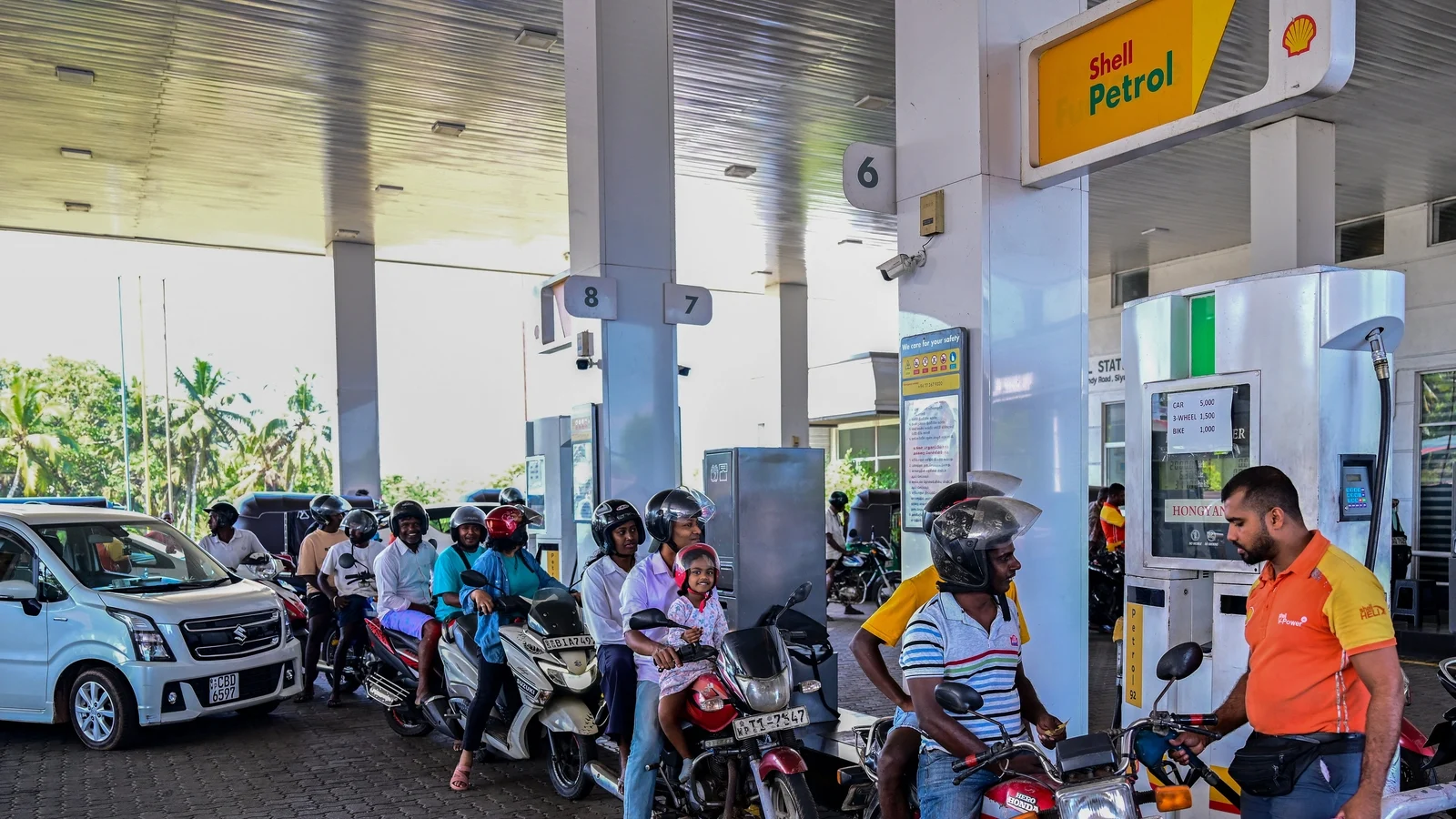
- Sri Lanka declared Wednesday a public holiday for the public sector—effectively creating a four-day working week for state institutions, while pushing civil servants to work from home where possible.
- South Korea is nudging citizens toward shorter showers and scheduled charging for phones and electric vehicles, and plans to restart five nuclear reactors by May while keeping some coal plants online longer than planned.
- Myanmar moved to an “even-odd” driving policy to restrict private cars on alternate days, turning license plates into calendars and congestion into a new kind of civic arithmetic.
- The Philippines declared a “national energy emergency” on 24 March, pairing work-week reductions and fuel subsidies with controversial decisions like temporarily lifting bans on certain fuels and negotiating new oil imports.
Scenes from the frontlines of adaptation
In Cairo’s narrow commercial streets, shopkeepers sweep doorways at dusk and close earlier than they used to. “The lights used to be on until midnight,” said Hassan, who runs a small grocery near Tahrir. “Now we close at nine because we must, not because we want to.” He paused, then added, “We save on the electricity bill, but the customers disappear sooner, and so does our income.”
In Seoul, a 28-year-old software developer named Ji-won described a culture shift: “At work, everyone jokes about who is taking the shortest shower. It’s weird to have so many aspects of your private life guided by national policy, but here we are.”
Even among policy wonks, the mood is pragmatic rather than celebratory. “These measures are triage,” said Dr. Amir Rezaei, an energy economist I spoke with over the phone. “They buy time. They redistribute pain. But without coordinated international action—to stabilize supply, diversify sources and accelerate renewables—we’re cycling through short-term fixes.”
What do these quick fixes reveal?
They reveal inequality, adaptation and the tension between emergency and long-term planning.
Consider the paradox: a bus that becomes free for a month is a direct benefit for lower-income riders, but it does little for rural families who rely on cars and have no viable transit alternative. A ban on night-time shopping in Egypt saves fuel and electricity, but it also cuts income for late-night hospitality workers. Even something as simple as asking officials to wear short sleeves in Thailand underscores the limits of demand management when supply is the real bottleneck.
These are not merely logistics; they are ethics. Who gets protection when petrol becomes scarce? Who bears the burden of sacrifice? Who benefits when a price shock hits a globalized market?
Beyond the emergency: lessons and questions
There are hard lessons here for urban design and energy policy. Cities that offer dense, reliable public transport and walkable neighborhoods are more resilient when fossil-fuel prices spike. Countries that invest in diverse energy mixes—renewables, storage, smarter grids—have more room to maneuver. But those investments take time, money and political will.
As you read this, ask yourself: what would make your city more resilient? Would you ride public transport more if it were cheaper? Could your workplace adopt a shorter week without losing productivity? These are not hypothetical for many people—they are the conversations happening now in town halls and kitchen tables across continents.
At the end of the day, emergency measures are human stories. They are commuters saving $50 a week, bakers closing early, office workers debating shower lengths. They are also policy experiments—sometimes clumsy, sometimes creative—that reveal what we value and how well-prepared we are when global systems wobble.
For now, Victorians will climb onto free trams and buses and count the small relief. Elsewhere, people will tighten belts, dim lights, and reconsider the rhythms of daily life. The question that lingers is not only how long these measures will last, but how many of them we will choose to keep as we build a more resilient future.