When a President Says “Soon”: Confusion, Courage and the Cost of Uncertainty
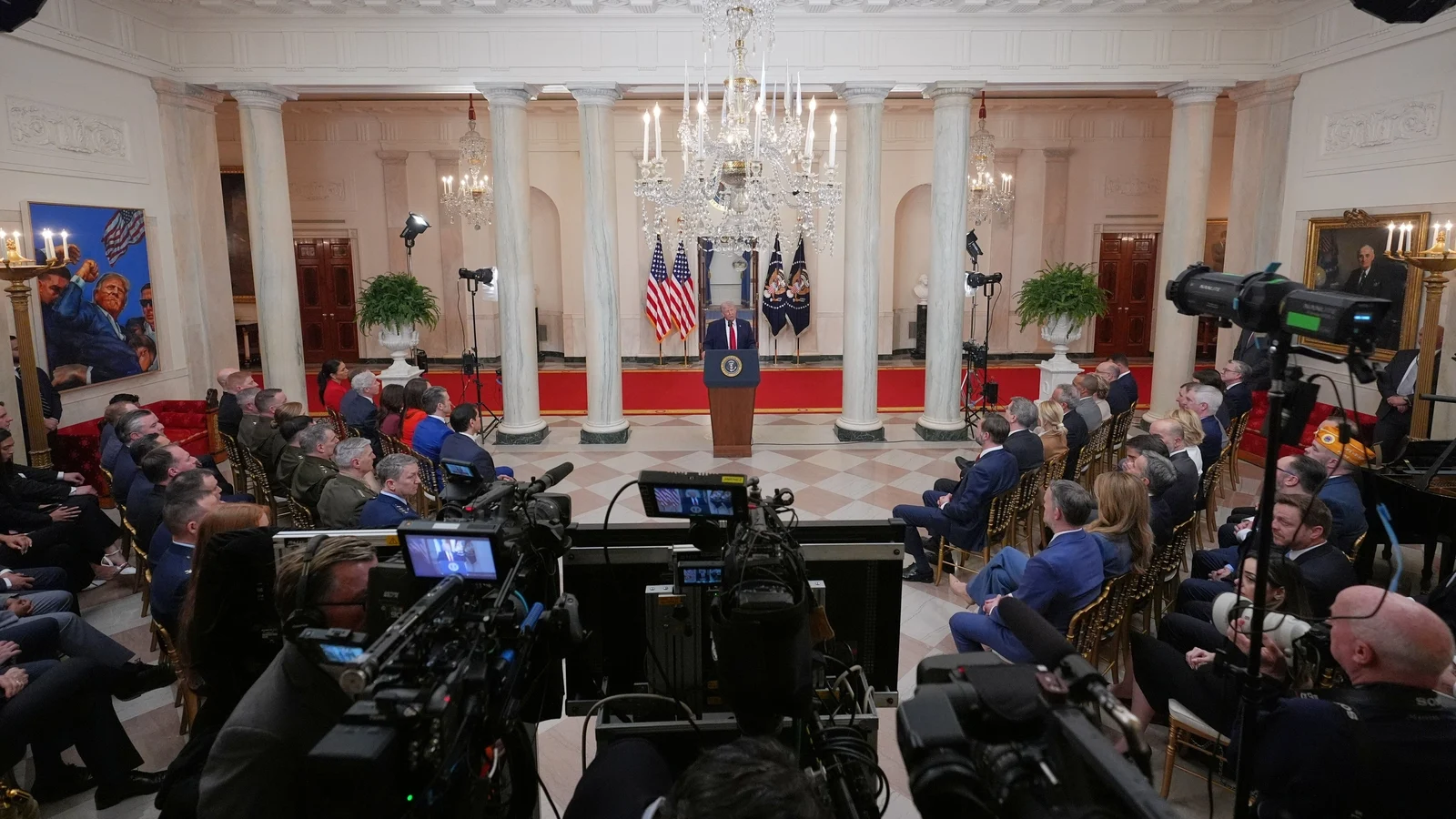
On a cool evening that felt ordinary in strip malls and living rooms across America, millions of people leaned forward to watch a president try to close a chapter he himself had opened.
It was a short address—barely 20 minutes—but in those minutes the air felt heavy with contradiction. The speech stitched together triumphal headlines and thinly veiled threats, comfort and warning, all wrapped in a cadence that has become familiar to many voters. “We are on track to complete all of America’s military objectives shortly,” the president told viewers. “Over the next two to three weeks, we are going to bring them back to the Stone Ages.”
For a public already weary of geopolitical uncertainty, those lines landed like a question mark you couldn’t quite erase. What did “shortly” mean? Which objectives? And who, in the middle of escalating rhetoric and real-world damage, was keeping the score?
The Patchwork of Messages
The past weeks have been a study in inconsistent signals. Administration officials, aides and the president himself have offered varying explanations for why the operation began on Feb. 28 and what endgame they hope to reach. One minute, Americans heard that decisive action had been taken to neutralize a clear threat. The next, they heard that negotiations remained possible—if Tehran bowed to American terms.
“That kind of wobble isn’t just political theater,” said Laura Mendes, a foreign policy analyst in Washington who has tracked presidential communications for a decade. “It affects how allies coordinate, how markets react, and how everyday people—parents, truckers, nurses—plan their weeks.”
And the markets are listening. Gasoline prices, a blunt instrument of geopolitical anxiety, crept above $4 a gallon this week—an average many Americans recognize as a psychological threshold—according to industry trackers. For households that budgeted tightly, that number is not an abstraction. It’s real money leaving grocery budgets and weekend plans.
A Diner, a Gas Station, a Living Room
In a diner outside Cleveland, I spoke with Marsha, a school bus driver whose notices about gas costs have become a running lament. “We cut coupons, we skip coffee runs,” she said, stirring sugar into her tea. “When they tell us the war will end in weeks, I want to believe it. But I’ve learned the word ‘soon’ can mean a lot of things.”
At a corner station in Des Moines, Ahmed, a cashier, shrugged and counted change. “Every time the news gets loud it gets slow here,” he said. “People fill jerry cans, talk about stockpiling. That’s not heroic—it’s panic.”
Threats and Restraint, Side by Side
The presidential address doubled down on a striking posture: a proclamation of restraint—“we have not hit their oil even though that’s the easiest target of all”—paired with explicit warnings about hitting Iran’s energy grid “very hard and probably simultaneously.” The message was clear: negotiations are on the table. So are crippling attacks.
Such duality is more than rhetorical. Military planners call it “bounded coercion”—the attempt to compel a rival to act without crossing a self-imposed red line that could lead to uncontrolled escalation. But bounded coercion is a risky business. Misjudged, it can be read as weakness. Too forceful, and it risks spiraling into prolonged conflict.
“Decisions about infrastructure targets are strategic and symbolic,” said Col. Ahmed Ruiz (ret.), who served in the region. “Take out power grids and you degrade the enemy’s capacity and morale. But you also create humanitarian crises and galvanize opponents. It’s not a tidy ledger.”
Politics, Polls and the Pressure of an Election Cycle
There’s a domestic subplot to the drama. Republican leaders are watching anxiously as consumers feel pressure at the pump. That discomfort eats into political narratives built on tax cuts and economic momentum. “Energy prices are a political thermometer,” a GOP strategist in New York told me. “When the mercury rises, so does voter anxiety.”
The president himself connected the two in his remarks, framing military action as a necessary complement to recent tax legislation that he said was returning money to ordinary Americans. Whether that framing resonates is another matter. Voters tend to care about both security and pocketbook issues—often at the same time.
On the Ground: Soldiers, Families, and a Nation Waiting
Thousands of U.S. troops have been repositioned across the Middle East, and their presence is a constant reminder that decisions made in the Oval Office play out in barracks and bases thousands of miles away. Families of service members describe a surreal mix of pride and dread.
“He called it a mission of necessity,” said James Whitaker, whose son is stationed overseas. “We’re proud, but we’re exhausted from not knowing when this will end.”
Uncertainty—more than any tweet or press conference—changes people’s routines. Schools plan for absences, employers juggle shifts, and communities brace for the possible ripple effects of a widening conflict: rising oil prices, strained supply chains, and a spike in refugees and humanitarian needs should violence escalate.
What Comes Next? Questions to Weigh
When a leader promises the conflict will “finish very fast,” journalists and citizens alike are right to press for clarity. A credible exit strategy answers three basic questions: what are the objectives, how will success be measured, and what is the mechanism for withdrawal or de-escalation? Vague timelines do not satisfy those demands.
- What specific military objectives does the administration consider fulfilled?
- How will civilian harm be minimized if infrastructure is targeted?
- Who will hold the negotiating table for both sides, and what are the red lines?
“Exit strategies have to be more than slogans,” Mendes said. “They require concrete steps, benchmarks, and, crucially, international buy-in.”
Beyond the Soundbites: A Global Moment
There is a global dimension to this conversation. Allies watch for signs that Washington is leading coherently; adversaries search for openings. Global markets price in risk. Humanitarian organizations prepare for downstream needs. And ordinary people—wherever they live—calculate how their daily lives will be affected.
In the discomfort of that waiting room, two truths stand out. First, words from a podium can shape realities in neighborhoods and markets far from the capital. Second, clarity matters. A nation that asks its people to bear the burdens of military action owes them not platitudes but a clear account of aims and a credible plan to achieve them.
So where do we go from here? Will “very shortly” become an exit, or an interlude? The next weeks will tell. For now, millions are tuning in, filling tanks, and standing by—hoping that this time, “soon” will mean an actual end.