Easter at Sea: Bodies, Survivors and the Quiet Harbor of Lampedusa
The ferry from Lampedusa cut through a pewter morning as if to reach a truth the world often prefers to avoid: that the sea, for many, is not a highway of hope but a ledger of loss.
On Easter weekend, two merchant vessels patrolling off Italy’s southern coast pulled 32 people from the water and recovered two bodies, according to Mediterranean rescue charities. The survivors — shaken, salt-crusted, and speaking through interpreters — told rescuers their boat had left Libya with 105 people aboard. Seventy-one, they said, never made it.
“We had barely left the sand when waves turned us over,” one survivor recounted later, his voice hollow and even. “I held a child for hours. I couldn’t feel my hands.”
An Island That Sees Everything
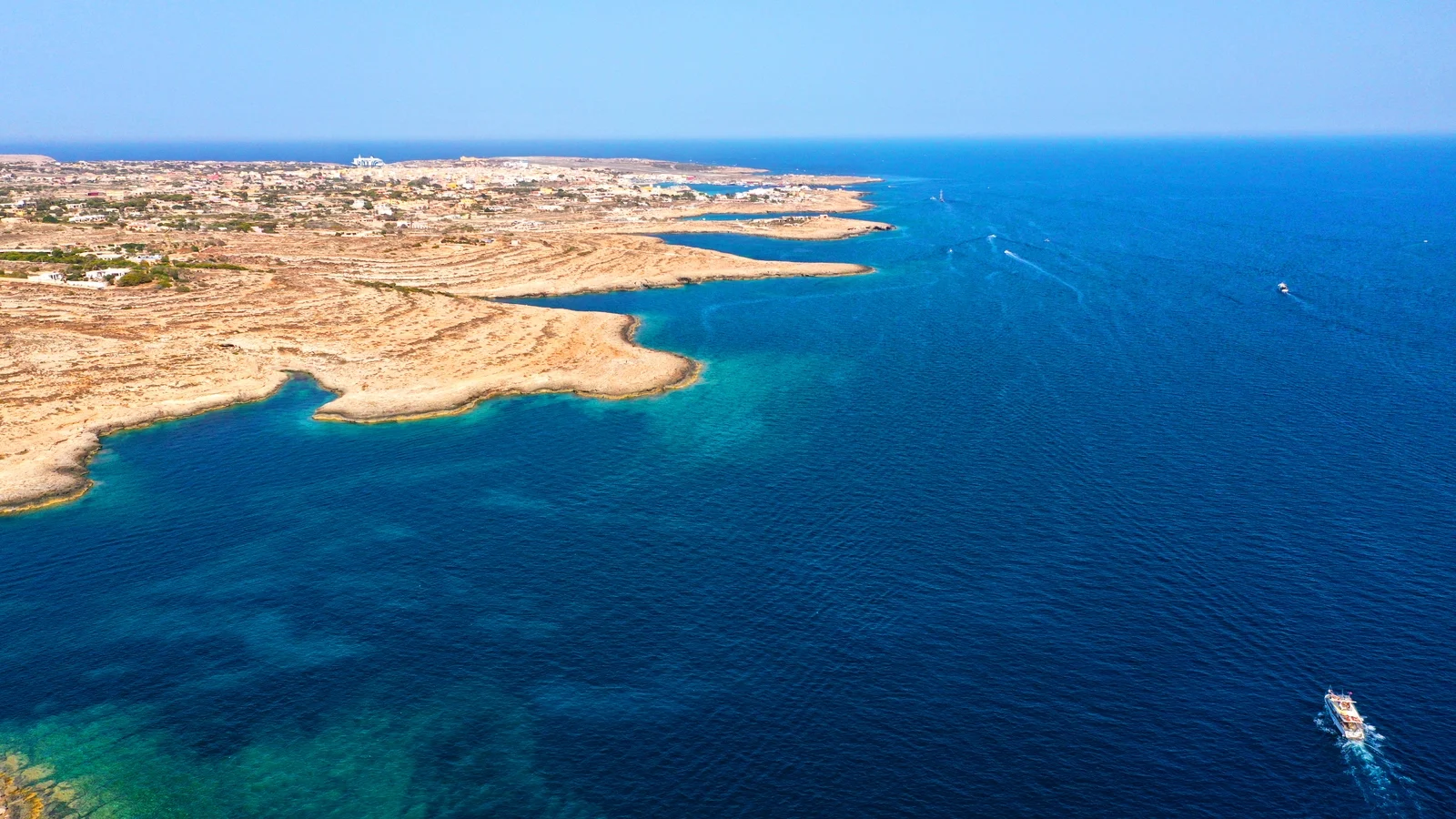
Lampedusa is small enough that you can cross it in under an hour, but broad enough to contain two conflicting seasons: a tourist drizzle of sun and a steady, grim procession of arrivals. Fishermen mend nets at dawn. Church bells still ring on holidays. Then, in the late mornings and late nights, coast guard boats arrive — not with cruise passengers, but with people who have been stripped down to the fundamentals of life.
On this Easter, community volunteers wrapped survivors in thermal blankets and offered hot tea while doctors checked for hypothermia, dehydration, and shock. “We know the faces of rescue,” said a local aid worker who asked not to be named. “We also know the faces of loss. They do not get easier.”
The Numbers, and the Silence
Mediterranea Saving Humans and Sea-Watch, two NGOs that monitor rescues and maritime distress, confirmed the recoveries and the rescues. They also shared a short, harrowing video: an orange inflatable capsized like a dead beetle, a half-dozen people clinging to its underside in a scene that could be from a war film if it weren’t painfully ordinary.
Italy’s interior ministry declined to comment on the account, and the Italian Coast Guard did not immediately respond to outside requests for detail. Such pauses are not uncommon in crises that sit at the intersection of diplomacy, migration policy and public sentiment.
Still, the International Organization for Migration (IOM) has been blunt: the central Mediterranean has seen one of its deadliest years in recent memory, with at least 683 people estimated to have died so far in the region. That figure — stark, anonymous, cumulative — is an index of a problem that stretches from conflict zones in Africa and the Middle East to reception centers in Europe, and the dangerous business of crossing between.
Voices From the Water and the Shore
“We came because there was no other way,” said another survivor, a woman whose name rescue workers asked to withhold. “We left children behind. We thought Europe would keep us alive.”
A fisherman in Lampedusa, who has spent four decades reading the sea’s moods, stood with salt on his boots and said: “The sea remembers everything. We try to save as many as we can. But sometimes it is not the sea that kills; it is the desperation that pushes people onto a boat like that.”
An academic who studies migration patterns called the incident a “tragic emblem” of larger failures. “Smuggling networks, political stalemates, and increasingly volatile weather patterns combine to make this route extraordinarily perilous,” she said. “When crossings spike in dangerous conditions, the death toll follows.”
Storms, Smugglers and the Geography of Risk
Bad weather has battered the Mediterranean this year, constraining departures from North African shores but also making any voyage that does begin far more hazardous. Overloaded rubber dinghies, unseaworthy wooden skiffs, and the seasonal swell are a lethal mix.
Human smugglers exploit every gap — in law enforcement, in compassion, in the calendars of EU policymaking. They charge high fees, disassemble families into numbers, and sell hope on the cheap. When a boat capizes, what was freight becomes people: men, women, children. They are counted later, and too often, not all of them are counted at all.
What the Numbers Hide
Data can feel clinical. “At least 683 dead in the central Mediterranean” is a number meant to point to scale. But each figure represents a small universe. The 32 rescued are mothers, brothers, sons. The two bodies recovered are someone’s husband and someone’s friend. The 71 missing are sparking ripple effects across neighborhoods and villages far from the blue horizon.
- 32 survivors rescued and taken to Lampedusa
- 2 bodies recovered and transferred to Italian coast guard
- 105 passengers reported aboard the vessel when it left Libya
- 71 people reported missing or presumed lost at sea
- IOM estimate: at least 683 deaths in central Mediterranean this year
Between Policy and Humanity
Every season, the same questions return: How do we stop the boats? How do we save those aboard them? How do we prevent the cycle of migration and tragedy without criminalizing those who are trying to survive? Answers are partial and political, and they vary across capitals.
“We cannot outsource our conscience to naval doctrine or to statistics,” said a volunteer medic from an NGO. “This is not just a migration problem. It is a governance problem and a humanitarian emergency.”
For residents of Lampedusa, the proximity to the sea is a double-edged sword. Tourism brings money; arrivals bring moral reckoning. Café owners serve espresso to both sunburned holidaymakers and hyperventilated refugees. Children play where rescuers tarp body bags some days and beach umbrellas other days. This is an island that lives in a tightrope’s shadow.
What Can Be Done?
It is tempting to despair. It is also possible to act: through policy, through aid, through public pressure. Experts suggest a mix of safer legal routes, enhanced search-and-rescue coordination, regional diplomacy to stabilize departure points, and stronger measures to dismantle smuggling rings.
But beyond policy, there is the human question: how much of someone else’s suffering are we willing to make invisible? How far do we allow geography to define personhood?
Ask yourself: if a child from your town was on that orange boat, how would you want the world to respond?
Closing, and a Call to Remember
On Lampedusa’s quay, people fold into rhythm: a kiss, a pat on the back, a quiet prayer. The sea keeps its secrets, but the island does not let them go. For every headline, there are countless private funerals and unspoken debts.
As the survivors disembarked, wrapped in blankets and escorted to medical tents, the line between celebration and mourning felt thin — much as it does in many places across the world, where holidays and tragedies coexist within the same breath.
We will read more such stories, unless the architecture of global response changes. That change requires more than statistics and statements. It asks for policy, for compassion, and for a refusal to let these lives be reduced to numbers. If you feel moved, consider learning more about Mediterranean rescue efforts and the organizations on the ground. Listen to the survivors. Share their stories. Ask your representatives what they are doing to prevent the next crossing from becoming the next headline.