When Humankind Stretched a Little Further
There are moments that feel like they belong to everyone at once: a sudden hush, a collective intake of breath, the soft fizz of radio static turning into words that stitch thousands of miles into something intimate. Late on April 7, 2026, that hush happened again. Four people aboard a silver capsule called Orion—Commander Reid Wiseman, pilot Victor Glover, mission specialists Christina Koch and Colonel Jeremy Hansen—cut a new furrow through human history by traveling farther from Earth than any human beings in half a century.
For a few hours they were not simply astronauts on a mission log; they were an urgent, live reminder that exploration still changes the way we understand ourselves. When Houston’s Mission Control re-established radio contact after about a 40-minute blackout behind the Moon, Christina Koch’s first words carried more than relief: “It is so great to hear from Earth again.”
Breaking the Record—and What It Feels Like
The headline is simple: Artemis II surpassed the distance record set by Apollo 13 in 1970. The new milestone—roughly 406,778 kilometres from Earth, some 6,606 km farther than the Apollo-era benchmark—was not just a number on a telemetry screen. It was a line in a story that stretches from the first footprints at Tranquility Base to the next generation of missions that will linger in lunar orbit, build new outposts and perhaps, one day, host long-term settlers.
“We will always choose Earth, we will always choose each other,” Koch said, a small ceremony of solidarity framed by the black infinity beyond the capsule windows. Colonel Jeremy Hansen, representing Canada aboard the mission, put it another way: “This moment is to challenge this generation and the next, to make sure this record is not long-lived.”
The Blackout: Alone Behind the Moon
Passing behind the Moon temporarily severs line-of-sight communications with Earth. In practical terms it was a roughly 40-minute blackout—time measured by computers but felt by humans as an almost tangible solitude. “It’s a weird kind of quiet,” a flight director at Mission Control later said. “Not silence so much as the sound of people listening harder to one another.”
In that silence, crew and capsule became both fragile and fiercely human. The Orion was on a free-return trajectory—an elegant, passive arc that uses lunar gravity to swing the spacecraft around and send it home, an old but reliable trick of orbital mechanics. With the Moon between them and Earth, the crew did what people who understand risk and wonder tend to do: they looked.
The Terminator: Where Night Meets Day on the Moon
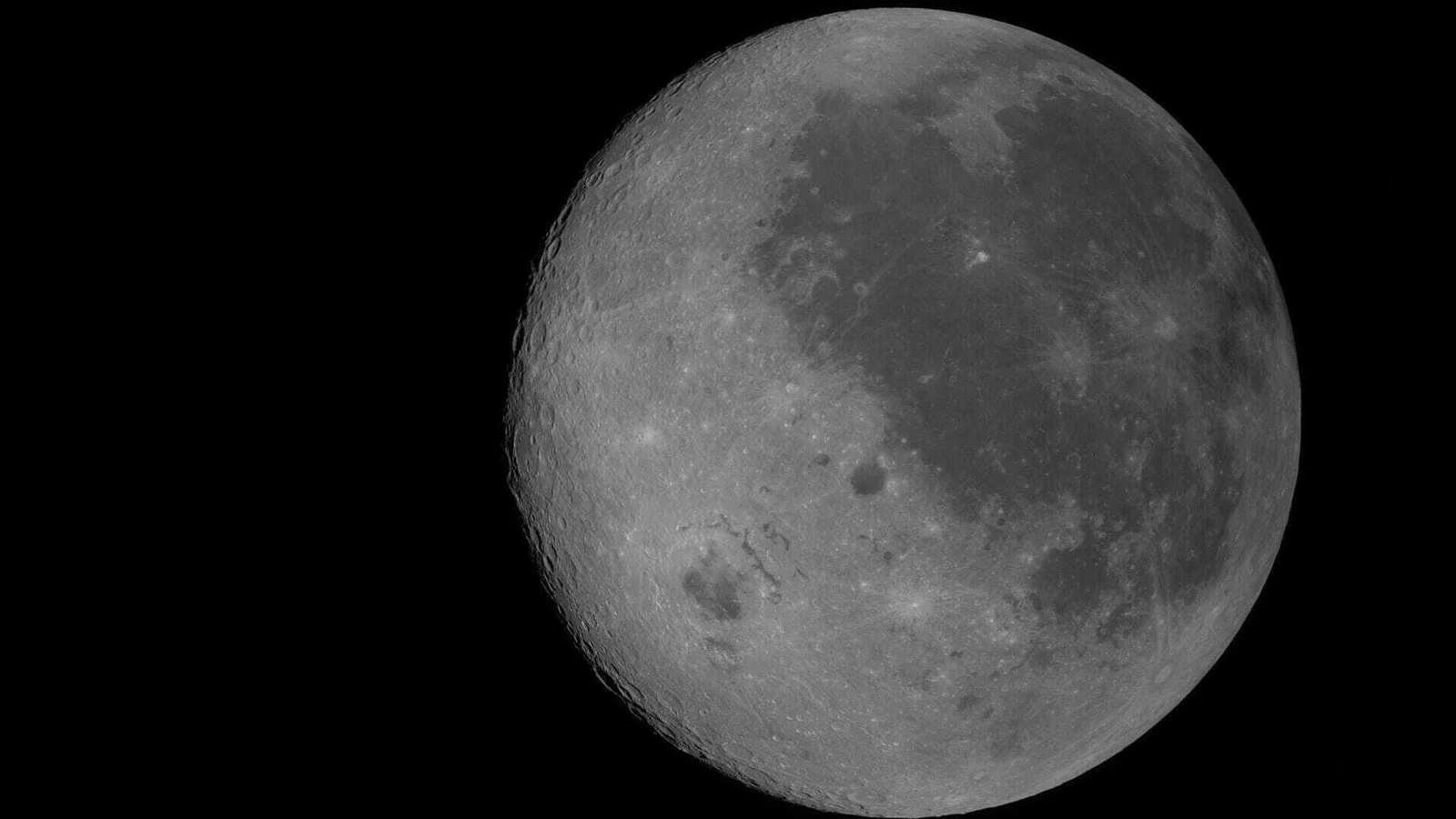
Victor Glover’s voice, crackling through speakers, painted a lunar landscape with the urgency of a poet and the specificity of an engineer. He described the terminator—the ragged edge where lunar night becomes day—as “the most rugged that I’ve seen it from a lighting perspective.” Kelsey Young, lead scientist for the Artemis II observations, responded aloud in Mission Control: “You just really brought us along with you.”
There’s a reason scientists yearn for human eyes and human descriptions. Robotic cameras can map craters in excruciating detail, but a person in a window transmits scale, texture and the movement of light over time. “Those little pinprick highlights in the craters? They aren’t just bright pixels,” Koch said. “They’re like a lampshade with tiny holes, letting light through.” It’s a description that made engineers smile and poets nod.
Names on a Blank Canvas
Exploration is also an act of memory. Moments after breaking the distance record, the crew suggested naming two previously unnamed lunar craters. One would honor their ship’s nickname—Integrity—and another, more personal and tender, would be named Carroll, after Commander Wiseman’s late wife.
“It’s a bright spot on the Moon,” Colonel Hansen said, his voice thick. “And we would like to call it Carroll.” The embrace that followed, shared among four individuals traveling farther from home than any humans before them, felt like a small, private rite made public by radio waves.
NASA will submit these proposals to the International Astronomical Union, which governs the formal naming of celestial features. Whether or not the IAU approves, the gesture itself—fitful, human and immediate—marks how spaceflight stitches human stories onto the planetary canvas.
Firsts and Faces
Artemis II is heavy with symbolism as much as with instruments. Victor Glover is the first person of color to fly around the Moon; Christina Koch the first woman to do so; Jeremy Hansen is the first non-American crew member to make the lunar flyby. Those “firsts” matter. They break the stale template of who belongs at the frontiers of knowledge.
“We’re trying to open the story of space to more people,” an international space policy analyst said. “It’s not just about who can go; it’s about who gets to be seen going.”
Why This Moment Matters to You
Is it merely a stunt? A PR milestone? Look closer. Artemis II is a rehearsal for systems, a test of international partnerships and a deep breath before longer stays on the Moon. The free-return trajectory, the careful observation of the terminator, the emotional labor of naming—each is a stitch in the broader tapestry of a program that aims to return humans to the surface, build lunar infrastructure and use the Moon as a springboard to Mars.
Consider these facts:
- Artemis II is the first crewed lunar flyby in more than 50 years.
- The mission reached about 406,778 km from Earth, surpassing Apollo 13’s record from 1970 by roughly 6,606 km.
- The Orion capsule is on a free-return trajectory that will bring the crew home in about four days.
Beyond the figures, there is a second-order effect: seeing Earth from beyond its thin atmosphere changes how people think about planetary stewardship. Lookouts and astronauts alike speak about “the overview effect”—a shift in perspective that emphasizes our shared fate on a small, fragile planet. When the crew spoke of choosing Earth and choosing each other, that’s the echo of that same insight.
What We Take Back Down
When Orion swings back toward home and re-enters the thin, noisy envelope of Earth’s radio chatter, it will bring more than data. It will carry stories, images, and a renewed argument for exploration that includes grief and joy, precision and poetry. It will remind the world that human beings still look up and, sometimes, go farther than before—partly to prove we can, partly to honor those we have loved, and partly to see our own blue planet with fresh, reverent eyes.
So let me ask you, the reader: when you imagine standing at the rim of a lunar crater named for a person you love, does it feel distant or strangely near? How do you think history should remember this generation of explorers? The answers—personal, shared, contested—are already in motion, like radio waves threading the dark between two worlds.