After the Fireball: A Fragile Ceasefire, a Region on Edge
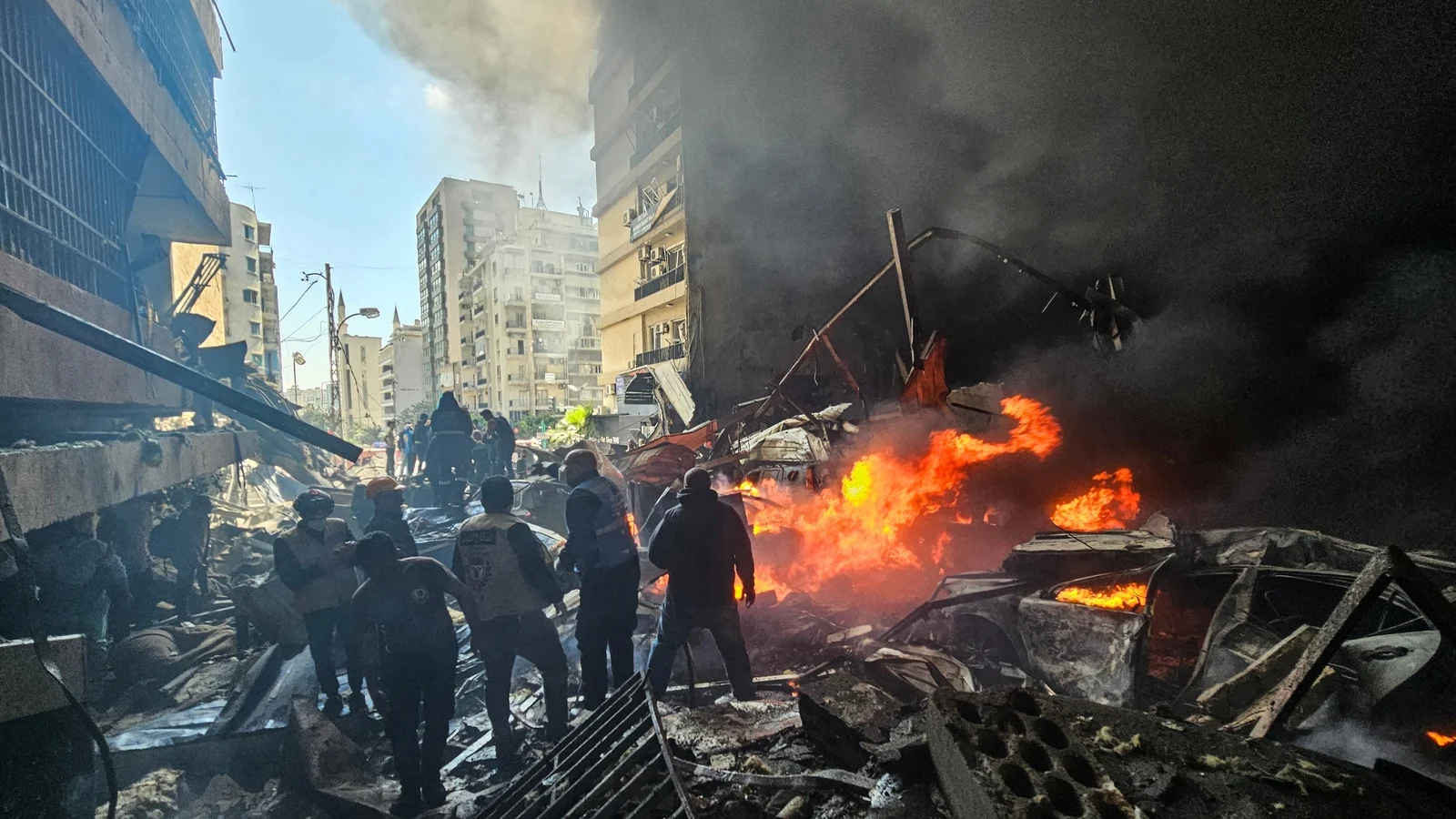
It began, as so many days in this terrible stretch of months have begun, with light. A flash over the low-rise district of Abbasiyeh in Tyre, a column of smoke that clawed at the sky, and then the hollow ache of a city counting the cost of another strike.
By the time the sun fully rose, Lebanon’s civil defence had tallied 254 dead across the country; Beirut alone bore the heaviest burden, with 91 lives lost, according to officials on the ground. Streets that yesterday teemed with vendors, children and the languid commerce of a coastal capital now smelled of dust, petrol and something flinty that comes when glass and concrete meet heat.
What the ceasefire did — and did not — promise
The world had been cautiously awake to the news of a two-week ceasefire negotiated between the United States and Iran, a diplomatic breath that many hoped would pull back a region from the brink. But the fragile peace — if that is what it was — was immediately clouded by competing interpretations.
In Tehran, Iran’s parliament speaker Mohammad Bagher Qalibaf warned that the conditions for diplomacy were already being broken. “In such a situation, a bilateral ceasefire or negotiations were unreasonable,” his office said, pointing to continued Israeli operations and what Iran described as Washington’s insistence that Tehran relinquish nuclear ambitions.
Washington and Tel Aviv, however, drew the lines differently. Both the US and Israel said the ceasefire did not extend to Lebanon, and Israeli Prime Minister Benjamin Netanyahu made plain his readiness to strike again: “We have our finger on the trigger,” he said — a phrase that landed like a challenge in cities still smoldering.
On the ground: warnings, silences, and a human toll
A woman who asked to be called Amal described the moment an airstrike hit a street near her home in Beirut. “There was no orange text on my phone. No message to leave. One moment I was boiling tea, the next the whole building trembled,” she said. “My neighbour lost her husband in the stairwell.”
Rescue workers and medics have repeatedly complained about the difficulty of evacuations during strikes. “In some cases the usual 10-minute warning systems were absent,” said a civil defence volunteer who returned from a night shift with blood on his gloves and exhaustion under his eyes. “People ran into alleys. Children are seeing things no child should ever witness.”
The casualty figures are raw and evolving. This conflict — now more than five weeks old — has cost thousands of lives across multiple countries and uprooted countless families. It has also bent global attention and triggered a cascade of economic and strategic consequences that reach far beyond the Levant.
From Tehran’s streets to oil tankers: the wider fallout
In Tehran, crowds celebrated the perceived diplomatic win. Flags were waved, US and Israeli banners burned, and for a hopeful night there was a collective exhale. Yet among the jubilation was a quiet sense of unease.
“We cheered. But we also know how fragile agreements are,” said one university student marching past the square. “Hope feels like smoke — easy to disperse.”
The conflict’s shockwaves were not limited to human tragedy. Markets wavered, then surged. World stock indices climbed while oil fell sharply — plunging 14 percent at one point and settling near $95 per barrel after dipping to about $90.40. The reason was not simple. Traders reacted to both the promise of a ceasefire and the immediate reality of Iranian strikes that showed Tehran could, if it chose, choke seaborne traffic through the Strait of Hormuz.
Consider the geography: roughly one-fifth of the world’s seaborne oil has historically passed through the Strait of Hormuz. For decades the United States invested heavily in regional military presence to guarantee freedom of navigation. The recent weeks exposed how fragile that control can be when a regional power leverages geography and proxies.
Oil infrastructure beyond Iran also felt the blow. Industry sources reported attacks on a pipeline in Saudi territory — a conduit used to bypass the Hormuz bottleneck — and missile and drone strikes were claimed or reported in Kuwait, Bahrain and the UAE. Meanwhile, the strait remained effectively closed to vessels without permits, sapping commercial confidence and forcing shippers to ask hard questions about the costs of doing business in a war-shaken region.
Words, threats and the theatre of diplomacy
High-stakes diplomacy was slated to resume in Budapest, with the US delegation led by Vice President J.D. Vance. Yet the headlines and the battlefield were not cooperating. Tehran insists its nuclear activities remain within the terms it interprets as acceptable. Washington frames the conversation differently — President Trump publicly said Iran agreed to stop enriching uranium and would hand over existing stockpiles, an assertion Tehran disputes.
And then there were pronouncements that sounded more like campaign speeches than policy: tweets announcing unilateral tariffs — “50% on all goods from any country that supplies arms to Iran,” Mr. Trump wrote — even as analysts questioned the legality and enforceability of such a unilateral move.
“For diplomacy to succeed, there must be mutual confidence, a shared baseline of reality,” said Lara Mendes, a former UN mediator who has worked in the region. “When parties announce victories before verification, or when fighting continues in adjacent theatres, you erode that baseline. The real test of any ceasefire is whether it creates space for daily life to resume — not whether it can be celebrated in sound bites.”
What’s at stake — and what comes next
- Human security: Thousands killed; hundreds displaced; infrastructure damaged and recovery costs unknown.
- Energy security: The Strait of Hormuz disruption underscored the region’s outsized role in global energy markets.
- Nuclear risk: Competing interpretations about enrichment and stockpiles mean the core dispute is unsettled.
- Regional power balance: Non-state proxies, missile ranges and maritime chokepoints have shifted strategic calculations.
Walking through a Beirut neighbourhood, you notice small signs of endurance: a bakery open by dawn, a child kicking a ball beside a shattered shopfront, an elderly man sweeping glass so his neighbour can return home. These are the quotidian acts that make victory or peace meaningful — not treaties signed under duress, not headlines declaring triumph.
So what should we ask ourselves? When the cameras leave and the ceasefire text is tucked away, who will rebuild the hospitals, the homes, the lives? Can a two-week pause in violence be the seed of a durable settlement, or will it simply reorder the terms of another round of fighting? And as global markets breathe easier for now, for how long will the price of peace be counted only in charts?
The answer, as ever, rests with more than generals and presidents. It rests with those who mend roofs, those who teach children under power outages, and those who continue to speak — loudly, stubbornly — for accountability, aid and long-term reconciliation.
For now, the fires have dimmed in places, but the smell of smoke lingers. Whether that scent will give way to rebuilding or to renewed ash depends on whether leaders can turn fragile pauses into durable, tangible safety for the people who have already given so much.