When Words Become Weapons: A Nation on the Brink of a Constitutional Choice
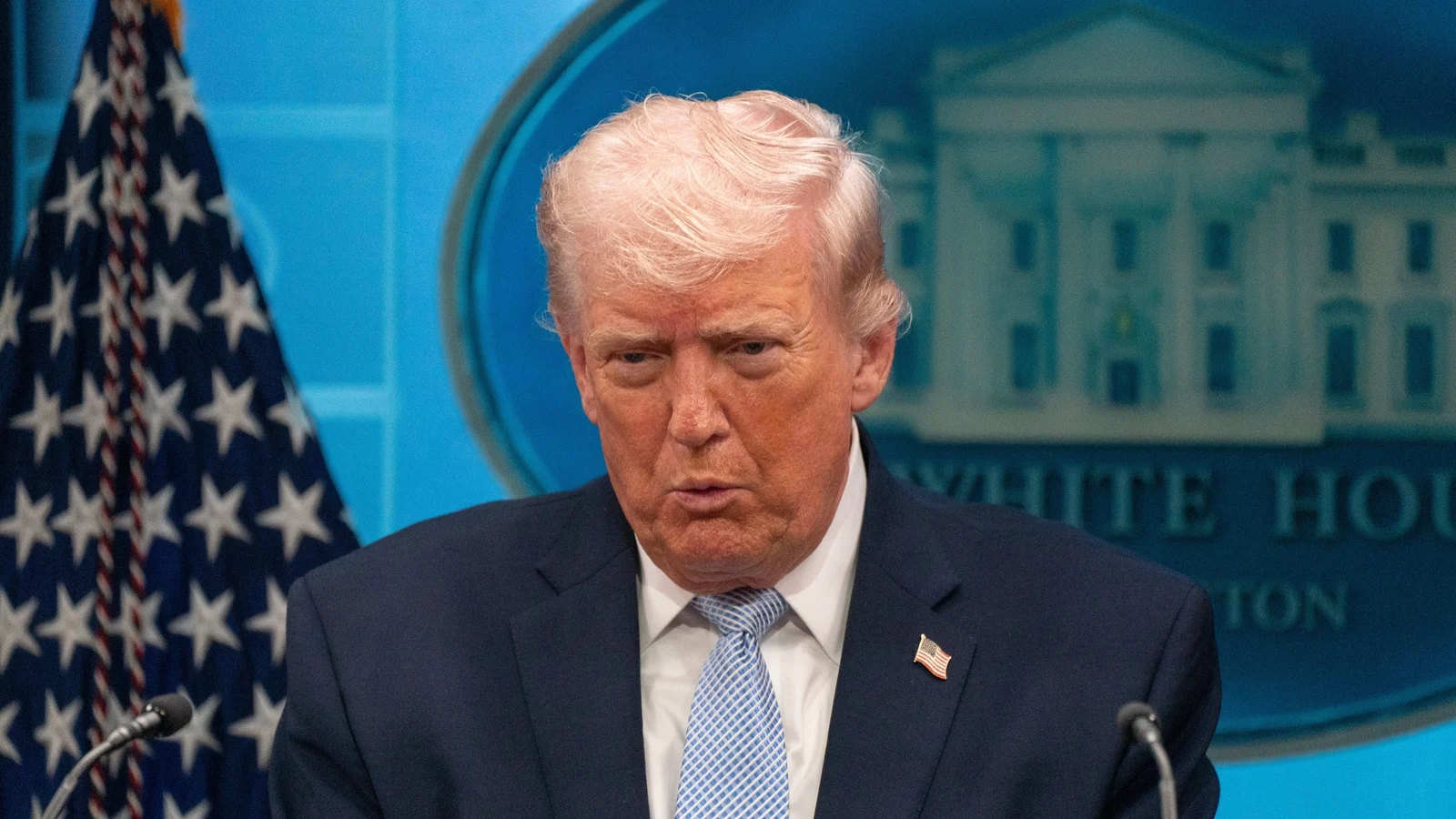
It began, as so many seismic political moments do, with a single line on a smartphone screen. A post on Truth Social — stark, apocalyptic, unmoored from the usual diplomatic preambles — declared that “a whole civilisation will die tonight.” For millions of Americans and observers around the world, the language felt less like bravado and more like a threat: a president telegraphing the possible use of overwhelming force in a way that tore at the threads of restraint and international law.
What followed was not a slow burn but a rush of phones buzzing in congressional offices, coffee shops, and living rooms from Wilmington to Lansing to Washington. According to multiple reports, dozens of congressional offices were flooded with calls and emails; one House member told staff they had never seen that volume of constituent outrage in a single morning. “There was a river of messages,” said a staffer who asked not to be named. “People were frightened, and not in the distant, theatrical way — in the grim, ‘what does this mean for my kids’ way.”
The immediate political reaction exposed fissures that have long been present in American life. Democrats who had been cautious — chastened by failed impeachment efforts, the shock of a 2024 re-election and the loss of congressional majorities — began to harden. Freshman Representative Shri Thanedar pressed the nation’s constitutional mechanisms, urging Vice President J.D. Vance and cabinet members to invoke the 25th Amendment. “You cannot allow a single person’s rhetoric to hold the military’s trigger,” a Michigan voter told me over lunch, stirring her tea with a hand that didn’t quite stop shaking.
The Paths the Constitution Offers — And Their Limits
The U.S. Constitution provides two primary checks for removing an incumbent president: impeachment and the 25th Amendment. Each route is politically and legally fraught.
The 25th Amendment
Section 4 of the 25th Amendment allows the vice president and a majority of cabinet members to declare a president “unable to discharge the powers and duties of his office,” immediately transferring power to the vice president. It sounds, on paper, simple — almost surgical. In practice it requires officials to openly conclude that the president is unfit and to do so at the high political cost of betraying a commander-in-chief they serve.
“The 25th is the emergency exit, but it’s an exit you have to walk out of in front of the whole country,” said a constitutional scholar I spoke to at Georgetown, who asked to remain unnamed to speak candidly. “It presumes a level of consensus among the vice president and cabinet that simply isn’t present in a deeply polarized Washington.”
Impeachment
The other option, impeachment, lives squarely in the public and partisan arena. The House can bring charges, but removal requires a two-thirds vote in the Senate — a high bar, especially when the Republican Party controls both chambers of Congress. Even the rumor of initiation forces a nation again to relive battles of 2019, 2021 and the bruising politics that followed. “We learned a lot,” one senior Democratic aide told me. “Mostly that doing the constitutional thing doesn’t always win you salvation at the ballot box.”
Unlikely Allies, Fractured Leadership
One of the most disorienting elements of the past week has been how voices from across the aisle have at times joined the chorus for restraint. Conservative firebrands and conspiracy theorists — an odd, shrill escort — openly asked: “How do we 25th Amendment his ass?” An ex-congresswoman, known for deep loyalty to the former president, posted in capital letters: “25TH AMENDMENT!!! Not a single bomb has dropped on America. We cannot kill an entire civilization. This is evil and madness.”
Even Senator Ron Johnson, a staunch Trump ally, told a national paper that the president would “lose” him if civilian infrastructure were targeted. These acknowledgments underscore a basic truth: some forms of military action are not merely political tools; they are moral and legal line-drawers, and crossing them can fracture loyalties.
Yet top congressional leaders remained cautious. House Minority Leader Hakeem Jeffries told a morning program that while “nothing is ruled out and nothing is ruled in” on impeachment, leaders were “going to deal with what’s in front of us.” That steadiness, some say, is pragmatic restraint; others call it paralysis.
Voices from the Ground: Fear, Fury, and Fatigue
Walk through a diner outside Detroit, and you will hear people who vote differently agree on the same dread. “We survived COVID and inflation,” said Carla, a waitress and single mother, “but this? This is different. War talk feels like a virus that spreads through words.”
In Wilmington, where Rep. Sarah McBride represents a constituency steeped in the history of shipbuilding and quiet civic traditions, locals described a city that suddenly felt exposed. “You can’t shout ‘fire’ in a crowded theater,” McBride wrote online, echoing an uneasy consensus. “A president cannot be allowed to threaten genocide with the United States military.”
Experts warn that the rhetoric matters beyond the borders of the United States. “Allies watch language closely; adversaries study it,” said Maya Ortiz, an analyst at an international security think tank. “When a president tweets or posts about annihilation, it ripples through heads of state, markets, and the very frameworks of deterrence.”
What Comes Next — And Why It Matters Globally
At the immediate level, nothing in the Constitution changes: the 25th Amendment is available; impeachment remains possible but politically unlikely without broad Republican desertion. At the systemic level, the episode is a test of norms. Can institutions withstand rhetorical escalation? Can leaders at once hold accountable and avoid inflaming conflict?
This is where you, the reader, come in. Do we trust institutional brakes to engage when rhetoric threatens real harm? Or have those brakes worn thin in an era of polarized media and personality-driven politics? The question isn’t only American; it’s global. Countries watching Washington are assessing how the world’s most powerful military is governed — not just by law, but by habit and custom.
- Short-term actions likely: heightened congressional oversight, a flurry of hearings, and renewed pressure on cabinet officials to clarify their stance.
- Legal reality: removal would require either invocation by the vice president and cabinet under the 25th Amendment or conviction by two-thirds of the Senate after House impeachment.
- Political reality: with Republicans controlling both chambers, neither path is straightforward without cross-party ruptures.
For months, many Democrats had been cautious — learning from past missteps. But this week’s shock pulled them toward a more confrontational posture, not out of vengeance but out of fear. “This isn’t about scoring points,” one veteran Democratic operative told me. “It’s about whether we can live with the idea that words alone could pave the way to irreversible action.”
History will judge how this moment is handled. Whether the consequence is a cabinet meeting in which conscience trumps loyalty, an impeachment vote that forces the country to confront its divisions, or a defiant continuation of presidential authority, the choices will reverberate beyond ballots and partisan victories. They will shape how the republic answers its oldest question: who holds the power, and what limits do we consent to place upon it?
Where do you stand? And what responsibility do citizens and leaders have when rhetoric risks becoming reality?