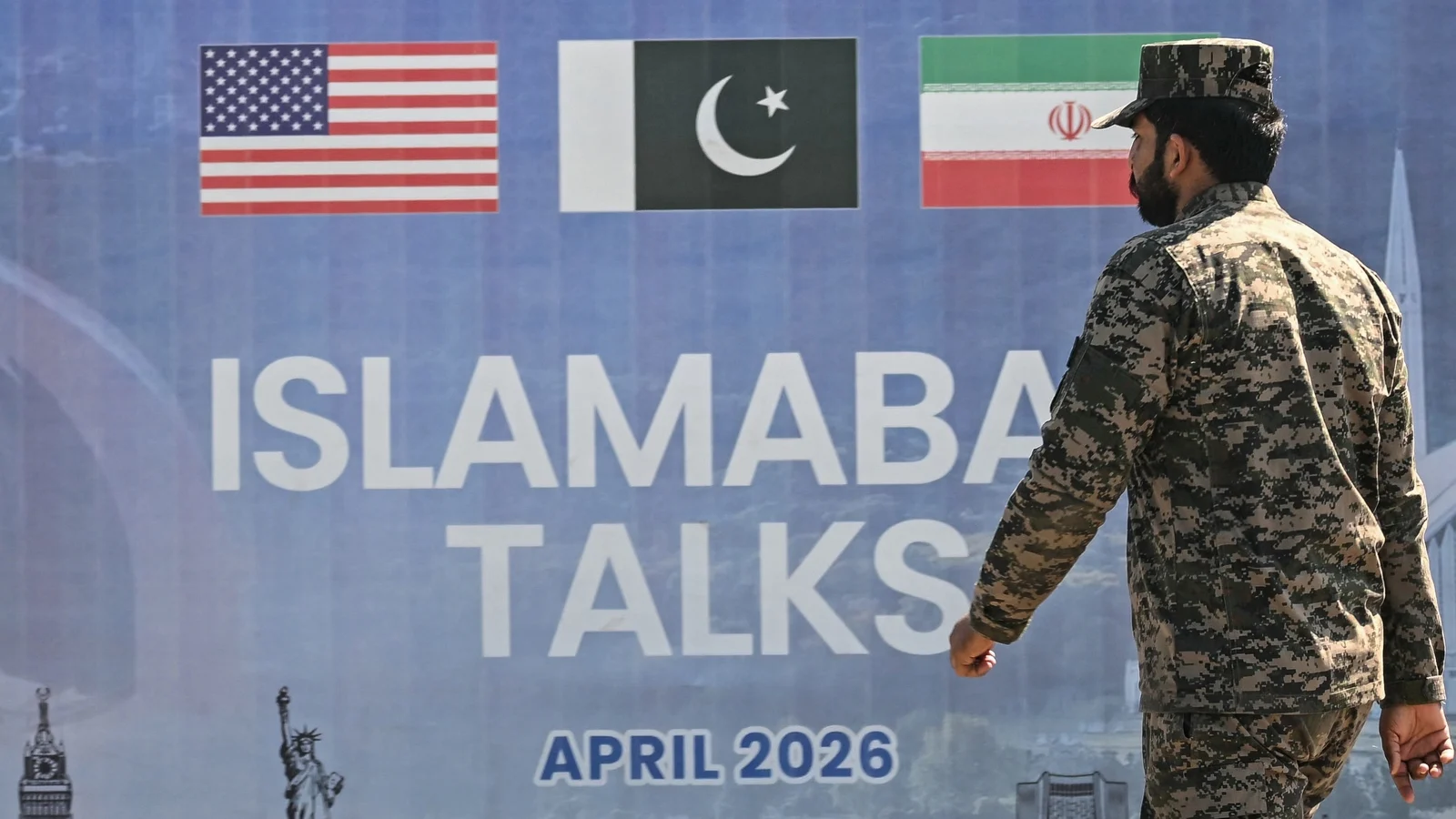
Nightfall in Islamabad: 21 Hours That Barely Bridged a Chasm
The Serena Hotel’s chandeliers were still burning when the delegations finally folded up their notes and left the carpeted ballroom—more exhausted than triumphant, more wary than relieved.
They had spent 21 hours negotiating, talking, and sometimes talking past one another. At dawn, the United States walked away saying it had left a “final and best offer” on the table. Iran walked away saying the other side had failed to earn its trust.
“We have been at it now for 21 hours, and we have had a number of substantive discussions. That’s the good news,” US Vice President JD Vance told reporters in the early hours. “The bad news is that we have not reached an agreement.” The line landed like a cliff: earnest, exhausted—and inconclusive.
For a moment, there was cautious optimism. Face-to-face talks, after all, were a small victory in themselves. Tehran had threatened to stay away. The alternative—messages ferried back and forth by Pakistani intermediaries—would have been a diplomatic limbo. So when both sides actually sat across from one another in the same room, it felt like progress. That it stretched long into the night felt even more hopeful to some: maybe, just maybe, the gaps could be closed.
A game of mirrors and missed looks
But the optimism was brittle. By the time the sun rose over Margalla Hills, neither side could even agree on who should make the next move. Vance said the US had left a deadline-tinged offer for Iran to consider. Tehran’s spokespeople told reporters the United States was searching for an excuse to walk away and that “the ball is in America’s court.” Two delegations, one room, two irreconcilable narratives.
“Diplomacy is partly about the story you tell yourself,” observed a former negotiator who asked not to be named. “Last night, both sides told themselves very different stories about what ‘progress’ looks like.”
What was on the table—and what wasn’t
Officials said the agenda was wide: the nuclear programme, the Strait of Hormuz, sanctions relief, war reparations, and a pledge to end hostilities. The specifics were where the teeth were.
- Nuclear constraints: The United States demanded an explicit Iranian commitment not to develop nuclear weapons. Tehran, officials said, declined to provide that categorical assurance.
- Strait of Hormuz: Iran’s control of the waterway—and its intermittent closure to shipping—became a central irritant. The strait handles roughly one-fifth of the world’s seaborne-traded oil; any disruption is felt in fuel markets from Rotterdam to Singapore.
- Sanctions and reparations: Tehran sought relief from sanctions imposed over the past decade and compensation for civilian damage it blames on military strikes. Washington pushed back, insisting on verifiable steps before easing pressure.
For many analysts, the maritime standoff is the most potent lever Tehran possesses. “If you can turn a global economic artery into a bargaining chip, why would you voluntarily give that back?” one Middle East security analyst asked bluntly. The answer—if one exists—lies in trust, or the lack of it.
Trust, history and the ghost of the JCPOA
You cannot understand these talks without the shadow of 2015 looming over them. The Joint Comprehensive Plan of Action was the product of patient bargaining—20 months of formal negotiations, 18 meetings across 11 cities. When the United States under President Donald Trump withdrew from that deal in 2018, Tehran’s trust tank took a severe hit.
Since then, Iran’s nuclear material stockpile has grown. Independent monitors and analysts have estimated enriched uranium holdings that far exceed the tightly constrained levels set by the original JCPOA. “We are not back to 2015,” said a European diplomat following the talks. “But the trends are worrying.” The International Atomic Energy Agency’s last public tallies put Iranian enriched uranium quantities at levels multiple times greater than before the 2015 deal—enough to complicate any rapid return to former limits.
Iranian parliament speaker Mohammad Bagher Ghalibaf, who led Tehran’s delegation alongside Foreign Minister Abbas Araghchi, bluntly framed the problem as a crisis of confidence. “My colleagues proposed forward-looking initiatives,” he told state media. “But in this round the other side failed to gain our trust.” For many in Tehran, the memory of unilateral strikes and abrupt policy reversals is fresh. For many in Washington, Iran’s enrichment trajectory is equally fresh and troubling.
On the ground in Islamabad: voices and textures
Outside the hotel, the city hummed with normal life—tea stalls, buses, men in shalwar kameez bargaining over fruit—contrasting sharply with the high-stakes choreography inside. A young Serena waiter, who asked only to be identified by his first name, Ahmed, described the mood like the weather: “Tense, like before a big storm. You can feel it in people’s steps.” He paused. “We hope they make a good deal. People are tired.”
A taxi driver, Habib, who ferried a junior aide between the airport and the hotel, offered a different, more world-weary read. “Everyone comes here thinking they can sit at the table and fix everything,” he said. “But the old problems follow them into the room.” Habib shrugged, his hands on the wheel. “We watch from the side and hope the price of petrol doesn’t jump again.”
Why this matters to you
Ask yourself: when diplomats haggle over words like “final offer” and “commitment,” who pays the real cost? For shipping companies, fuel traders, and ordinary commuters, the answer is simple: uncertainty is expensive. The Strait of Hormuz is economically vital; disruptions there ripple through supply chains and squeeze household budgets halfway around the world.
And beyond economics, there is the larger moral calculus. Nuclear proliferation, regional instability, the trauma of airstrikes and reprisals—these are not abstract policy points. They are lives interrupted. “We lived through missile sirens last year,” a teacher from southern Iran told a journalist. “My students still draw rockets and tanks. They ask if the world has peace. I do not have an answer.”
What comes next?
No one in Islamabad left with a blueprint. No follow-up meeting was confirmed. Each side insists the other holds the initiative. But treat the bluster as tactic rather than truth: both delegations have incentives to posture now and soften later.
We should not expect miracles from a single night in a hotel ballroom. Real diplomacy is patient and procedural, not cinematic. Yet the fact that two adversaries sat together at all matters. It keeps a corridor open—however narrow—for conversation where violence might otherwise escalate.
Will they use it? That is the question hanging over the region. Will history—memory of broken agreements, strikes, and deaths—be allowed to harden into permanent distance? Or can some combination of verification, international guarantees, and patient face-to-face bargaining rebuild enough trust to prevent the worst outcomes?
We cannot know the answer tonight. But we can watch, listen, and demand clarity from those who claim to act in our names. Diplomacy is messy, human work: often noisy, sometimes slow, occasionally brave. As the lights in Islamabad dimmed and the negotiators went their separate ways, one thing was clear—the world will be watching, and the next move could come from either side.