The Image, the Pope, and the Politics of a Moment
There are images that land like thunderclaps. Two days after deleting a post that many read as an implicit comparison of himself to a messianic figure, former US President Donald Trump returned to his echo chamber with a different kind of roar: an apparently AI-generated picture of himself and Jesus, temple-to-temple, eyes closed, an American flag folding behind them like a curtain.
The photo — shared on Truth Social and accompanied by a triumphant caption — feels engineered to do more than provoke. It asks a question about identity, faith, and power, and it refuses to let you look away. “The Radical Left Lunatics might not like this, but I think it is quite nice!!!” the post read. Two days earlier, Mr. Trump had written, in a post that he later removed, “I was never a very religious man .. but doesn’t it seem, with all these satanic, demonic, child sacrificing monsters being exposed … that God might be playing his Trump card!”
Ask yourself: what happens to faith when the language of salvation is traded for campaign theater? What happens when sacred imagery is churned out by algorithms and then weaponized inside a culture war?
Ripples Across Rome and the World
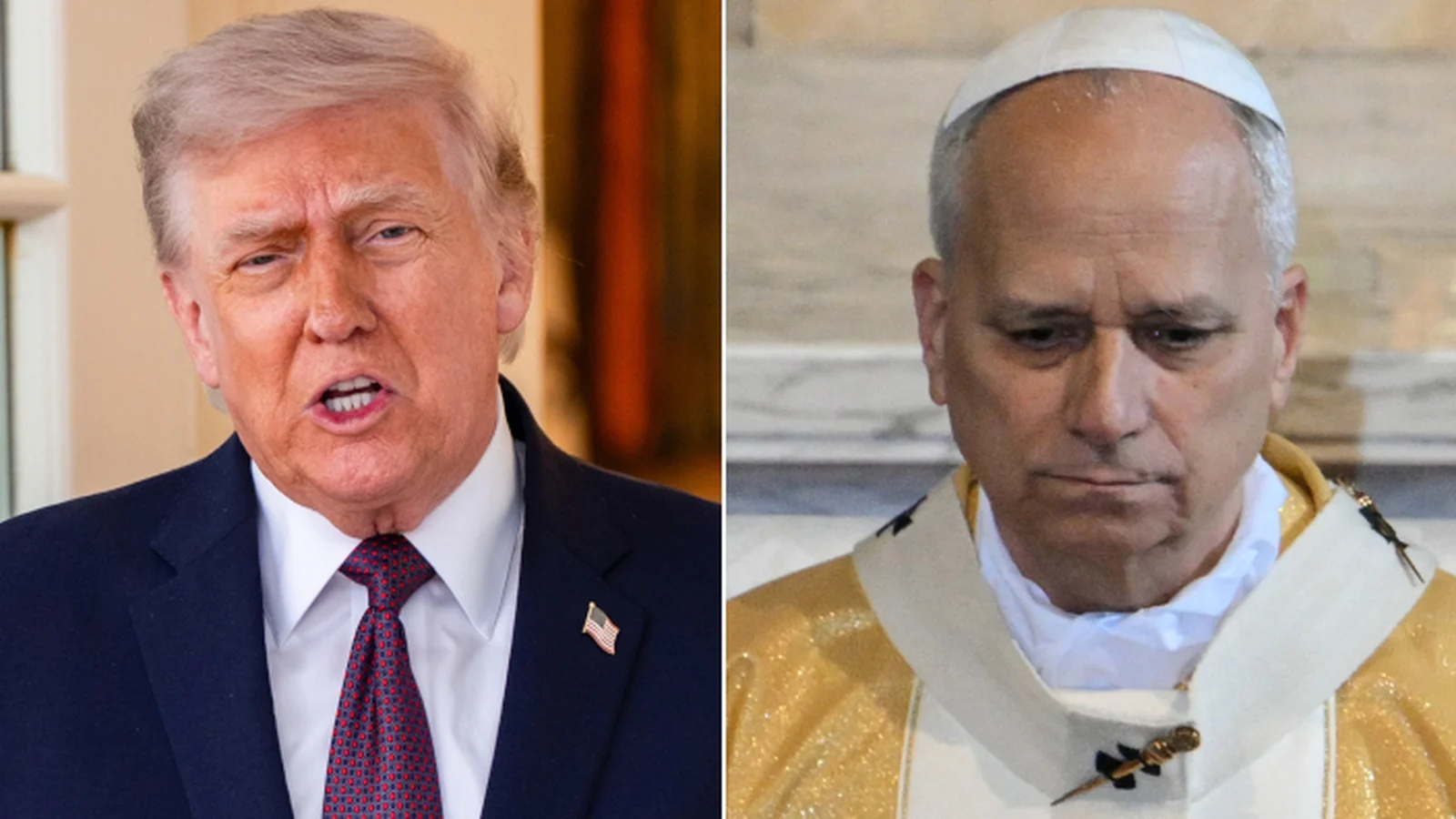
The image came at a complicated moment for another figure who has been trying to speak of unity and peace: Pope Leo — the first US-born pontiff in the history of the Catholic Church, now shepherding some 1.4 billion Catholics worldwide. He is midway through an arduous 10-day African tour that will take him across nearly 18,000 kilometres and through 11 cities on 18 flights — an itinerary ambitious in reach and remarkably heavy with symbolism.
“We need a message of peace,” the pope said recently while speaking from the plane on the way from Algeria to Cameroon. “Although we have different beliefs, we have different ways of worshipping, we can live together in peace.” His words, delivered between air pockets and press briefings, were meant to remind an anxious world that coexistence is not merely abstract idealism but a practical necessity.
The pope’s African stops are not ceremonial alone. In Algeria — a country where Catholics are a tiny minority in a predominantly Muslim society — he listened more than he preached, meeting with imams and community leaders and invoking the teachings of St Augustine of Hippo on unity. In Cameroon, where he is due to meet President Paul Biya and address national leaders, his schedule includes a massive Mass in Douala expected to draw some 600,000 people, according to Vatican estimates.
Tensions Escalate: Israel, Iran, and a Papal Rebuke
What has inflamed matters even further is the pope’s increasingly outspoken criticism of the violent spiral between the US-Israeli alliance and Iran — statements that have not gone unanswered. Mr. Trump, who has been vocally supportive of Israel and hawkish on Iran, took to Truth Social to press his own narrative, accusing Tehran of brutality against protesters and declaring, “for Iran to have a Nuclear Bomb is absolutely unacceptable.” He also urged that “someone please tell Pope Leo” about recent killings of demonstrators by Iranian security forces.
From Rome, the pope has been explicit about his plans to keep raising his voice. “I will speak about peace as long as there are bombs falling and lives being ruined,” he told reporters, per Vatican communiqués. “To promote that kind of image is something which the world needs to hear today.” He did not engage directly with Mr. Trump’s social media post while in transit.
Back in Washington, reactions were predictably polarized. Vice President JD Vance cautioned the pope to be careful when blending theology with commentary on geopolitical conflict — a reminder that even spiritual leaders can be drawn into the crossfire of modern politics.
Local Voices, Global Echoes
On the streets of Yaoundé, a 27-year-old market vendor named Amina sat beneath a canopy of tarpaulins and shook her head. “We hear the pope speak of peace and then we read about bombs far away,” she said. “It gives hope. But we also see leaders who shout and post pictures. Words are easy on a screen.” Her hands, stained faintly from drying cassava, made the point in gestures the pope himself has come to respect: ordinary people want to live without being conscripted into someone else’s drama.
In Algiers, a local imam, Sheikh Omar Benali, told me over sweet mint tea that the pope’s approach felt respectful. “He listened more than he lectured, and that is why people welcomed him,” he said. “When a leader shows curiosity about another’s faith, trust can begin.” Such moments of interfaith engagement are small oxygen tanks in a world that sometimes seems designed to inflame difference.
Why an AI Image Matters
There is an entire industry now building the pixels of persuasion. Deepfakes and generative images are no longer the provenance of late-night pranksters; they land inside political ecosystems and are amplified by networks built to reward outrage. If an image like the one Mr. Trump shared would have been extraordinary a decade ago, today it is painfully ordinary — and dangerous in new ways.
“We are in a moment when visual culture is easily weaponised,” explained Dr. Naomi Hsu, a digital ethics scholar. “The true harm isn’t only that an image is fake. The real danger is how such images can reshape narratives and moral imagination. People fold these pictures into their worldview, and then those views harden.” Her research points to a broader trend: trust in institutions — the press, the church, the academy — has been declining, and in that vacuum, images proliferate to fill meaning-making gaps.
Where Do We Go From Here?
There are practical questions to answer. How do faith leaders speak truth into a polarized media landscape without being co-opted? How do politicians use — or abuse — religion? And how do ordinary people find a way to live together when images and messages are engineered to split them apart?
Here are a few things to watch:
- How the Vatican frames its response if the photo debate continues to escalate.
- Whether social platforms establish clearer norms about AI-generated religious imagery.
- How communities on the ground in Algeria and Cameroon interpret the pope’s message of coexistence in concrete terms — in schools, markets, and interfaith councils.
What feels clear is that the clash between a former American president and the head of the Catholic Church is not merely about personalities. It is a meeting of powerful narratives: the modern spectacle and the ancient summons to humility; the momentum of algorithmic persuasion against the slower work of building mutual respect.
We can choose to treat the moment as entertainment — another primetime scandal to scroll past — or as a reminder that images, words, and leaders shape the world we inherit. Which will we choose to believe? Which will we choose to build?
As the pope prepares to step before hundreds of thousands in Douala, and as digital artists (and their critics) continue to redraw the lines of what is real, the question remains: can the languages of faith and politics be disentangled, or are they forever braided together in the loom of public life? Sit with that for a moment before you tap refresh.