Under the Neon: Spielberg, Spaceships and the Fight for the Big Screen
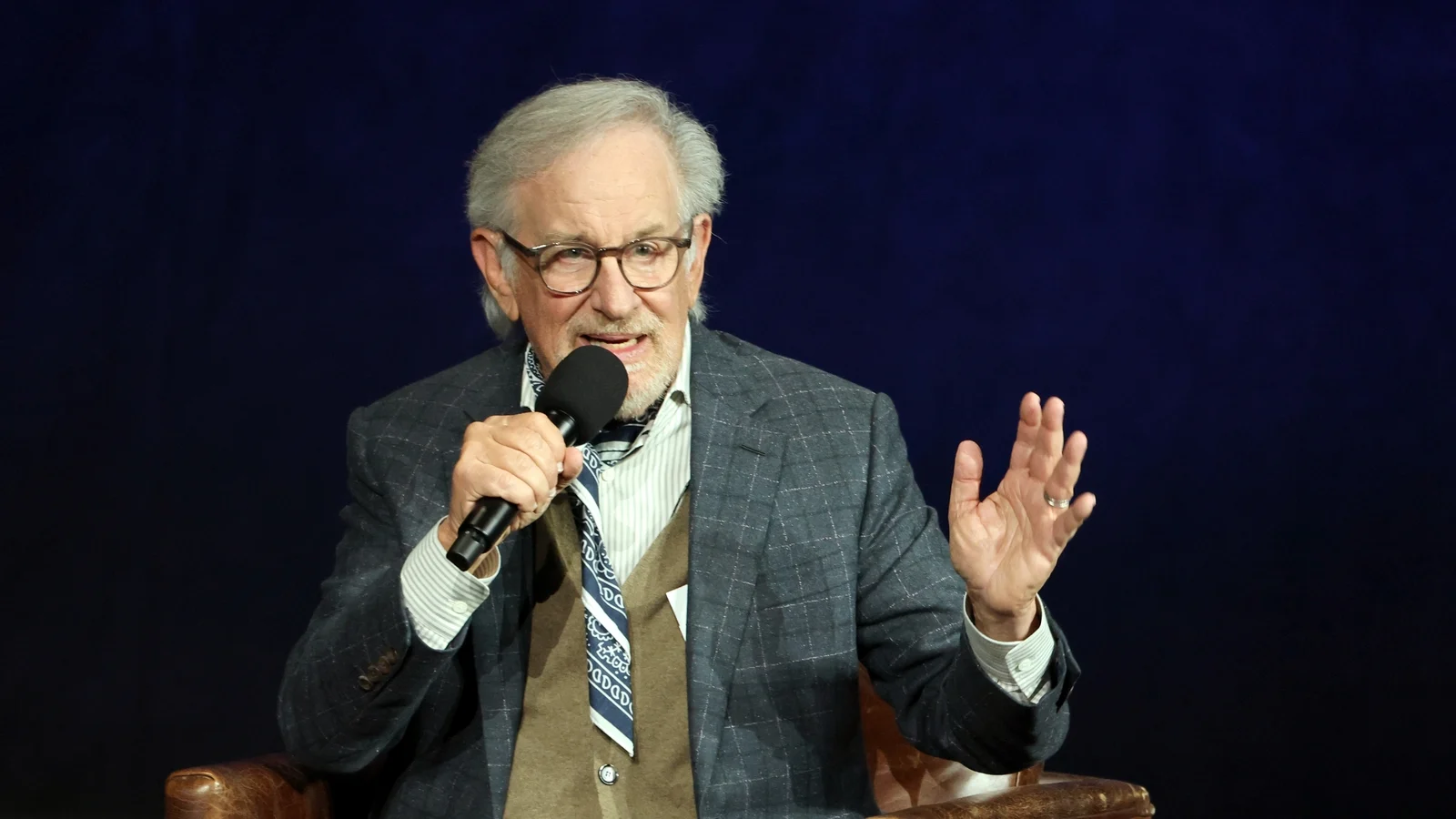
Caesars Palace glittered like a passing comet the night Steven Spielberg stepped onto the stage at CinemaCon, Las Vegas’ yearly congregation of movie house owners, distributors and anyone who worships at the altar of the big picture. The carpet smelled of perfume and stale espresso; slot machines hummed a few blocks over as if the city itself were providing a soundtrack. For a few charged minutes, the room wasn’t a trade show—it was a nervy, collective inhale.
Spielberg didn’t just show a clip. He delivered a promise. He framed his new film, Disclosure Day, not as another CGI spectacle but as a provocation: “There is more truth than fiction here,” he told the crowd, eyes bright in that familiar mix of mischief and surety.
Footage, Faces and a Seatbelt
Disclosure Day is due in cinemas this summer, and Spielberg described what viewers will find as “an experience”—the kind that insists you buckle in. He joked that you’d need nothing from the concession stand but your seatbelt, and meant it: this is big-screen storytelling built for an audience that wants to feel, not just watch.
The cast is a map of contemporary British and American acting talent. Emily Blunt anchors, Josh O’Connor brings his sharp intensity, Eve Hewson offers a quietly luminous presence, Colman Domingo supplies moral heft, and Colin Firth adds the kind of dignity that still surprises. Together, they’re meant to populate a film that looks backward—toward Spielberg’s own Close Encounters of the Third Kind—and forward, nudging at the edges of a real public conversation about what might be happening above us.
What the Footage Shows
Spielberg screened new scenes that traded on atmosphere over spectacle: late-night skywatching, the hush of rural communities, the bureaucratic inertia that greets extraordinary claims. There were moments of awe and shards of doubt—faces lit by LED screens, the slow pivot of government officials who find the ground shifting beneath them. The feel was less blockbuster adrenaline, more a moral thriller that asks questions instead of offering easy answers.
A Half-Century Orbit
Nearly 50 years after Close Encounters first startled audiences and reconfigured the public’s imagination around UFO narratives, Spielberg is back in that cosmos. He’s no stranger to the night sky—he once admitted to being “haunted” by what goes on above—and Disclosure Day looks like a kind of reckoning. What happens when a storyteller who shaped the cultural lexicon of extraterrestrial contact tries to reframe the conversation for a streaming-and-skeptic era?
“If cinema is a communal dream,” an old friend of Spielberg’s (here presented as a longtime collaborator) might say, “then Disclosure Day is a dream that insists we wake up together.” That insistence—on shared experience in a fragmented media landscape—feels almost like a thesis statement for the film.
More Than a Movie: The Business of Windows
Spielberg’s appearance at CinemaCon was not only about storytelling; it was a call to defend a way of watching. Honored by the Motion Picture Association, he used that spotlight to advocate for longer exclusive theatrical windows—the span of time between a movie’s theatrical opening and when it becomes available on digital platforms.
Universal’s current policy of a 45-day theatrical window for wide releases is what he praised; he even teased about hearing talk of stretching that to 60 days. The joke landed like a dropped coin, but the issue behind it is no laughing matter. Since 2020, the pandemic accelerated a tectonic shift in distribution models. Studios rushed films to streaming, viewers got used to the comfort of their couches, and movie theaters watched revenues wobble.
Industry executives, theater owners and filmmakers are debating how to protect box office revenue while adapting to new audience habits. Theater chains argue that longer theatrical exclusivity helps preserve the communal, immersive value of cinema. Streaming platforms point to wider accessibility and the global reach of their models. Both sides make fair points; both are navigating uncharted territory.
Voices from the Floor
- “A 45-day window gives us a fighting chance,” said Maria Alvarez, manager at the Historic Orpheum Cinema outside Philadelphia. “People need a reason to come out. If everything drops online the same week, why leave the house?”
- “I love the idea of a long theatrical window,” said Jamal Thompson, a college student and a self-described cinephile who traveled to CinemaCon. “Cinema is about being with strangers and being moved together.”
- “Streaming isn’t the enemy; it’s how stories find new lives,” offered Dr. Priya Nair, a media studies professor. “But we must remember that some films are architected for darkness, surround sound and a shared gasp.”
Why It Matters Beyond Box Office
This conversation isn’t just about revenue splits. It’s about cultural rhythms. When a film like Disclosure Day is designed to be communal—when its themes are about public revelation, secrecy, and the search for shared truth—the form matters. Watching a moment of supposed disclosure alone on a laptop is not the same as hearing an entire theater hold its breath.
On another level, the film taps into a global fascination: our perennial urge to know whether we are alone, and what it would mean if we weren’t. The past few years have seen heightened public interest in unidentified aerial phenomena, official reports and dialogues about transparency. Disclosure Day arrives at that charged intersection of curiosity, conspiracy and the science of wonder.
Local Color: Las Vegas and the Ritual of Reveal
There’s an irony to unveiling a film about seeing clearly beneath a skyline in Las Vegas. The city is a place of artifice and spectacle—neon gods, late-night diners and performers who make the extraordinary everyday. Walking out of Caesars Palace after the screening, a vendor selling miniature plastic Oscars laughed: “If Spielberg can convince people to look up, I’ll sell more hats.” The comment was half-joke, half-forecast. CinemaCon is very much about reinvention, and Vegas is its amplifier.
Questions for the Reader
Will you wait for Disclosure Day on your couch, or will you head back to the darkened theater for the collective moment? Do you think movies require the cinema to fulfill their promise? How do you weigh the comforts of streaming against the ethical argument that some stories are owed a communal viewing?
These are not idle questions. They shape how we finance films, how we tell big stories and how we reckon with the unknown—whether that unknown is a new technology, a new distribution model, or a light in the sky that refuses explanation.
Closing: The Long Take
Spielberg’s footage at CinemaCon did its work. It made people talk. It reminded us that, even in a fractured media era, there are filmmakers who aim for something beyond clicks and immediate metrics: a lasting cinematic moment you remember years later. Whether Disclosure Day delivers revelation, mystery, or just a good old-fashioned goosebump is something we’ll find out this summer.
For now, there is the image of an audience at Caesars Palace—an entire room leaning forward—and a director who, after half a century of asking us to look up, still believes the sky has things to teach us.