The Day the World’s Eyes Turned to Manila’s Shadow
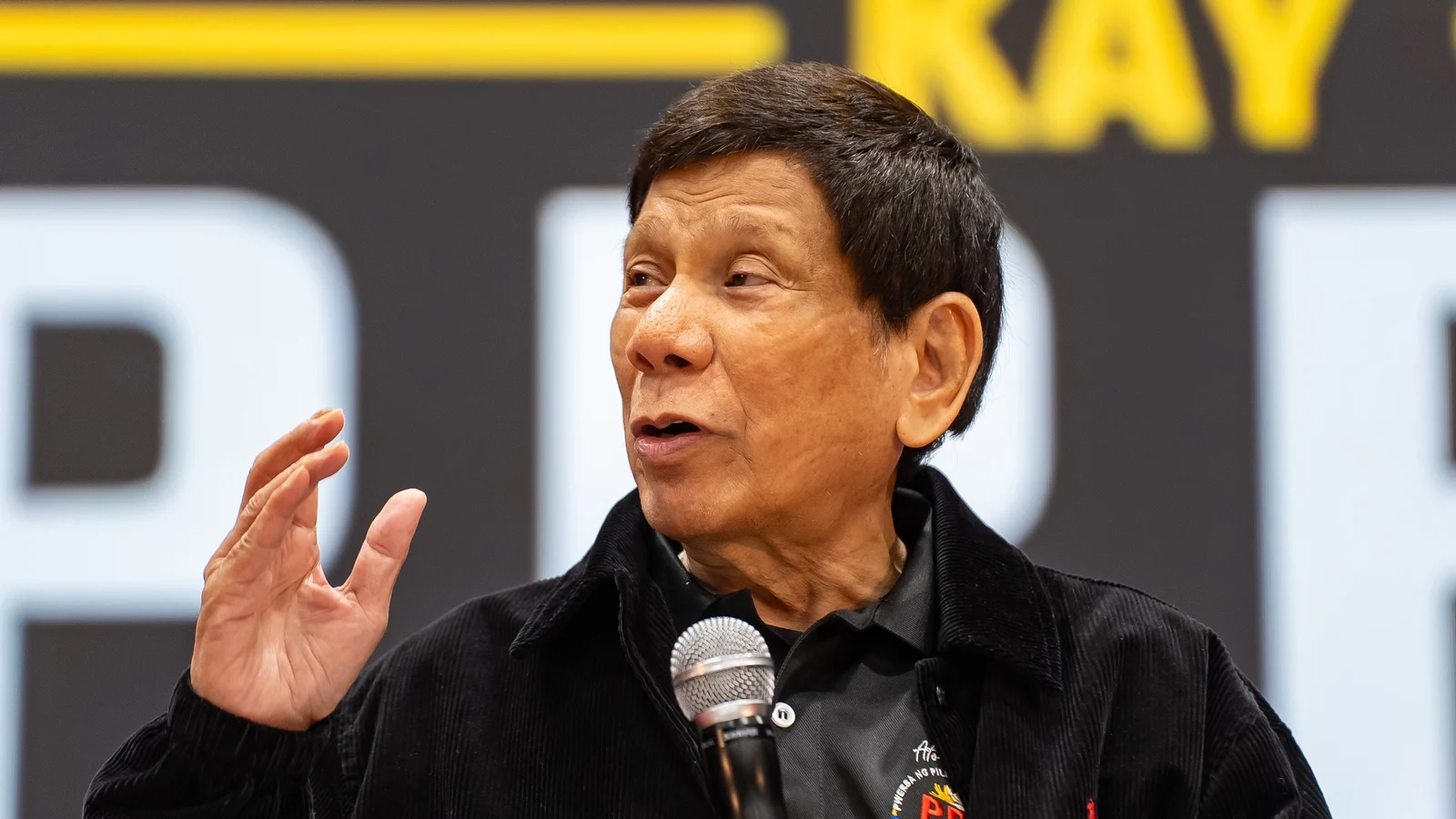
There are mornings in Manila when the city hums like a living thing — jeepneys cough into traffic, vendors call out the day’s catch, and church bells blend with the distant drone of construction. On one of those mornings, an announcement from The Hague sliced through the ordinary noise: Rodrigo Duterte, the former president whose name is as polarizing in the Philippines as it is familiar abroad, has been sent to trial at the International Criminal Court.
It is a moment heavy with contradiction. For years, Duterte cultivated an image of the strongman who would do anything to eradicate illegal drugs. For others, he became the architect of a campaign that left thousands dead and families shattered. Now, the pre-trial judges at the ICC have concluded there are substantial grounds to believe he bears responsibility for crimes against humanity — murder and attempted murder — and have committed him to stand trial.
A First of Its Kind in Asia
This case marks an unprecedented chapter in Asian politics: an ex-head of state from the region arraigned on charges at the court in The Hague, the global tribunal set up to prosecute genocide, war crimes and crimes against humanity since 2002.
“We are watching a test — for international justice and for our collective conscience,” said Elena Morales, a human rights lawyer in Manila. “Whether the court can proceed fairly and credibly in the face of geopolitical pressure matters to victims everywhere.”
The ICC, now more than two decades old, is navigating one of its most turbulent periods. The court’s recent activity on conflicts beyond the Philippines, including decisions that have drawn responses — even sanctions — from powerful states, has raised questions about how international law and politics intersect. The Philippines, with a population of roughly 113 million, finds itself under an international microscope even as daily life goes on in its bustling markets and quiet provincial towns.
Faces of the Drug War
Walk the neighborhoods of Davao, where Duterte began his political ascent, and the echoes of the drug war remain mixed with everyday city sounds. In the Paco district of Manila, a woman named Liza clutches a photograph of her younger brother, killed in 2017. “They called it a legitimate police operation,” she said. “But no one told us how many people would be reduced to numbers.”
Statistics, too, tell a divided story. Government tallies recorded about 6,000 deaths classified as “deaths under investigation” during operations, a figure often cited by Philippine authorities. Human rights organizations, poring over witness statements and media reports, place the likely number of victims much higher — estimates range from roughly 12,000 up to 30,000 — when suspected vigilante-style killings and other unrecorded incidents are included.
“People died in their homes, on the street, sometimes in front of their children,” said Reverend Tomas Delgado, who leads a community outreach program in a Manila barangay. “Grief has become part of the fabric of life for many families here.”
What the ICC Found
Pre-trial judges are not delivering a verdict of guilt — that remains the province of the trial itself — but they found the allegations sufficiently grave to move forward. The decision concludes that there are reasonable grounds to believe that the campaign, as implemented and encouraged, reached the threshold of crimes against humanity. That means prosecutors convinced judges the actions were not isolated but part of a broader, systemic policy.
“This is not about politics; it’s about whether international norms were breached in ways that demand accountability,” said a senior investigator involved in the case. “The court’s role is to assess evidence and ensure the rule of law applies, even when the accused once sat atop a government.”
Lives in the Waiting Room
Procedural details — whether Duterte will physically appear at the trial, the pace of evidence collection, the protection of witnesses — have been contentious. His legal team maintains the 81-year-old is not fit to participate, citing mental frailty. When he made an initial video appearance after his arrest, some observers noticed signs of confusion and fatigue.
“I have seen veterans on their deathbed who were less frail,” Duterte’s lead counsel said in a statement. “We will do everything to protect his rights and dignity.”
Opponents and victims’ families watch that posture with ambivalence. “If he cannot stand, then what does justice look like?” Maria Santos asked, still tamping the soil over her brother’s grave. “We want truth, accountability, and a future where leaders think twice before ordering death.”
Local Color: Vigil, Market, Memory
Justice proceedings are often abstract — legal texts and evidentiary filings. But in the Philippines, they intersect with ritual and community. On the eve of the court’s announcement, a small procession wound through Quezon City carrying candles and photos of the disappeared. A sari-sari store owner lit a candle and murmured, “This is for peace.”
At lunchtime in a fish market near Manila Bay, vendors argued about the news between weighing scales and piles of fish. “If this goes through, then maybe politicians will think twice,” one vendor offered, wiping his hands on his apron. “But if not, what changes?”
The Global Backdrop
The ICC’s docket now includes cases that touch some of the most fraught conflicts of recent memory. Its decision to proceed against Duterte comes at a moment when the court itself faces diplomatic headwinds, including public pushback from countries that once championed its mission. Sanctions and political pressure have complicated the court’s work and provoked debate about sovereignty, justice, and the limits of international law.
“This institution was created so that the worst crimes don’t go unpunished,” said Dr. Miriam Kohl, an international law professor. “When powerful states react against it, the question becomes whether it can retain impartiality and the resources to see these cases through.”
What Comes Next — and Why It Matters
The trial ahead will be logistically and legally complex. Witness protection will be paramount, documentary evidence must be vetted, and international legal standards applied in a way that respects due process. Yet the stakes are not only legal; they are moral and political.
- For victims and their families: the trial is a possibility for acknowledgment and redress.
- For the Philippines: a national reckoning with past policies and the political cultures that enable them.
- For international justice: a test of whether global institutions can act amid geopolitical pushback.
“Accountability isn’t vengeance,” said a former prosecutor. “It’s the foundation for rebuilding trust.”
Questions to Carry With You
As this story unfolds, what do you think justice should look like after mass violence? Is a trial enough to heal communities, or does it need to be paired with truth-telling, reparations, and reform? How do nations balance sovereignty with international obligations to prevent atrocity?
These are not academic queries. They are the heartbeat of families who light candles each night, of communities learning to live with loss, and of a world wrestling with how to enforce human dignity when state power is turned against its people.
In the weeks and months to come, the courtroom in The Hague will become a focal point for many — petitioning to be more than a backdrop to headlines. It may be, if the process is meticulous and the evidence compelling, a place where legal reasoning and human stories meet. Or it may become another example of how messy, imperfect and politically entangled international justice can be.
Either way, the Philippines — and the world — will be watching. Will this trial change the calculus of power? Will it offer solace to the bereaved? Or will it become yet another unresolved question on a long list of global injustices? The answers, like the lives at the center of the case, will not be simple.