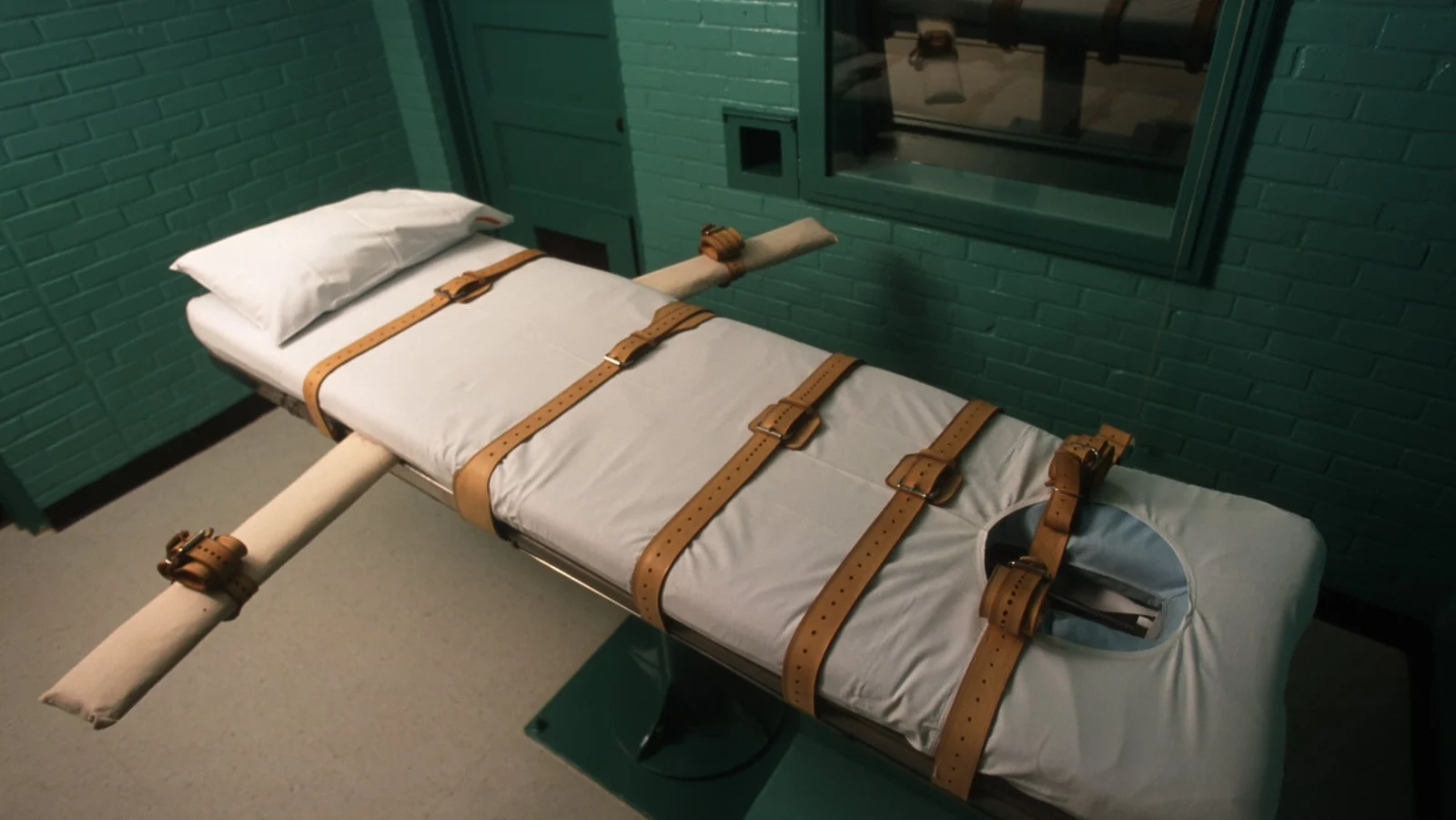
A Grim Turn in the Corridors of Power
When the Justice Department announced a sweeping push to widen the federal government’s toolbox for executions, the news landed like a stone thrown into a still pond — concentric shockwaves rippling through courtrooms, living rooms, and human-rights offices from Boston to Bali.
“The prior administration failed in its duty to protect the American people by refusing to pursue and carry out the ultimate punishment against the most dangerous criminals,” acting Attorney General Todd Blanche said, a line that read more like a verdict of policy than a legal memo. “Under President Trump, the Department of Justice is once again enforcing the law and standing with victims.”
That language is forceful by design. It frames capital punishment not as a fraught moral question but as a necessary tool for public safety — a blunt instrument to be wielded, proponents insist, against terrorists, child killers, and those who murder law enforcement officers. But the shift being proposed — adding firing squads, electrocution, and gas alongside lethal injection — raises immediate and unavoidable questions: about cruelty and dignity, about science and error, about politics and pain.
What the Proposal Actually Means
The move is technical in one sense and seismic in another. Execution method has long been a battleground for legal challenges and ethical debate. While the death penalty is primarily a matter for state governments, the federal system can and does seek capital punishment for a narrow list of crimes.
The Justice Department proposal aims to expand the federal palette for capital punishment. At the center of the debate are several methods:
- Firing squad — currently authorized in five states, though rarely used; South Carolina is the only state to have used it in recent years.
- Electrocution — permitted in nine states, but not used federally since 2020.
- Nitrogen hypoxia — the method that uses nitrogen to induce asphyxiation; two states have experimented with it recently, and it has drawn condemnation from United Nations experts.
- Traditional lethal injection — the method used in the vast majority of recent federal executions.
To the uninitiated, these read like technical options on an official form. To others, they are visceral reminders of how humans have tried, at times gruesomely, to resolve questions of justice and retribution.
Voices from the Front Lines
At a community center outside Charleston, South Carolina, a woman at a coffee table folded her hands and said, “I lost my nephew to a shooting five years ago. The system needs teeth. When I hear about gas or electric chairs, I think less about the method and more about whether the law will actually stop the next killer.”
Across the hall, a former public defender who has spent decades battling death sentences pressed her palms together. “What terrifies me is not advocacy for victims’ justice,” she said. “It’s the certainty of error. Innocence exonerations happen too often for us to add more irreversible penalties. The risk of killing the wrong person is intolerable.”
A Justice Department official, speaking on background, framed the proposal as a disciplined return to statutory options. “Our focus is on ensuring that federal law can be carried out where Congress has authorized it,” the official told me. “We’re not inventing cruelty; we’re recognizing that states have set standards they believe are constitutional.”
Human-rights groups and international observers were blunt. “This is a step backward,” said Dr. Mira Kohli, an expert on international law. “Methods like nitrogen hypoxia, which UN experts have called cruel and inhumane, should have no place in a system aspiring to basic human dignity.”
Numbers That Matter
Numbers anchor the rhetoric. Under President Trump’s previous term, federal executions resumed after a 17-year pause, and 13 people were executed by lethal injection in his last six months — the highest federal tally in more than a century. Then, in the closing chapter of a later administration, President Joe Biden commuted the sentences of 37 of the 40 inmates on federal death row, a dramatic move reflecting his long-standing opposition to capital punishment. Three men remained on federal death row: one connected to the 2013 Boston Marathon bombing, a gunman responsible for an 11-person massacre at a Jewish house of worship in 2018, and a white supremacist who took nine lives in a Black church in 2015.
Across the states, the map of capital punishment is patchwork and contradictory. Twenty-three states have abolished the death penalty outright. Three more — California, Oregon, and Pennsylvania — maintain moratoriums on executions. Yet the cultural and legal appetite for capital punishment remains robust in pockets, especially in parts of the country where political identity and perceptions of crime are tightly linked.
History, Law, and the Problem of Error
The debate is not merely about mechanics. It’s about whether a nation that prides itself on legal safeguards should continue to authorize an irreversible penalty when wrongful convictions can and do occur. Since 1973, more than 185 people sentenced to death in the U.S. have been exonerated, often thanks to new evidence, DNA testing, or legal missteps that once went unnoticed. Those exonerations don’t just puncture confidence; they blow gaping holes in it.
Legal scholars point out that changing execution method does not erase these fundamental problems. “You can change the drugs, the chair, the gas, and the suit,” said Professor Jamal Rivera of Georgetown Law, “but you can’t change the fact that the risk of executing an innocent person never goes away.”
A Global Mirror
Outside the United States, many democracies have walked away from capital punishment altogether, citing human rights concerns. The European Union, for instance, treats the abolition of the death penalty as a core value. When the U.S. enlarges the list of available execution methods, it also reshapes its image abroad — as a country teetering between a punitive past and a rights-respecting future.
“This is a global conversation,” Dr. Kohli told me. “When a country expands methods of execution, it signals something about how it balances security and dignity. That has diplomatic consequences.”
Where We Go From Here
Legally, the proposal will invite lawsuits, appeals, and constitutional challenges. Politically, it will become part of a larger culture war — about victims’ rights, about race and class in the justice system, and about national identity. Practically, it will force courts to wrestle anew with questions of suffering, science, and acceptable risk.
What should you take away from all of this? Ask yourself: what does justice look like in a modern democracy? Is retribution a satisfying measure of public safety, or do we want a system focused on prevention, rehabilitation, and error correction? Where should the moral line be drawn when the state itself is the agent of death?
A Final Thought
Walking away from the Justice Department that afternoon, I saw a student protest poster flapping in the wind: “Abolish the chair, defend the future.” It was a simple sentence, but it held a thousand arguments — about victims, about power, about human fallibility. The debate ahead will not be tidy. It will be loud, uneven, and painfully human. And it will force a nation to look at what it asks of itself when it decides who may live and who may not.