At the edge of a fragile pause: behind the scenes as envoys race to Islamabad
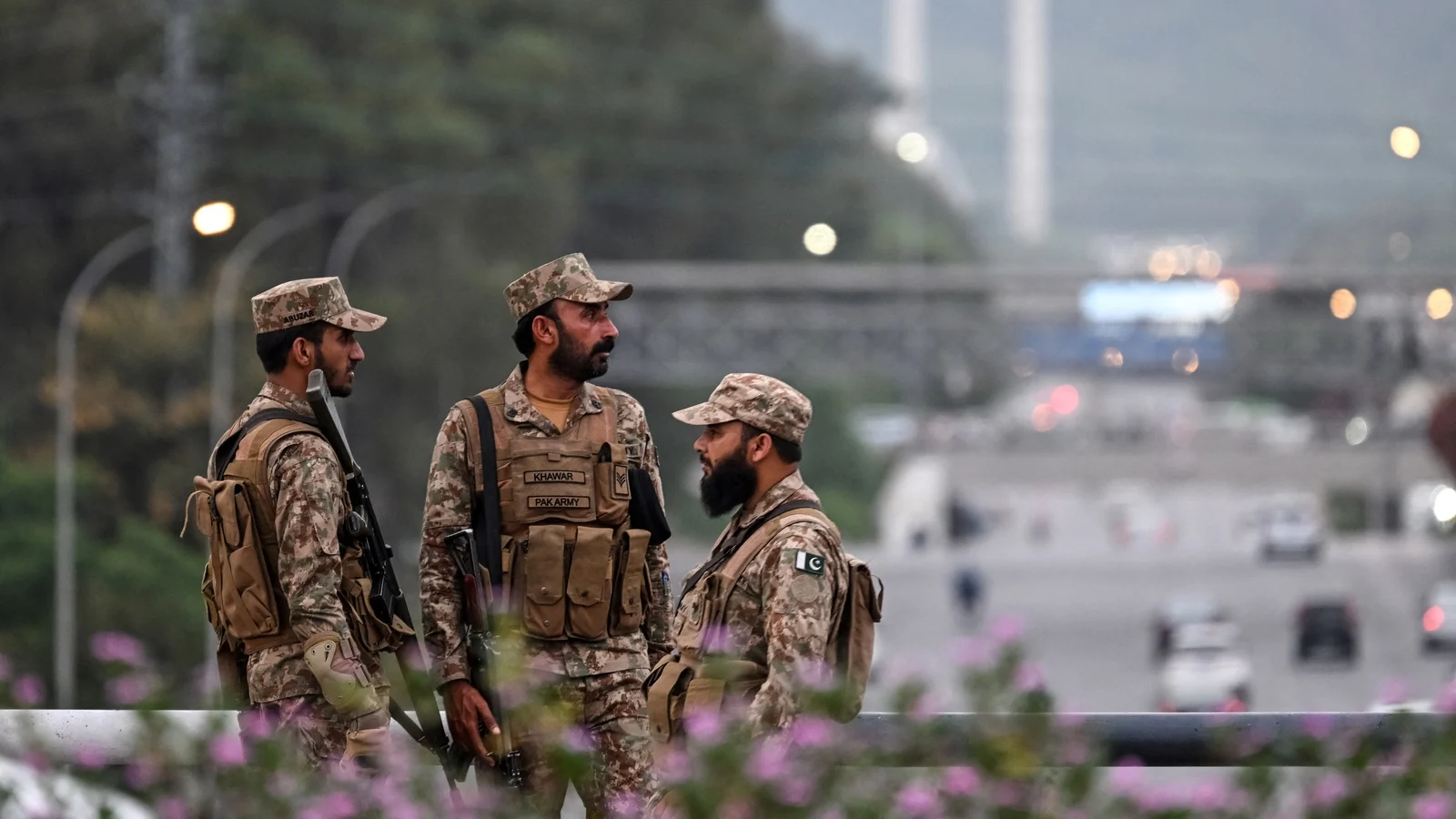
The runway lights at Islamabad airport feel too small for the weight of what is about to land. Diplomacy, that most unlikely of heavy-lift cargoes, has its own timetables and turbulence. In the gray dawn, as taxis weave past the blue-domed mosques and the pine slopes of the Margalla Hills, a new chapter in an old confrontation is taking shape: a small U.S. delegation — special envoy Steve Witkoff and Jared Kushner — is due to fly into Pakistan to meet Iranian representatives, Islamabad acting as the unlikely referee between two long-standing adversaries.
“I can confirm Special Envoy Witkoff and Jared Kushner will be off to Pakistan again tomorrow morning to engage in talks … with representatives from the Iranian delegation,” White House press secretary Karoline Leavitt told Fox News. The statement was short, clinical. Outside, the city is not.
A vendor on Jinnah Avenue, sipping chai from a chipped glass, watched the traffic and shrugged. “We see many passports here,” he said. “Sometimes talks come and go. But if they can stop the rockets and the boats, we will welcome them. Peace means business again—market opens, life returns.”
Why Islamabad?
Pakistan’s diplomatic role is not accidental. Nestled between Iran and the wider Muslim world, Islamabad has maintained channels with Tehran even as Washington’s ties with Tehran remain at a zenith of tension. Pakistani officials, speaking on condition of anonymity, told Reuters that Tehran’s foreign minister Abbas Araghchi would also visit — a brief stop to convey Iran’s proposals for talks that Pakistani mediators would relay to Washington.
Araghchi himself posted on X that he was embarking on visits to Pakistan, Oman and Russia “to coordinate with partners on bilateral matters and consult on regional developments,” adding, “Iran’s neighbours remain Tehran’s priority.” It is, at once, a diplomatic foreign tour and a strategic circuit: Iran testing the waters, Pakistan offering a calm harbor, Russia and Oman potential stabilizers or backchannels.
What’s at stake
The mechanics of these meetings are simple on paper and fiendishly complex in practice. Washington wants verifiable steps that would halt Iran’s path toward a weaponized nuclear capability and curb its support for proxy forces across the region. Tehran wants an easing of economic pressure and recognition of its security concerns. Between them sits a map crowded with history: years of sanctions, clandestine enrichment programs, regional proxy wars and the politics of domestic audiences who view concessions as weakness.
For now, the most tangible lever is a ceasefire that US President Donald Trump has extended more than once to create space for negotiations. First came a two-week extension at the 11th hour; then a three-week extension meant to widen the window for talks. Small increments, but for families in border towns and crews on shipping lanes, they have felt like breaths of air.
Blockades, ships and the global ripple
Not all parts of the globe have loosened their grips. Standing beside top US general Dan Caine, US Defense Secretary Pete Hegseth declared that “our blockade is growing and going global.” According to military briefings, the US Central Command says it has turned around 34 ships so far this operation — a visible, kinetic sign that Washington is moving beyond sanctions to active interdiction of vessels headed to or from Iranian ports.
That posture has practical as well as symbolic consequence. The Strait of Hormuz, a strategic choke point, has historically carried about 20% of the world’s seaborne oil. Even talk of closure reverberates through trading desks from Dubai to Rotterdam. “No one sails from the Strait of Hormuz to anywhere in the world without the permission of the United States Navy,” Hegseth said bluntly — and the message was as much for global shipping firms as for Tehran.
German Chancellor Friedrich Merz offered a counterpoint in Nicosia: the EU is prepared to gradually ease sanctions if a comprehensive agreement is achieved. “The easing of sanctions can be part of a process,” Merz said. “It is, so to speak, part of the contribution we can make to advance this process and, hopefully, lead to a lasting ceasefire.” The carrot, it seems, sits next to the stick.
Hezbollah, Lebanon and the human ledger
Meanwhile, on the scarred hills of southern Lebanon, the ceasefire extension feels brittle. Hezbollah dismissed Washington-mediated terms as “meaningless,” after Lebanese authorities reported continued strikes and clashes that left civilians dead. “Every Israeli attack … gives the resistance the right to a proportionate response,” Hezbollah politician Ali Fayyad said, underlining the group’s refusal to be bound by a deal it did not sign.
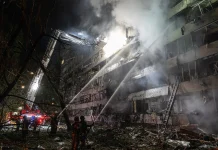
The human cost is stark: Lebanon’s health ministry reports nearly 2,500 people killed in Israeli attacks since the clashes reignited on 2 March. Buildings lie in ruin in neighborhoods like Ain al-Mreisseh; the city’s coastal air is still sharp with the smell of burned concrete. For many Lebanese civilians, the question is painfully practical: how do you rebuild a home when a ceasefire might be only a pause?
Voices from the continent and the street
Back in Islamabad, a mid-level Pakistani diplomat, who requested anonymity, described the mediation as a “tightrope walk.” “We are not doing anyone’s bidding,” she said. “We host, we ferry messages, and we try to keep the room from becoming an arena.” Outside the diplomatic enclave, an English teacher who has watched the region’s headlines for decades leaned on the fence and said, “I was born here when wars were far. Now it feels like everything is connected. A ship turned back in the Indian Ocean can ripple into my neighbor’s fuel price.” Her voice was both weary and wary.
Analysts warn that even a successful negotiation will be partial. “No single deal can undo decades of mistrust,” said Laila Rahman, a security analyst at a think-tank in Lahore. “But what it can do is create guardrails. A process matters: phased, verifiable, reversible measures that allow both sides to save face while reducing immediate harm.”
Questions to sit with
What does success look like here? Is it a single, grand bargain, or a series of smaller truces that slowly recalibrate incentives? Can external mediators like Pakistan realistically shepherd two powers whose public rhetoric is designed for domestic audiences rather than quiet compromise?
And, perhaps most urgently: how will ordinary people absorb the uncertainty? For merchants in Beirut repairing shutters, for sailors rerouting to avoid interdiction, for mothers in border villages timing the day around distant rocket sirens — diplomacy is not an abstract exercise but the scaffolding of safety.
Why this matters beyond the region
These talks are more than a bilateral negotiation. They are a test of whether middle powers and unconventional channels can create breathing room in a world where globalized trade, nuclear risk and proxy conflicts are deeply entangled. The outcomes will affect oil prices, the security of shipping lanes, European sanctions policy and the calculus of armed groups across the Levant. They will also offer a lesson in diplomacy’s most human capacity: to turn enemies into interlocutors.
So, as Witkoff and Kushner taxi down the runway and Araghchi steps off a plane with a folder of proposals, watch for the small signals: who speaks to whom in the corridor, what language their communiqués use, and whether the ceasefires on the ground lengthen from weeks into months. These are the details that make the difference between a pause and a peace.