Night of the Drones: A New Kind of Siege
There is a rhythm to war now in Ukraine — a jagged, metallic pulse that arrives at night and refuses to let a city sleep. In the small hours this week, that pulse intensified: Ukraine’s air force reported that 619 drones and 47 missiles were launched toward Ukrainian territory. The military said air defenses managed to shoot down 580 of those drones and 30 missiles, but the numbers alone tell an incomplete story about lives upended, windows blown inward, and the brittle quiet between explosions.
“You get used to the sirens, and then you don’t,” said Maria, a schoolteacher who lives in an old apartment block overlooking the Dnipro River. “Then a new sound begins — a whine, a distant thud — and you remember you are not safe at home.” She wrapped a wool scarf around her hands as she spoke, the kind of small, domestic detail that underlines how ordinary life and extraordinary danger now share the same spaces.
What the Numbers Mean
On paper, the tally looks like a triumph of air-defense systems: hundreds of incoming aerial targets neutralized. Yet even highly successful interceptions leave a trail. Debris rains down. Engine casings and mangled plastic become shrapnel for apartment balconies, cars, and playgrounds. Local authorities reported four people killed and dozens injured in the overnight strikes.
“One drone engine landed in our courtyard,” said Oleksandr, a volunteer with a Kyiv-based rescue group. “It was like something from a science fiction movie — a metal heart lying in the grass. We gathered children’s toys out from under it; someone’s life could have been taken by that broken machine.”
Dnipro: Buildings, Babies, and the Sound of Rescue
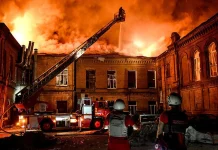
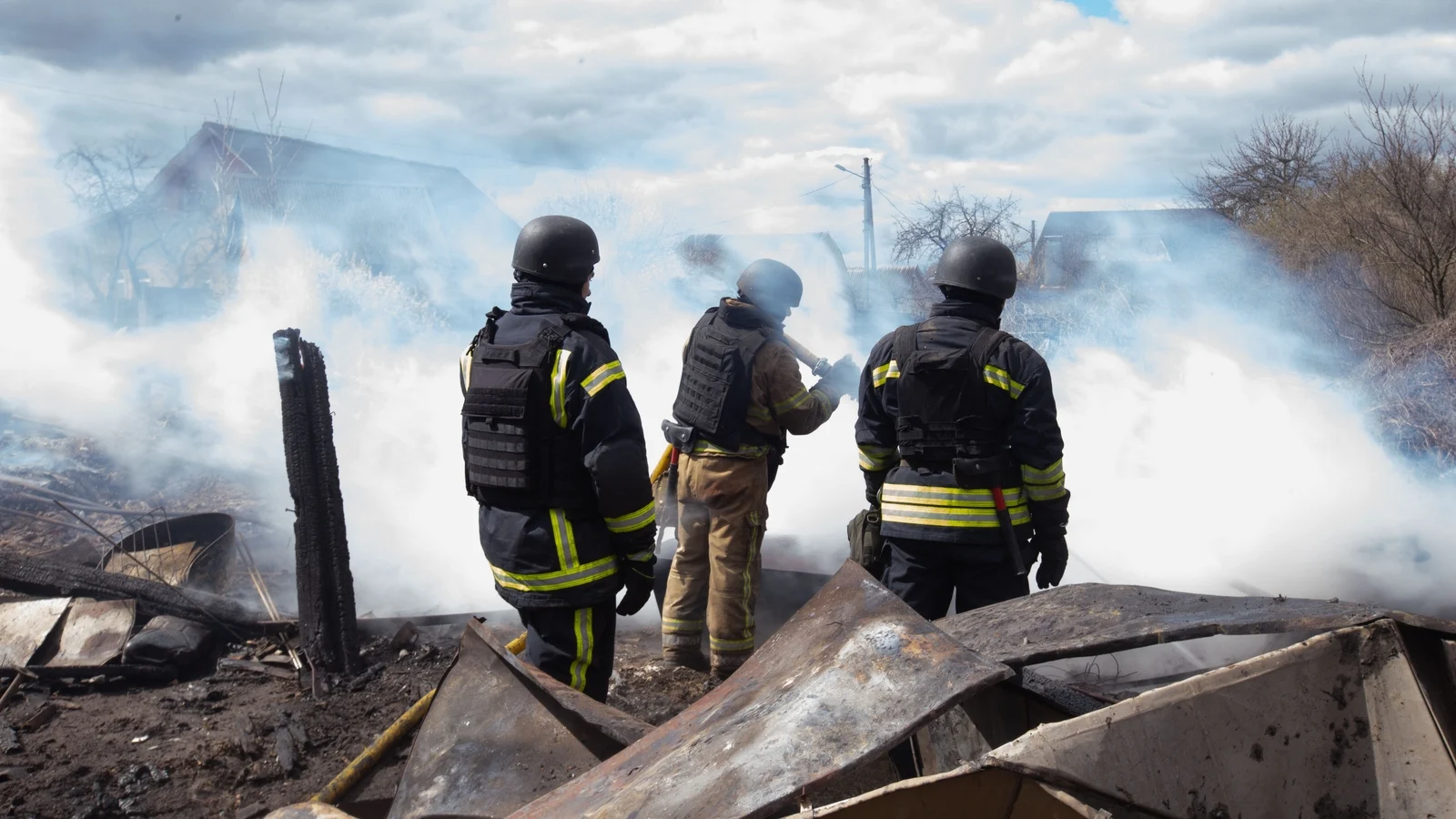
In the central city of Dnipro, which hugs the banks of the river that gives the whole country its name, damage was evident across residential districts. Local officials said at least 14 people were wounded there, including a nine-year-old boy, as drones and missiles struck apartment buildings and other infrastructural targets. Video circulating on social platforms showed emergency workers — flashlights bobbing through dust and fallen plaster — methodically searching a building’s shell for survivors.
“We hear the blast and our whole building shakes,” said Tamara, who runs a bakery two streets from the strike site. “Today I had only one customer. He bought bread, paid, and then sat in the doorway and cried. He said, ‘What’s the point of bread if I can’t feed my grandchildren tomorrow?’”
There is a particular cruelty to attacks that hit housing: they scatter the most private of lives into public spectacle. In one hallway, a grandmother’s embroidered pillowcase lay near a child’s schoolbook; farther along, a kettle still sat on a ruined stove. These intimate remnants of home illustrate how civilian life becomes the collateral canvas on which military technology paints its damage.
Kherson and the Perimeter of War
The frontline city of Kherson also endured strikes overnight. The city’s military administration reported at least two wounded. Rockets and drone strikes have turned urban peripheries into shifting lines on a map — lines that mean the difference between a quiet market and a sudden, chaotic scramble for shelter.
“We are not soldiers,” a municipal medics coordinator, Serhiy, said. “We are tending to people who have names, letters from loved ones in their pockets. You cannot sterilize that from the story.” He spoke with a weary patience, the sort that accumulates in hospitals where the number of casualties does not diminish the severity of each wound.
Scenes of Resilience
Despite the danger, life continues in small acts of defiance: neighbors sharing hot tea, volunteers knitting slings out of bed sheets, teachers setting up makeshift classes in basements. In Dnipro, locals have organized a network of night-watch teams to clear rubble and assist the injured after attacks. “It is how we survive — not by waiting for someone else, but by helping each other,” said Kateryna, who coordinates one such group.
What This Tells Us About the War
These attacks are not isolated incidents; they are part of an evolving conflict dynamic that has seen Moscow deploy hundreds of drones almost nightly since the war began in February 2022. Kyiv, for its part, has conducted strikes across the border in response. Russia’s defense ministry, for its part, said it intercepted 127 Ukrainian drones overnight — a claim that underscores how both sides are now heavily reliant on unmanned systems.
Technology has shortened the distance between battlefield and home. Swarm tactics, cheap drones, and stand-off missiles mean that a city once considered safe can be targeted from hundreds of kilometers away. Analysts warn that this is a global trend: as the cost of strike technology falls, the risk to civilian urban centers everywhere rises.
“We are witnessing the democratization of destructive capability,” said Dr. Elena Karpova, a security analyst based in Kyiv. “Small states, non-state actors, and major powers alike can now deploy systems that create disproportionate harm. That changes how wars begin, continue, and how civilians must prepare.”
Numbers to Hold in Mind
- 619 drones and 47 missiles were reported launched overnight toward Ukraine.
- Ukraine’s air force said 580 drones and 30 missiles were intercepted.
- Russian officials claimed they intercepted 127 Ukrainian drones in the same period.
- Local officials reported four dead and dozens injured from the strikes.
- Since February 2022, tens of thousands of civilians have been killed or wounded in the conflict.
The Diplomacy Drain
The human cost is mirrored by diplomatic exhaustion. US-brokered talks intended to halt this bleeding have failed to bring the sides closer to a deal; negotiations have been frozen for weeks. For people on the ground, the diplomatic freeze is less an abstract setback than a prolonging of the simple arithmetic of survival: how many nights can you spend sleeping under a mattress in a hallway?
“All the talks, all the maps and proposals — they mean nothing to the boy with the shrapnel in his leg,” said Hanna, a nurse who works at a Dnipro hospital. “We patch bodies. We try to stitch together hope.”
Looking Outward: Why the World Should Care
When cities are turned into targets, the ripple effects are global. Refugee flows strain neighboring countries, grain shipments are delayed or destroyed, and energy infrastructure is disrupted. The drones that buzz over Ukrainian skylines are a stark reminder that modern conflict can destabilize markets, displace millions, and set back fragile progress in far-off places.
So what do we do with this knowledge? We can demand stronger safeguards for civilians. We can press for renewed diplomacy that centers human security. We can remember that behind the numbers are faces, recipes, lullabies, and lives that do not wish to be counted as statistics.
Tonight, as the city holds its breath again, ask yourself: if a new form of warfare can reach into kitchens and classrooms halfway across the world, how should our global community reshape its response to protect what we all share — the right to come home?