The Sea Stilled and Then It Didn’t: A Tanker Taken into Somali Waters
It began, by all accounts, like another ordinary morning on the Gulf of Aden — a ribbon of sea that has stitched continents together for centuries, dotted with dhows and the slow silhouettes of tankers heading north toward the Suez Canal.
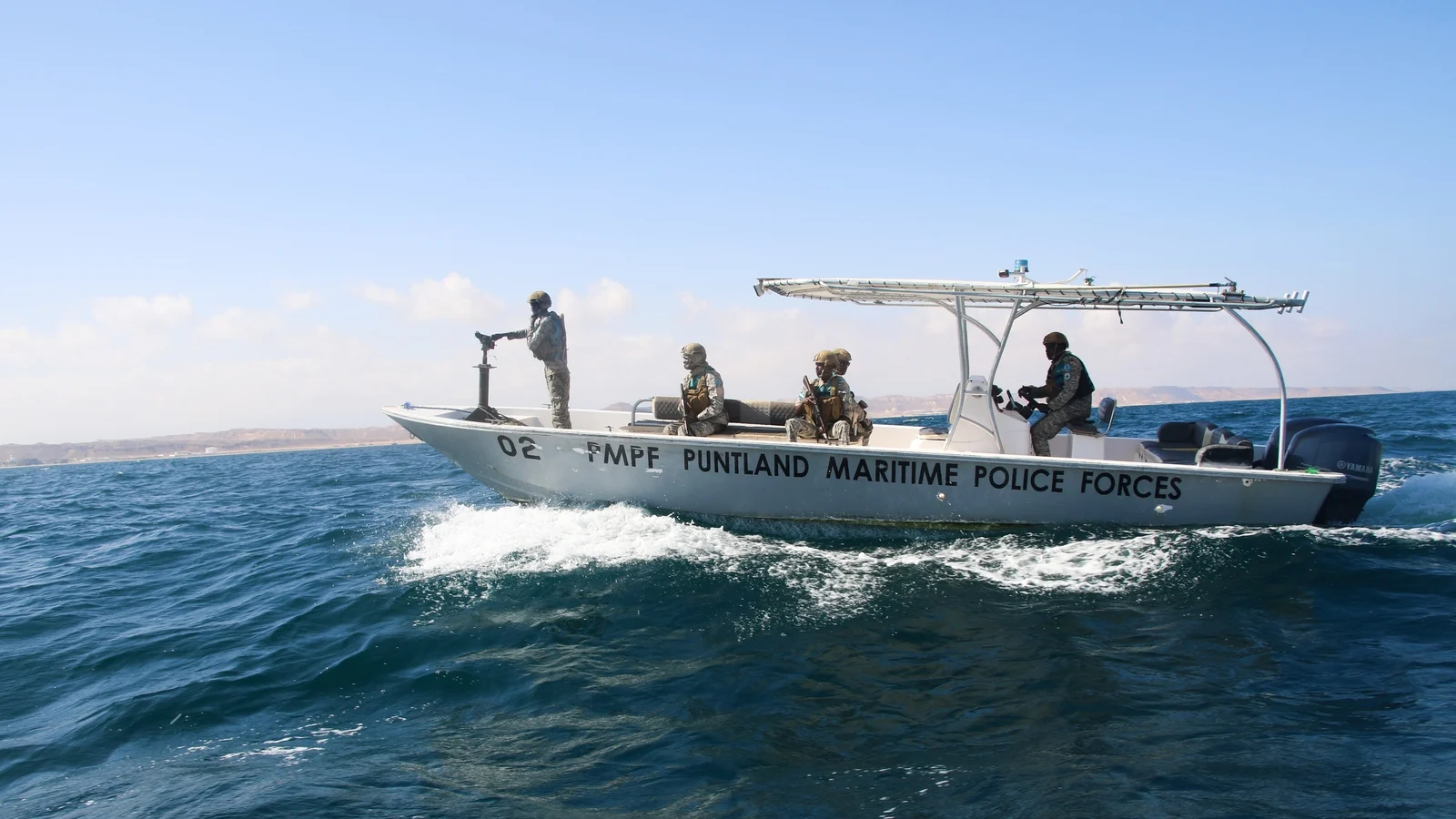
Then the radio crackled. A voice, thin with alarm, told a nearby fishing skiff to keep its distance. A large oil tanker, officials say, was no longer where it had been charted to be. It had been boarded, commandeered, and steered back toward Somalia, 77 nautical miles south into Somali territorial waters.
What happened
The British maritime security agency UKMTO disclosed the seizure on Tuesday, describing the incident as “unauthorised persons taking control of the tanker and manoeuvring the vessel” toward the Somali coast northeast of the town of Mareeyo. Days later, the agency reported further confrontations: an 11-person armed boarding of a Somali-flagged fishing vessel and a separate boarding of an oil-products tanker — a cluster of events that UKMTO said “indicate a credible piracy threat.”
Somali officials were slow to respond to international queries, a silence that, in this country, is as much a symptom as it is a statement. Somalia’s government operates in fits and starts amid a patchwork of semi-autonomous regions, insurgent strongholds, and clans whose loyalties are often local rather than national.
Voices from the Water
On the shoreline near Mareeyo, where fishermen mend nets as they have for generations, the seizure landed like an old fear reborn. “We used to see pirates in the daytime and at night,” said Abdi Nur, a 52-year-old fisherman. “They took boats before. Now big ships again. People are scared. They are not just passing, they come close to shore.”
From a small cafe in Bossaso, a port city some distance to the north, Captain Hassan Ali — who has worked the Gulf of Aden for 25 years — shook his head. “The sea remembers these things. When navy convoys were everywhere a decade ago, it felt safer. But the world’s attention moved. Those holes in security are filled by people who don’t care about flags,” he said.
A maritime security analyst, speaking on condition of anonymity, offered a harsher calculus. “This is less a tale of maritime adventurism and more a signal flare for geopolitics,” they said. “When the Strait of Hormuz is effectively constricted by tense relations in the Gulf, the Red Sea becomes the alternative artery. That makes it more tempting — and more lucrative — to threaten shipping lanes.”
Why the Red Sea Matters — and Why This Matters to You
For readers who track the economy as a distant thing that happens in skyscrapers, here’s the connective tissue: roughly one in ten to one in twelve containers of global trade passes through the Suez Canal and the Red Sea corridor. Oil flows are equally sensitive to chokepoints; historically, roughly one-fifth of seaborne oil has transited the Strait of Hormuz, which sits on the other side of the Arabian Peninsula from the Gulf of Aden.
When tensions grow in one maritime chokepoint, the other grows in importance. That means more tankers, more cargo ships, and more concentrated value moving past places where governance is weak or contested. For insurers and shipping companies, that concentration translates into higher premiums and security surcharges. For consumers, it can mean pricier fuel and delayed goods on store shelves. For shippers deciding whether to take the Red Sea route or reroute around the Cape of Good Hope, the math is ugly: rerouting adds days or weeks to journeys and millions in extra fuel and time costs.
Numbers that sharpen the picture
Consider this: the Suez route carries around 10–12% of global seaborne trade and is a preferred path because it’s fast and efficient. Detouring around Africa can tack on 7–14 days to a round trip and tens of thousands of dollars in additional costs for a single large vessel. Multiply that by thousands of sailings and the economic ripple becomes stark.
Back to Somalia: Why Anything Can Happen
To understand how a tanker could be steered into Somali waters, you have to understand the unsteady polity that is Somalia. The central government in Mogadishu shares authority with regional administrations such as Puntland and Jubaland; militant groups like Al-Shabaab still control rural swathes and launch attacks on cities. The sea itself has been a theatre of opportunists — from the piracy wave that peaked around 2011 to the lull that followed once international navies and private security became commonplace.
“The state never held the entire coastline,” said Dr. Fadumo Ismail, a Somali political scientist. “There are local power brokers, clans, and informal economies tied to coastal communities. When central capacity diminishes, non-state actors fill the gap. That’s true on land and at sea.”
Local color matters here. In port markets, men in colorful diracs sip spiced tea and pass qat leaves among friends while discussing the day’s catch. Motorbike couriers weave between stalls stacked with tuna and mangos. Children race along piers, oblivious to the larger currents pulling at their shores. It is in such ordinary scenes that the extraordinary — like a tanker being seized — collides with daily life.
Regional Dominoes: Yemen, Houthis, and a Geopolitical Game
Across the water, Yemen’s conflict continues to cast long shadows. Houthi rebels — armed and supported at times by external patrons — have carried out attacks on shipping in previous years, most notably in the Red Sea and Gulf of Aden. Those actions have made governments, shipping companies, and insurers jittery, and every new intrusion into maritime routes reignites the calculus of risk.
“These waters are a mosaic of local grievances and wider geopolitical rivalry,” said Miriam Goldberg, a researcher on maritime security. “What starts as a local incident — a hijacking, a boarding — can be amplified because many actors have an interest in making a point about control or coercion.”
What Happens Next?
There are no neat answers. International naval patrols have historically checked piracy when they are sustained and coordinated; private security teams on ships can deter boarding but at cost. Strengthening Somali coastal governance would be a long-term fix, but it requires political consensus, investment, and sustained attention — all in short supply.
- Short-term: increased naval patrols, rerouting options, higher insurance premiums.
- Medium-term: shipboard security measures and multinational coordination.
- Long-term: political stability ashore, economic opportunities for coastal communities, and regional diplomacy to reduce cross-border proxy tensions.
“You cannot police a sea if the shore is a lawless mosaic,” said Captain Ali. “Prevention is sitting in homes and markets, not only on warships.”
A Question for the Reader
When the commons — the oceans we all depend on — become battlegrounds for local disputes and global power-play alike, who should step in? Should the cost of security fall on private shipping companies, taxpayers, or international coalitions? And as more of our world’s trade depends on narrow routes and fragile states, what kind of global imagination do we need to safeguard those arteries?
The tanker that drifted into Somali waters is not just an incident. It is a mirror held up to our interconnected world: thin threads of commerce stretched across fragile shores. The next time you watch a shipping report or see a fuel price rise, remember the men on the piers of Mareeyo and the long arc from local fear to global consequence — and ask: how do we mend it?