A Night Interrupted: Laughter, Fear and a Nation Asking What Comes Next
Washington, D.C., has a particular smell in the spring — a mix of cherry blossoms, diesel from the Metro, and the faint perfume of optimism that gathers around the White House Correspondents’ Dinner. People arrive in gowns and suits, press passes sing in the shadows, and the joke writers of the capital sharpen their wits for the cameras. This year the cameras were still rolling. The jokes had already been told. And then, in the lobby of the Washington Hilton, a single burst of gunfire cracked through the air and the evening’s script was abruptly, terrifyingly rewritten.
It read like a scene from a political thriller — but it wasn’t fiction. A man later identified as Cole Allen barreled through a checkpoint, opened fire on Secret Service agents and wounded one before he was restrained and arrested. Guests were hurried outside. The dinner, an annual ritual where politicians and journalists mingle under a fragile tent of civility, was evacuated. Whispers swelled into shouts. Phones recorded hands that once clapped for satirists now trembling with fear.
When Satire Feels Like Flame
Jimmy Kimmel had already pushed the envelope days earlier. In a televised parody of the Correspondents’ Dinner, he launched into a monologue aimed at the first lady. “Mrs. Trump, you have a glow like an expectant widow,” he quipped — a line meant for shock and laughter, but landing hard in an atmosphere where political lines are redrawn daily on social feeds and talk radio.
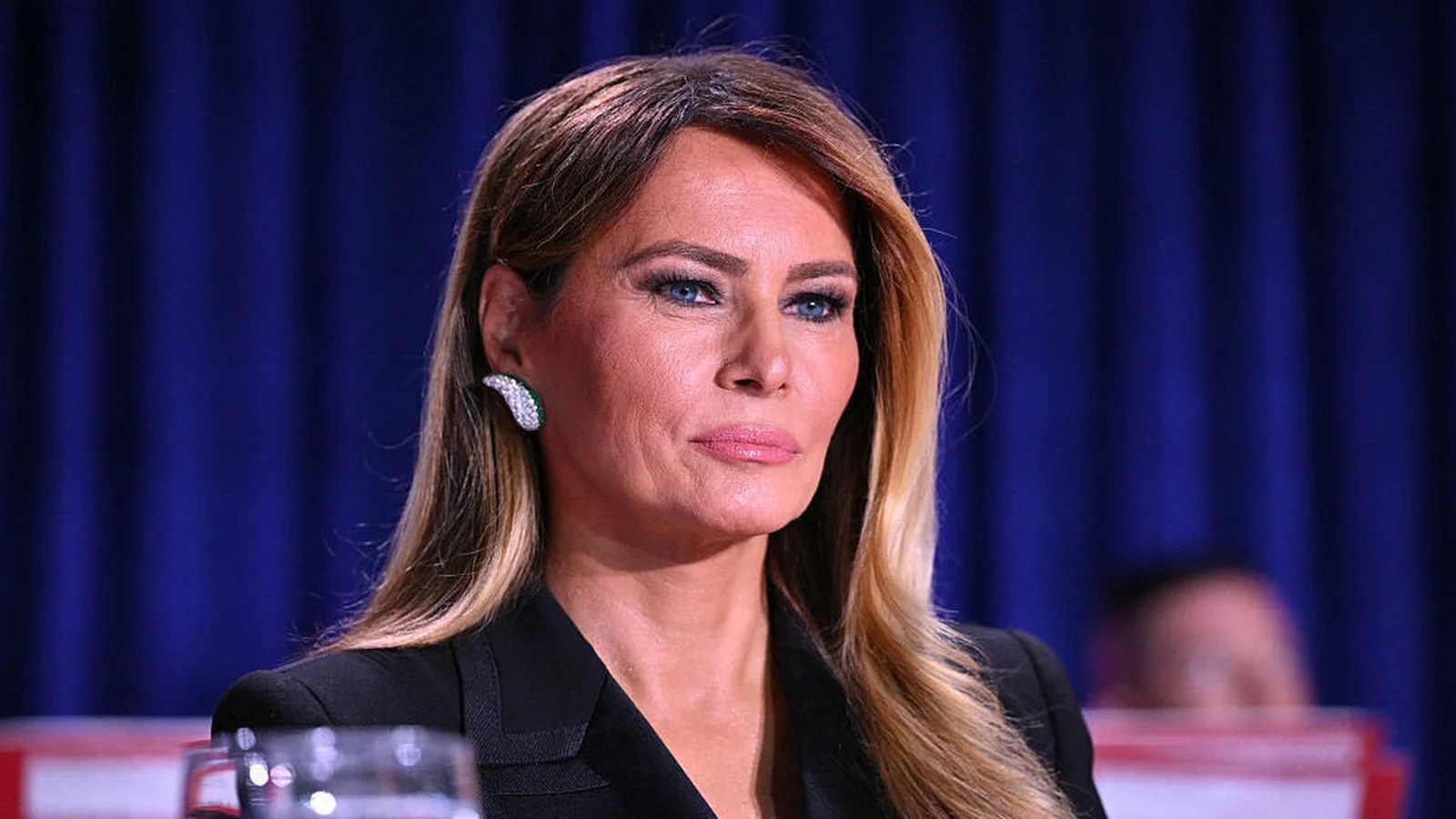
For some, the joke was a classic late-night punch; for others it was the latest in an escalating litany of commentary they describe as hateful. “Enough is enough,” Melania Trump wrote on X, accusing the network and its talent of fanning flames. “How many times will ABC’s leadership enable Kimmel’s atrocious behavior at the expense of our community,” she said, in words that landed like a gavel.
President Donald Trump, speaking on his platform, called for Kimmel to be fired “immediately” by Disney and ABC, arguing the monologue went “far beyond the pale.”
The Echoes of a Joke
Television thrives on provocation. Satire pierces pomposity, punctures pretense, and sometimes lands a needed blow. Yet in an America where fireworks and gunfire can feel alarmingly close to each other, a barb that once would have been dismissed as merely tasteless now ricochets into debates about safety, incitement and corporate responsibility.
“Comedy has always been about pushing boundaries,” said Dr. Lila Moreno, a media ethics professor at Georgetown University. “But when those boundaries overlap with a climate of political violence, we must be reflective about intent, context and consequence. A punchline isn’t created in a vacuum.”
Not everyone agrees that the joke warranted the fury it’s received. “I watch late-night hosts to unwind,” said Rashid Alvi, a public relations consultant who attended press events in D.C. “It felt like performative outrage — an attempt to score points. But then shots were fired, and everything became raw.”
Regulatory Pressure and the Blurring Lines of Broadcast Control
The incident didn’t occur in a vacuum. The months preceding the dinner had already seen a tug-of-war between broadcasters and regulators. FCC Commissioner Brendan Carr had publicly pressured stations to consider pulling Kimmel from airwaves, warning that local broadcasters who aired his show could face fines or even loss of licenses. In response, some broadcast groups — notably Sinclair and Nexstar — briefly dropped Kimmel’s program on dozens of ABC-affiliated stations.
“What we’re witnessing is a test of where the line is drawn between free expression and public safety,” said James Huang, a communications lawyer who has represented broadcasters. “The FCC’s rhetoric signals a desire to expand local control over programming, but the downstream effect is a chilling one for editorial independence.”
ABC briefly suspended Kimmel’s show months earlier after comments about the assassination of a political activist drew condemnation. Disney, ABC’s parent company, declined immediate comment after the shooting.
On the Ground: Voices That Cut Through the Headlines
Walking the block around the Hilton the morning after, you could feel the city processing what happened in micro conversations — in coffee lines, on metro platforms, at the desks of reporters who make lives out of being present when history folds into chaos.
“We were supposed to be laughing,” said Tara Nguyen, a junior reporter, fingers still stained with coffee. “Instead, we were running. You never think that a joke could be the preface to a lockdown. It makes you wonder how easily public discourse tips into danger.”
A Secret Service veteran, who asked to speak on background, described the chaotic minutes: “Training kicks in — shield, evacuate, secure. But none of that removes the human reaction. You don’t compartmentalize fear because it’s part of the job. You feel it.” The agent’s voice was measured but haunted.
- Wounded: One Secret Service agent was reported wounded by the suspect.
- Arrest: The suspect was subdued and taken into custody at the scene.
- Network responses: Disney/ABC had not issued an immediate public statement following the shooting.
Questions That Aren’t Going Away
How do we balance satire’s role as a corrective against the responsibilities of platforms and networks? When does provocative speech cross into a risk that media companies must proactively manage? And who decides when a joke moves from punchline to provocation in a landscape already brittle with political resentment?
“The immediate reaction — to pull, to punish, to punish quickly — is emotionally satisfying,” said Dr. Moreno. “But we should ask what long-term precedent we want to set for content control. Are we comfortable with regulators or corporations becoming the arbiters of comedic taste?”
At the same time, data reminds us why the stakes feel so high. The United States records tens of thousands of firearm-related deaths each year; unfamiliar headlines about violence accumulate into a national anxiety. When entertainment edges close to imagery or rhetoric suggestive of harm, that paranoia is easily weaponized.
Beyond D.C.: A Mirror for the Moment
The drama at the Hilton is more than a isolated episode. It’s an illustration of how culture, media and politics collide in modern America — how jokes become ordinance, how platforms and power trade blows, and how the public sphere is increasingly policed by both corporate boards and the loudest corners of social media.
People across the political spectrum expressed unease, but not unanimity. For some, the call to punish Kimmel is a necessary stand against what they see as normalized dehumanization. For others, it’s a dangerous slide toward censoring dissenting voices. Both sides look at the same sparks and fear different fires.
So what should an audience expect from those who shape public conversation? Should networks act as guardians, editors or simply as marketplaces of ideas? As you read this, consider where you stand: Do you think media companies should immediately remove personalities who provoke, or do you worry about the broader implications for free speech?
Closing Thought
That night at the Correspondents’ Dinner exposed more than a fissure in American humor. It exposed a nation still struggling to reconcile freedom with safety, entertainment with consequence, satire with the very real human cost of political antagonism. The jokes will return — and so will the debates. But if the past few days have taught us anything, it’s that the line between stage and street can, in moments, be alarmingly thin.
“We must ask ourselves,” Dr. Moreno said, “what kind of public square we want: one where we can laugh at power without endangering each other, or one where every laugh becomes ammunition.”