Ireland’s Atlantic Wake: A Small Nation Sets Big Maritime Ambitions on the EU Stage
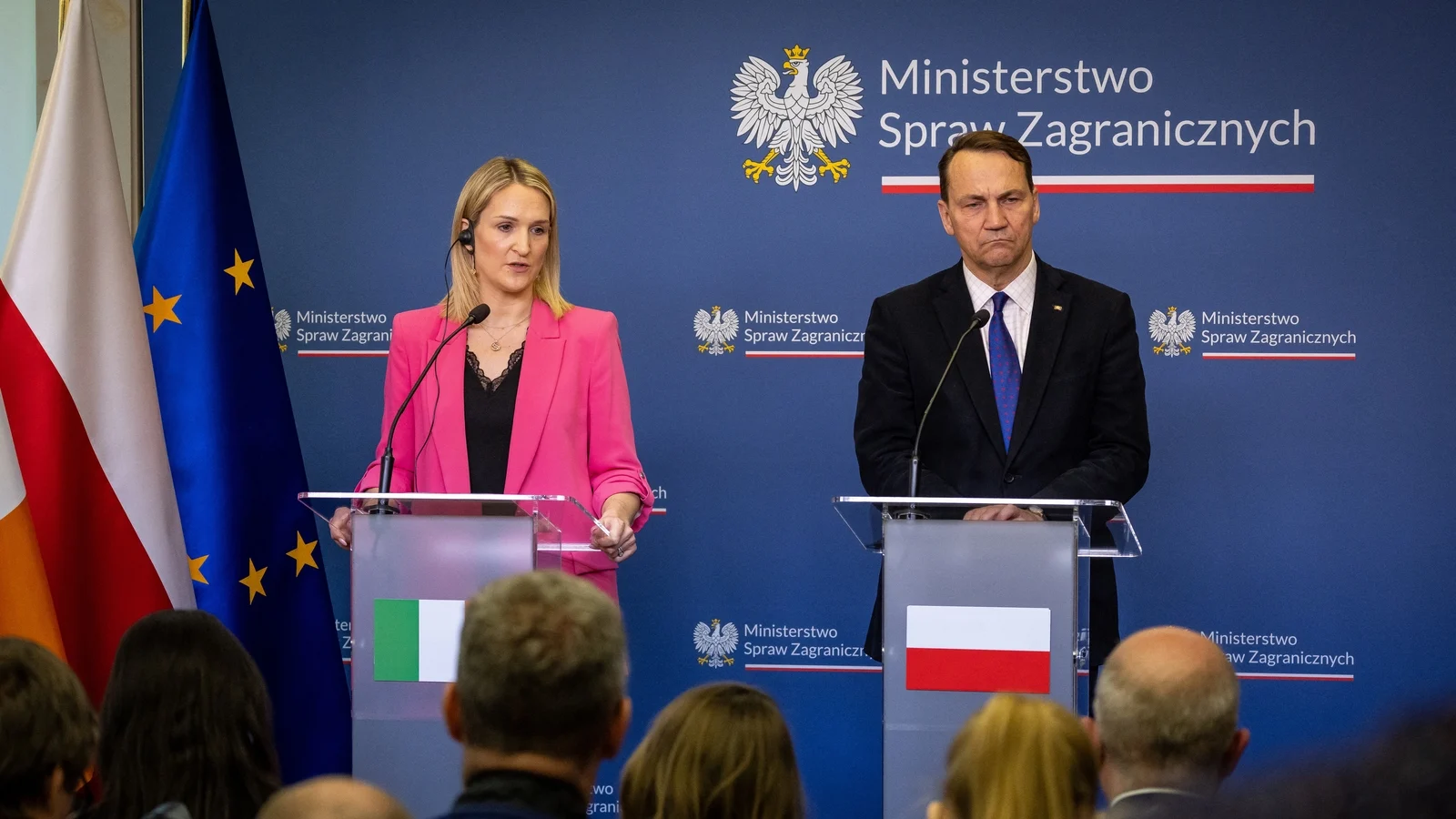
On a spring morning in Warsaw, amid the soft bustle of diplomats and the faint whiff of roasted coffee drifting from a nearby café, Ireland’s foreign minister sketched a map not just of seas and coasts, but of strategy. Helen McEntee arrived in Poland with a clear intention: to use Ireland’s forthcoming presidency of the Council of the European Union — beginning 1 July — as a platform to lift maritime security from the broadsheets into urgent, practical action.
“The ocean is not some distant idea for us,” she said, clearly and simply, during a series of bilateral talks with Poland’s Radosław Sikorski and Władysław Kosiniak-Kamysz, both deputy prime ministers who double as foreign and defence ministers. “It’s our sovereignty, our infrastructure and, increasingly, our vulnerability.”
Why the sea matters now
The line between the visible and the invisible has thinned. Above the waves, navies and drones patrol; below them, delicate fibers of international life—subsea cables—carry financial transactions, medical data, and the streaming that fills our evenings. More than 95% of intercontinental internet traffic travels under the sea in these cables. Cut one and economies stutter, markets wobble and hospitals that rely on cloud systems can be imperiled.
Ireland’s new National Maritime Security Strategy, launched in February, responds to precisely this modern topology of risk and reward. It names critical assets—ports, undersea infrastructure, fishing grounds—and envisions cooperation, intelligence-sharing and capability-building to protect them. The document also signals a willingness to deepen ties at sea with neighbouring powers, including France and the United Kingdom.
“This isn’t about posturing,” said Dr. Aoife Brennan, a maritime security analyst based in Cork. “It’s about practical steps: better radar and sonar, investment in counter-drone systems for patrol vessels, coordinated incident response and shared intelligence networks. For island nations—your lines of communication are your lifelines.”
From Warsaw with priorities
In Warsaw’s polished conference rooms, Ireland and Poland found common ground. Poland, which made security the axis of its EU presidency earlier this year, is carrying the heft of today’s defence conversations. Warsaw is projected to spend close to 5% of its annual GDP on defence this year—among the highest shares in Europe. Ireland, by contrast, has historically run one of the bloc’s more modest defence budgets, hovering slightly above 0.2% of GDP.
Numbers, though, do not tell the full story. Since 2022—the year Russia launched its full-scale invasion of Ukraine—Ireland has significantly stepped up its commitment to defence. The government allocated a record €1.5 billion for defence this year, a 35% increase compared with 2022. Capital funding for defence, ministers note, has risen by some 55% in that period. It’s an accelerated trajectory for a country that has long measured itself in civic neutrality rather than military might.
“We’re changing gear,” McEntee told reporters. “We must adapt to threats that are maritime, technological and hybrid. Our investments will focus on radar, sonar, counter-drone capabilities and protecting the underwater arteries of our economy.”
On the ground and at sea
Walk along the quays in Galway or Cork and you’ll hear different cadences: the shouts of trawler crews, the creak of ropes, the low rumble of ferries. These are places where national strategy meets everyday life. Subsea cable landing points—some of them in rural, often overlooked communities—are strategic assets, with technicians and local pubs marking the only visible signs that beneath them lies the global network.
“We’re a small place but we’re on the map,” said Sean O’Malley, a harbourmaster from a coastal county, taking a drag on his cigarette as gulls circled overhead. “When the cables go down, it’s not just the city that feels it; the local shop, the hospital, the teenager doing homework. People don’t think of it until the lights flicker.”
Allies, alliances and a seat at the table
Security conversations in Warsaw also threaded through the wider European commitment to Ukraine. McEntee emphasized Ireland’s stance: that supporting Ukraine is inseparable from defending the peace and stability of Europe. “If Ukraine’s future is negotiated, the EU must have a voice, a seat at that table,” she said. “Our support cannot be transactional.”
Poland’s Sikorski nodded in agreement, pointing to the communities that bind the two countries. “We’re united not only by interests but by people—there are many Polish families who have made Ireland their home. Our ties are human as well as strategic.”
For some commentators, Ireland’s presidency offers a rare window. It’s not about turning the country into a military heavyweight overnight; it’s about shaping norms, pushing for common standards on protecting critical maritime infrastructure, and embedding information-sharing mechanisms across the EU.
Practical steps—and hard choices
Policy, of course, is economics. Defence spending is political. EU members differ starkly in capacity and appetite: while countries like Poland are spending nearly 5% of GDP on defence this year, other EU states still fall below the NATO guideline of 2% (for those who are members) or national spending priorities. Ireland’s increase in funding is meaningful, but it raises questions about long-term budgeting and the balance between investing in hard assets and building human expertise.
“Technology isn’t a set-and-forget solution,” Dr. Brennan warned. “You need trained crews, continuous maintenance, international coordination, legal frameworks that let countries share data swiftly when a crisis hits. Those are the things that take time and political will.”
What should a watching world take from this?
Consider the map again. The Irish coastline is a long, jagged suggestion of land against an immense Atlantic. The sea that has been a source of trade, myth and isolation is now a frontier for cyber and physical security. Small states like Ireland are proof that geography still matters, but so does diplomacy and policy imagination.
Ask yourself: how would your life be affected if the invisible lines beneath the seafloor were severed? Would your bank, your hospital, your child’s school be able to carry on? Ireland’s move to place maritime security at the heart of its EU presidency isn’t just about naval exercises; it’s about asking Europe to think of resilience differently—about how to protect the pipes and fibers and routes that make the modern world run.
There will be debates ahead—over budgets, over partnerships with neighbours like the UK and France, over how intrusive surveillance and intelligence-sharing should be. There will be town-hall meetings in coastal villages, committees in Brussels, and midnight cables humming under the waves. And when Ireland takes the EU helm in July, it will be steering conversations that touch ports and parliaments alike.
“We don’t want to alarm anyone,” McEntee reflected as the day’s meetings closed, “but we must be honest about the dangers. If a small island country can start a big conversation about the sea, perhaps that’s just the kind of leadership Europe needs.”
Who will listen? Who will act? And what stories will be written, not just by ministers in Warsaw, but by the fishermen, engineers and citizens whose lives run like threads beneath the ocean? The answers will, for better or worse, shape the next chapter of Europe’s relationship with the Atlantic depths.