When Bread Becomes a Battlefield: Grain, Guns and the Port of Haifa
The morning the ship was said to have arrived, the port cranes of Haifa cut silhouettes against a pale Mediterranean sky — indifferent metal giants, their cables creaking like the rigging of old sailing ships. In Kyiv, a president’s social media post rippled across screens: “Another vessel carrying such grain has arrived at a port in Israel and is preparing to unload,” Volodymyr Zelensky wrote, his message part accusation, part call to action.
For many readers the image is almost surreal: sacks of wheat and corn — foodstuffs that feed millions — transformed into a diplomatic flashpoint. Yet for Ukrainians and for governments watching fragile supply chains, this is not symbolic. It is practical, legal and urgent.
Accusations, denials and a missing bill of lading
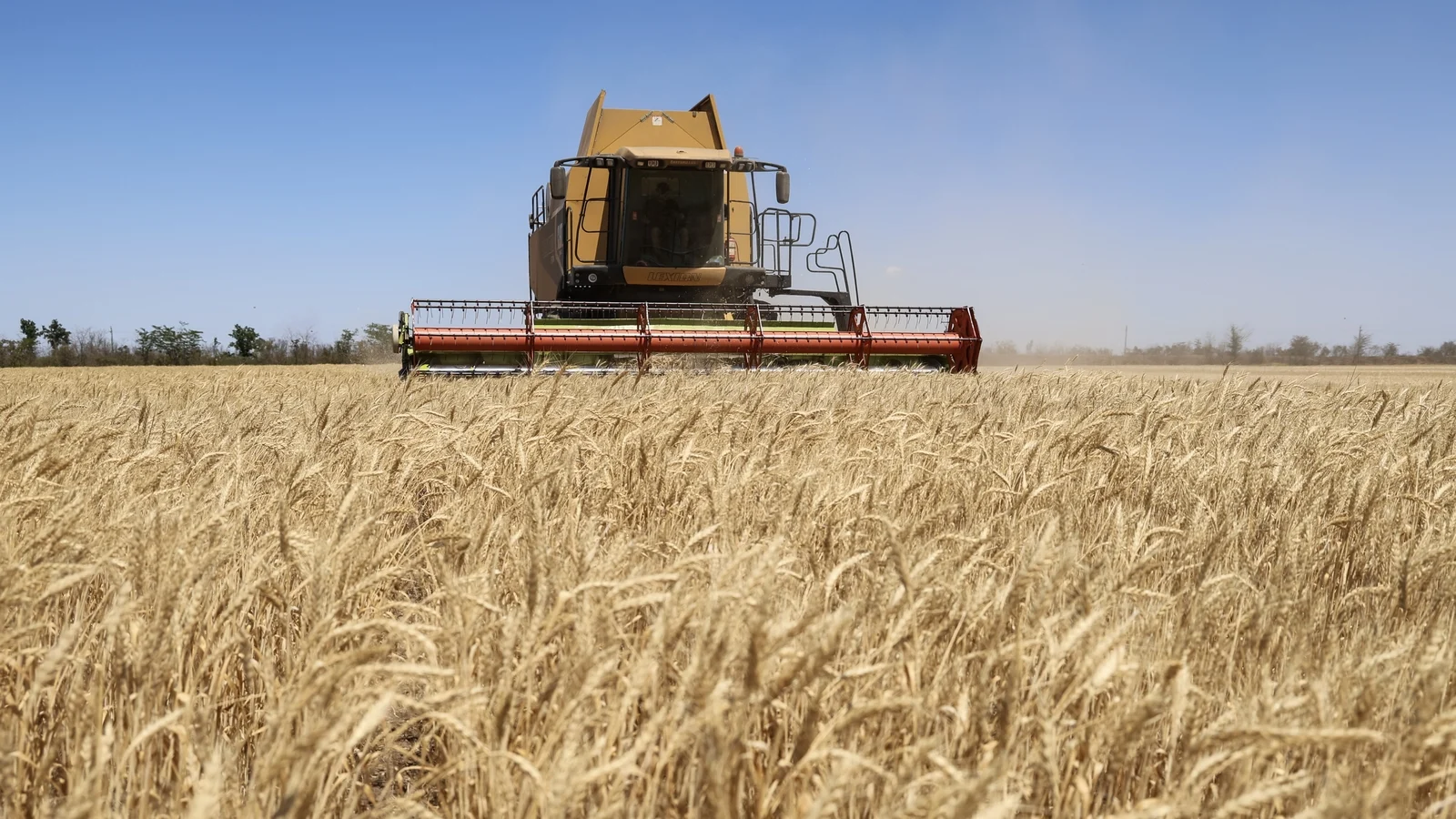
Ukraine, one of the world’s major grain producers and exporters, has repeatedly accused Russia of exporting agricultural products taken from territories Moscow has controlled since the full-scale invasion in February 2022. Kyiv says it tracked more than two million tonnes of grain moved out of occupied regions in 2025 alone to markets across Africa, Asia, the Middle East and Europe.
“We have the satellite footprints, the port calls, and we followed the paperwork,” a Ukrainian customs official told me in Kyiv last week. “Grain is not anonymous; its route is traceable if you have the will to trace it.”
Israel, for its part, pushed back. “The Ukrainian government has not submitted a request for legal assistance,” Foreign Minister Gideon Saar told reporters, adding that the vessel in question had not yet entered Haifa and that no documents substantiating Kyiv’s claims had been presented. “If you have any evidence of theft, submit it through the appropriate channels,” he said, chiding what he called “Twitter diplomacy.”
The technical heart of the row is a bill of lading — the shipping document that lists cargo details and ownership. “It’s not possible to verify the truth of the Ukrainian claims regarding the forgery of the bill of lading,” Mr Saar added, a short sentence that reveals the chasm between public accusation and legal proof.
Why the grain matters — beyond headlines
Grain is rarely only grain. For Ukraine, it is economic lifeblood: fields that once fed domestic markets and produced exports that helped stabilise world prices. Grain prices feed into inflation, into the budgets of importing nations, and into the bellies of millions in countries vulnerable to food insecurity.
Consider this: disruptions or illicit diversions of even a few hundred thousand tonnes can ripple through markets that depend on steady Black Sea shipments. When Kyiv alleges two million tonnes were taken in a single year, that’s not just a statistic — it is months of bread, sacks of feed, and livelihoods uprooted.
Lieutenant-colonel (ret.) Miriam Katz, a maritime law specialist based in Haifa, explained, “Ports are regulated environments. A bill of lading is the paperwork equivalent of DNA for a shipment. If that chain is broken or falsified, it becomes a legal tangle and a diplomatic crisis.” She added, “Proving theft across a warzone is possible but painstaking — you need more than tweets.”
From Haifa’s quays to Kyiv’s sirens: a city under winged threat
While diplomats sparred over manifests and images, Kyiv itself felt the war’s tremors. Explosions echoed over the city during a rare daytime drone attack that sent air raid sirens keening across neighbourhoods shortly after 2:15pm local time. City authorities said air defences engaged incoming drones and a public alert lasted 49 minutes; the mayor, Vitali Klitschko, reported two people injured.
Walking along Khreshchatyk, the city’s broad central avenue, residents spoke in low, brittle voices about the strange normality of alarms. “You get used to the sirens, but your body never does,” said Iryna, a schoolteacher whose classroom windows look towards the Dnieper. “Today I was in a meeting and suddenly everyone was staring at their phones.”
These close-in strikes are a reminder that war in 2025 is not only fought by tanks and infantry. Drones — cheap, proliferating, and often produced in large numbers — have become the artillery of modern asymmetry.
Energy targets, oil fires and an escalating chorus of warnings
The same pattern of strikes extends beyond Ukraine’s borders. A Ukrainian drone attack touched off a major fire at an oil refinery in Tuapse — the third assault on the Black Sea port region in less than two weeks, Russian officials said. Moscow, predictably, accused Western governments of fuelling an arms race by increasing drone production and supply to Kyiv. “This could lead to unpredictable consequences,” Russia’s defence minister warned.
Experts note that the spread of inexpensive drone technology makes containment difficult. “This isn’t a remote-control issue any more; it is industrialised warfare,” said Dr. Samuel Ortega, a security analyst at a London think tank. “Every country that steps up drone supplies alters risk calculations.” He paused, then added, “And oil fires in coastal refineries can lift market prices in ways that hurt the poorest importers first.”
Across the border: Hungary’s outreach and the politics of identity
While the battlefield and the market collide, political manoeuvring continues in Europe. Hungary’s incoming prime minister, Peter Magyar, has offered a meeting with President Zelensky in early June — symbolically in Berehove, a small city in Ukraine’s Transcarpathia region with a significant ethnic Hungarian community. Magyar framed the initiative as a bid to “open a new chapter” by addressing long-standing grievances over language and education rights.
“We must ensure Hungarians of Transcarpathia may remain in their homeland with full cultural and educational rights,” Magyar wrote after meeting Berehove’s mayor in Budapest. The line echoes a dispute that has simmered since Kyiv’s 2017 education law, which tightened Ukrainian as the primary language of instruction for secondary education. Hungary said the law disenfranchised tens of thousands of ethnic Hungarians. Kyiv viewed the law as part of state-building.
This potential thaw is geopolitically consequential: for years, Budapest — under the previous government of Viktor Orban — used its EU veto power to stall assistance to Ukraine. Whether this new outreach signals reconciliation or a strategic pivot will depend on follow-through and the sensitive balancing of identity, sovereignty and regional stability.
What to watch next — and what it all means
As a reader, you might ask: how do these threads tie together? They weave a picture of modern conflict where food, fuel and identity are battlefield axes. The grain row between Kyiv and Haifa is a test of international law and supply-chain transparency. The drone attacks are a reminder that the tools of war are proliferating, lowering the threshold for cross-border incidents. And the Hungarian overture shows how local minority rights can shape international alliances.
Here are a few signals to watch in the coming weeks:
- Whether Ukraine submits formal legal evidence of the alleged grain shipments and to which jurisdictions.
- Any movement by Israeli authorities to inspect the contested vessel or publish port call records.
- Escalation or de-escalation of drone attacks on both Ukrainian and Russian infrastructure, and any new donor announcements about drone supplies.
- Whether a meeting in Berehove between Magyar and Zelensky occurs, and if it produces concrete steps on minority rights.
Faces behind the headlines
At a cafe near the Haifa port, a crane operator named Amir stirred his coffee and shrugged at the politics. “I see ships come and go all my life,” he said. “Cargo is cargo, but I also know a grain truck when I see it. It’s hard to look at a bulging ship and not think of the people it might feed.” In Kyiv, an elderly baker I met on a tram held a paper bag of black bread. “We are used to flour being precious,” she said. “War makes even flour heavier.”
These simple observations are a reminder that behind legal arguments and diplomatic protocols sit people whose daily lives are shaped by grain prices, by whether a refinery burns, by whether a child can study in their mother tongue. When geopolitics picks up a sack of wheat and holds it like a bargaining chip, ordinary lives are the weight that tips the scale.
So what do we, as global citizens, do with this knowledge? We watch, we ask for transparency, and we remind ourselves that conflict is not an abstract ledger of gains and losses — it is a mosaic of neighbourhoods, ports and dinner tables. Perhaps the most urgent question is this: when the world looks away, who keeps count of the sacks, the sirens, and the small human stories that make up the cost?