A Diamond in the Mouth of Memory: A King, a Mayor, and a Question of Return
The plaza at the 9/11 Memorial hummed with the quiet of remembrance — the low echo of footsteps on stone, the soft wind that knifed across the bronze names, and a small cluster of cameras following an unhurried procession. On a cool, clear morning, King Charles placed a bouquet where the twin towers once split the skyline. It was a moment full of ritual, solemnity and the oddly intimate choreography of state visits: flowers, bow, a brief exchange, then the slow walk away.
Hours earlier, New York City Mayor Zohran Mamdani had given a different kind of statement. “If I were to speak to the king separately from that, I would probably encourage him to return the Koh-i-Noor Diamond,” he said at a press conference. The mayor, who is Indian American and who grew up with stories of partition and migration, delivered the line with the kind of blunt humanity local politics is famous for: a simple, moral nudge tossed into a larger geopolitical conversation.
What the Koh-i-Noor Carries: History, Loss, and Symbol
The Koh-i-Noor is not merely a glittering stone. It is a 105-carat heirloom of centuries: passed through the hands of Mughal emperors, Persian shahs, Afghan emirs and Sikh maharajas, before arriving in Britain after the annexation of the Punjab in 1849. For India, its existence in the Crown Jewels is a living wound — a physical emblem of an era in which power was expressed in dispossession.
“It isn’t about a jewel,” a man who runs a bookstore in Jackson Heights told me, speaking on the fly between customers. “It’s about stories stolen from our grandparents. It’s about what it means to be seen again.” He paused, then laughed softly. “And, frankly, my grandmother still brags she once saw a picture of it in her history book. She wants it back more than she wants anything else.”
India’s claims have been consistent: the diamond was taken following British conquest, presented to Queen Victoria in 1850, and has remained in Britain ever since. The British government’s position has generally been that the stone was acquired legally under the treaties and laws of the time, and Buckingham Palace declined to comment on Mayor Mamdani’s remark.
A Meeting of Two Histories
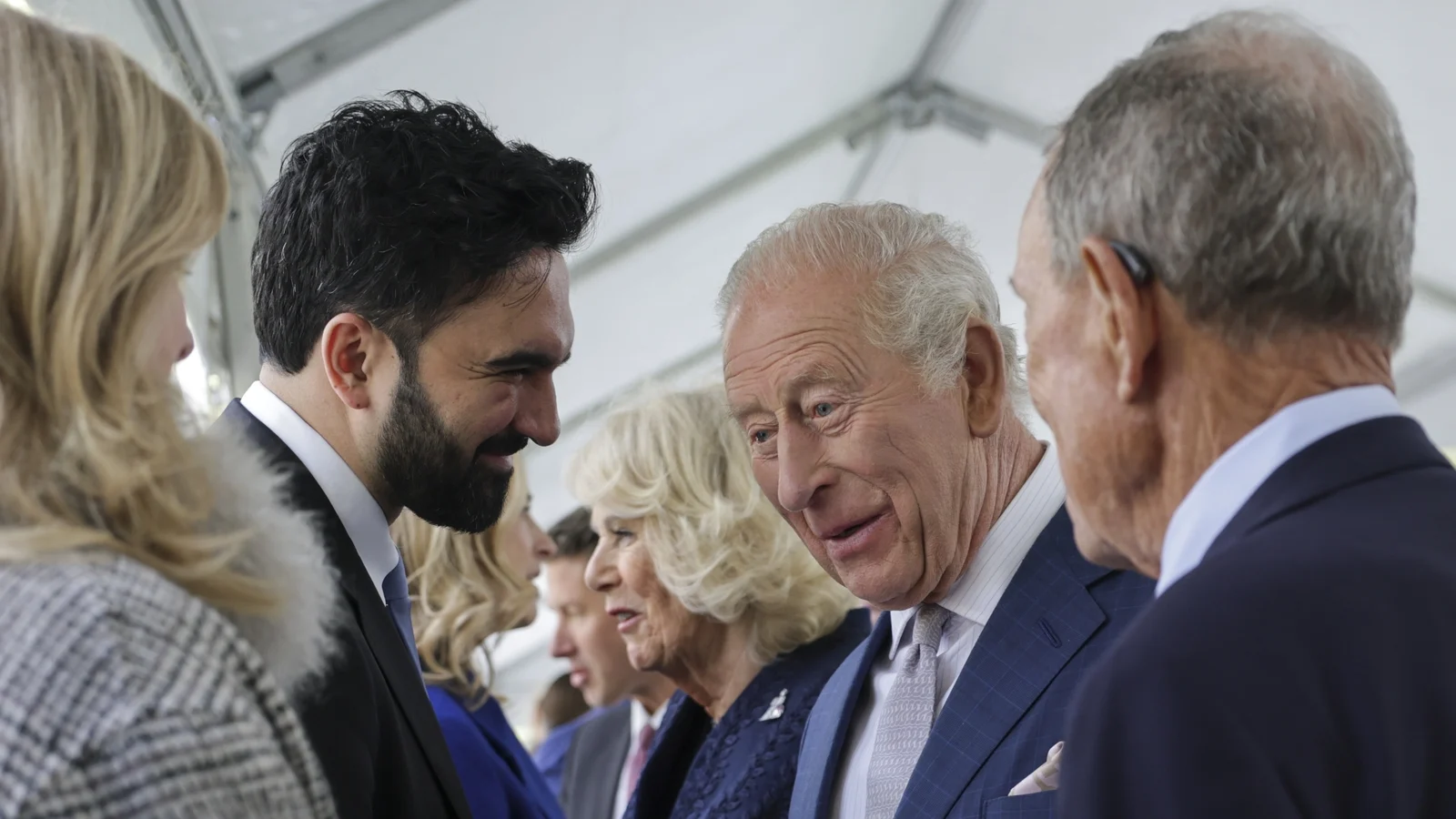
Later the same day, the king and Mayor Mamdani crossed paths at the memorial. Their conversation, brief and private, drew attention because of the proximity of two worlds: a royal figure long associated with the legacy of empire, and an elected official of Indian descent, representing a city whose streets are woven with immigrant stories.
Mamdani’s office did not respond when asked whether the mayor had raised the diamond directly in that exchange. But the very suggestion — voiced publicly, in the shadow of a national site of grief — underscores how colonial relics still move through contemporary politics. They are not merely artifacts in glass cases; they are markers of value, pride and historical grievance.
Voices From the Diaspora: Memory, Identity, and the Push for Repatriation
In neighborhoods across New York where chai kettles steam on stoops and posters for Bollywood films hang in shop windows, the issue of the Koh-i-Noor ripples through conversation. “My mother used to tell us stories about the jewels of the maharajas,” said Asha Patel, who runs a sari shop near the Bay Terrace station. “When she saw the Koh-i-Noor on TV, she would always say, ‘Why did they take it away?’ For people my age, it’s personal — we grew up with the feeling that something was taken that shouldn’t have been.”
Such sentiments are playing out globally, in a world that is increasingly uncomfortable with the idea that imperial powers casually extracted cultural treasures while leaving broken institutions behind. The debates are not limited to one stone: they are part of a broader movement that has put spotlight on cases like the Parthenon Marbles and the Benin Bronzes, and has pushed major museums and governments to re-evaluate what restitution could look like.
Experts Weigh In
“Repatriation is as much about restoring dignity as it is about returning objects,” said a historian of modern empires, speaking for this piece. “When a country asks for an object back, it’s often about identity, narrative, and correcting an imbalance in the historical record, not just reclaiming a valuable item.”
Legal scholars, meanwhile, warn of the complexity. Many artifacts were transferred under the laws of the time; others were bought and sold. Determining rightful ownership after centuries, layered transactions and shifting borders is a painstaking process. Yet law and ethics need not be the same thing: public sentiment, diplomatic pressure, and changing museum policies have already nudged some institutions toward cooperative solutions.
Beyond the Jewel: What Repatriation Could Mean
Ask yourself: what does it mean to return something that survived conquest because it was small enough to carry? How do you weigh the significance of a single object against the long shadow of imperial violence? These are not academic questions for the people whose grandparents lived the history in full. They are real dilemmas that tug at civic pride, national identity and local memory.
For many Indians, the Koh-i-Noor is described in the language of national heritage. In New Delhi, calls for its return are common from politicians and civil society groups alike. “It’s a valued piece of art with strong roots in our nation’s history,” one Indian official said in the past. In the courts of public opinion, such appeals resonate not only across borders but across generations — a bridge between the private grief of dispossession and the public demand for restorative justice.
Small Acts, Big Ripples
Repatriation cases often begin with a single, principled request and widen into broader discussions: about school curricula, about who tells whose history, and about how museums might transform into spaces of shared stewardship rather than static repositories. Where might that lead? Perhaps to joint exhibitions, loans for long-term displays in the places where the objects originated, or collaborative conservation projects that respect provenance and context.
For Mayor Mamdani, the remark was a reminder that local leaders can press global questions into the public sphere. For King Charles, whose lineage intersects with empire’s legacy, the visit is another moment in which symbolic gestures may matter as much as protocol. For the Indian diaspora in New York, it was a small victory: a mayor willing to name what many have felt for decades.
Leaving the Stone and Picking Up the Conversation
At the edge of the memorial, a young woman paused to frame a photograph. “It’s been in Britain for nearly two centuries,” she said, smiling at the absurdity of the modern world where a diamond could be the ledger of an empire. “Why wouldn’t we ask for it back?”
There will be legal entanglements and diplomatic hedges, and there will be those who argue that artifacts in major museums can educate global audiences in ways that local displays cannot. But perhaps the most important thing to watch is the conversation itself: how a single remark by a city mayor, made in the shadow of a national tragedy, can reopen a dialogue about history, ownership and healing.
What would justice look like in a world trying to reckon with the leftover goods of empire? Returning a diamond won’t erase a painful past, but it could be one small way of admitting it ever happened. And sometimes, a small admission is the first honest step toward repair.