A ship between oceans and alarm: the MV Hondius story
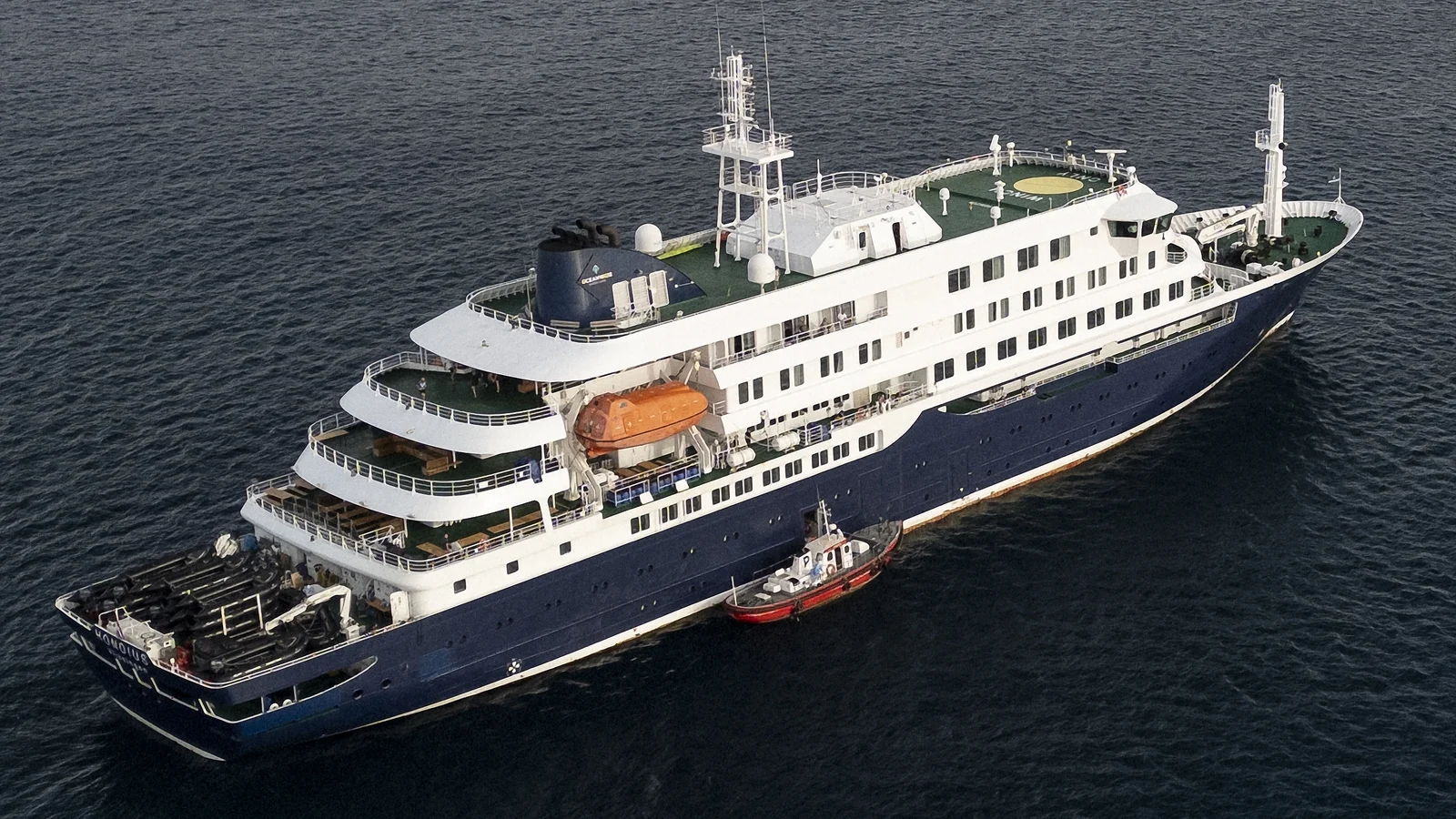
When a snug expedition ship steams through the lonely, glittering lanes of the South Atlantic, passengers expect penguins, wind-whipped decks and the slow unspooling of horizon. They rarely expect headlines. Yet that is how the MV Hondius—a small, comfortable vessel that ferries curious travelers from Ushuaia to remote islands—became the fulcrum of an international public-health jolt this spring.
Three people who traveled on that vessel have died. At least five of eight suspected cases of hantavirus tied to the voyage have been confirmed. For days the ship hovered, constrained by uncertainty and a web of contact-tracing that stretched across continents and time zones. Governments called relatives. Health agencies mobilised. Journalists knocked on doors and diplomats discussed repatriation. And, above the clamor of alarm, the World Health Organization leaned in with a carefully measured refrain: “This is not the start of an epidemic. This is not the start of a pandemic.”
What we know — the numbers and the people
Three fatalities have so far been linked to the outbreak—two European nationals who fell ill after leaving the ship and one who died en route. Five of the eight suspected infections have been laboratory-confirmed. Passengers who disembarked in St Helena on 24 April were later contacted as part of a sweeping tracing operation; authorities say those passengers came from at least a dozen countries, including the United Kingdom, the United States and Switzerland.
Doctors on the ground, clinicians in isolation wards and public-health teams in capital cities all say the same thing with slight variations: the immediate risk to the general public is low, but because the virus in question—the Andean hantavirus—can, in rare instances, pass between people, caution is essential. “We expect a limited outbreak if countries show solidarity and follow public health measures,” said one WHO official, capturing the cautious optimism and the call for cooperation that government health chiefs echoed around the world.
Quick facts
- Confirmed cases linked to the MV Hondius: 5 (of 8 suspected)
- Deaths reported: 3
- Virus strain identified: Andean hantavirus (ANDV)
- Typical hantavirus transmission: rodent excreta; human-to-human spread is rare but documented for ANDV
- Typical incubation period: days to several weeks
Tracing a trail across oceans and airports
Contact tracing for a modern cruise is a logistical jigsaw: passenger lists, shore excursions, transfers, flights. Oceanwide Expeditions, the ship’s operator, has been working to reconstruct who boarded and disembarked at every call since late March. The Hondius left Ushuaia, skirted subantarctic islands, called at St Helena, and later paused near Cape Verde before heading toward Tenerife in the Canary Islands where it is expected to dock.
“We are calling, checking and comforting,” a public-health official told me. “People are scared. But a lot of what we’re doing now is reassurance and surveillance—checking temperatures, symptoms, any close contacts.”
Some passengers were evacuated for medical care. Two were admitted to hospitals in the Netherlands and another was transferred to Germany. One of those evacuated has since tested positive. Others who were aboard have been asked to self-isolate as a precaution; in several countries, those who had close contact with confirmed cases are being monitored daily for signs of illness.
The science behind the fear: what hantavirus is
Hantaviruses are a family of viruses carried by rodents. Most human infections result from inhaling aerosolised particles of rodent urine or faeces—the classic image is a person sweeping an abandoned shed and stirring up viral dust. But the Andean hantavirus, known to circulate in parts of South America, is unusual: it has been recorded to spread between people in rare clusters.
Clinically, hantavirus infection can begin indistinguishably from a bad flu—a high fever, severe muscle aches, headache, and sometimes a dry cough. Within days, however, certain forms can progress to hantavirus pulmonary syndrome (HPS), a sudden, severe respiratory reaction that can be fatal without rapid, intensive care. Historically, some outbreaks of ANDV have carried case fatality rates in the range of roughly 30–40%, although outcomes vary with early detection and access to critical care.
“We must respect the virus without surrendering to fear,” said an infectious-disease specialist who has treated viral respiratory illnesses for two decades. “Early detection, isolation of symptomatic people and careful supportive care are what save lives.”
Onboard life: isolation, tension and tiny human stories
Inside the ship, the mood shifted. What had been days of lectures on wildlife and quiet nights at sea became a lesson in restraint: passengers confined to cabins, meals delivered to doors, quiet corridors where shoes made no sound. “It felt like being in a snow globe,” a British passenger recalled to me. “Everything around us went still, and you could watch people’s edges—how they were really coping.”
Martin Anstee, an expedition guide who was later hospitalised, told reporters he was “doing okay” as he awaited tests. Staff circulated information in multiple languages, and the ship’s crew tried to balance calm with candour—updating passengers, checking on psychological needs and liaising with health authorities. For many, the voyage’s wild, remote landscapes were now part of the backstory to a shared, unnerving experience.
Local colour: Ushuaia, St Helena and the Canary wrap-up
It all began at the southern tip of Argentina—Ushuaia—the kind of place where Patagonia’s winds shape conversations as much as landscapes. Authorities there have launched rodent-trapping surveys to understand local viral reservoirs. St Helena—a tiny, windswept island in the South Atlantic where the Hondius called—became, for a day, the node of an international investigation, with health workers phoning every disembarking passenger and logging movements.
And now the ship sails north toward Tenerife, where crews plan to disembark healthy passengers for repatriation while a smaller number of Spanish nationals may be quarantined. The practicalities are heavy with human detail: where will people sleep? Who will cook for them? Which hospitals are ready to isolate and treat anyone who becomes sick?
What this episode says about global readiness
Ask yourself: did the last pandemic make the world braver—or merely more jittery? This outbreak is neither a rerun nor a remnant of Covid-19. Yet it is a reminder that zoonotic diseases—those that jump from animals to humans—remain a constant, global thread. The Hondius incident spotlights three connected realities: the fragility and resilience of global travel networks, the need for rapid international cooperation, and the human side of outbreak response—reassurance, dignity and the practicalities of caring for people far from home.
“We run simulations for this,” a senior clinician at a national isolation unit told me. “We practise routing, we practise PPE, and we practise the phone calls to families. But real situations test not only systems but people.”
Looking ahead: small measures, big impacts
A virus that can, in rare cases, pass between humans requires attention—not panic. Rapid notification, transparent reporting, and robust support for laboratories and isolation facilities will keep this event small. But the episode also asks larger questions: how do we manage travel in an age of pandemics, protect remote communities, and reduce the animal–human contact that catalyses these events?
As the Hondius approaches port, as phone calls continue and labs analyse samples, the answer will not be drama but steady public-health work. The stakes are measured by lives saved and anxieties soothed. And somewhere on a ship’s upper deck, under low, indifferent stars, travellers who set out for penguins and glaciers will remember this journey differently: as a lesson in how fragile, and how connected, our world remains.