Red Square Without Tanks: A Victory Day Shrunk by Anxiety
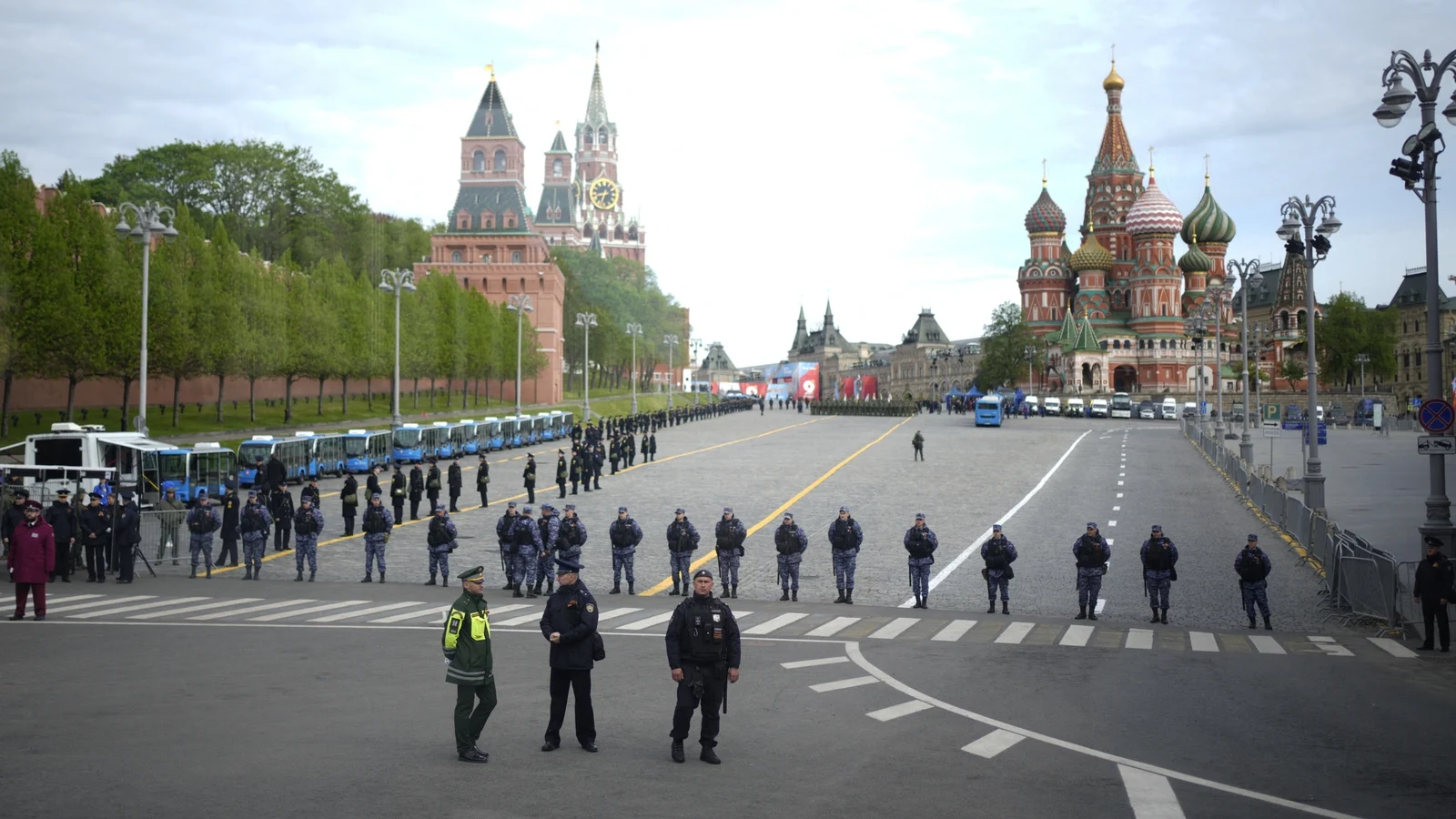
Morning on May 9 in Moscow had the rusty comfort of ritual — veterans in battered caps, the clack of unpolished boots on cobbles, a thin spring sun gilding the Kremlin towers — but the parade felt hollowed, like a symphony missing its brass. For the first time in years, the spectacle that once rolled Soviet steel across Red Square arrived without the heavy rumble of tanks; no armored columns crawled over the cobbles to punctuate a nation’s memory with muscle.
“It’s strange,” said Elena Morozova, 68, a retired schoolteacher who carried a faded photograph of a grandfather who fought in the Great Patriotic War. “We come to remember them. Not to see our young men turning into headlines.” Her voice was low, threaded with a grief that has become common on both sides of this long conflict.
Why the Silence of Steel?
The Kremlin called it a practical decision. “In general, everything is as usual, except for the demonstration of military equipment,” Kremlin aide Yuri Ushakov told reporters, offering a bland administrative explanation for a gesture that felt deeply political.
But the context was combustible. After more than four years of fighting since the 2022 invasion of Ukraine, Russia’s leaders evidently judged the optics and risks of rolling heavy armor through the heart of the capital to be unacceptable. Moscow had warned that any attempt by Kyiv to disrupt the event would be met with massive strikes, and foreign diplomatic staff were quietly advised to consider evacuation plans for Kyiv in the event of escalation.
At the same time, an unlikely interlude of restraint emerged: a three-day ceasefire brokered with the public urging of US President Donald Trump — who told reporters, “I’d like to see it stop. Russia-Ukraine — it’s the worst thing since World War Two in terms of life. Twenty-five thousand young soldiers every month. It’s crazy.” The pause was coupled with an agreement to swap 1,000 prisoners, a small piece of humanitarian choreography layered over a war that refuses simple resolutions.
How Victory Day Has Changed
Victory Day, for Russians, is not merely history; it is a sacred calendar marker. On May 9, 1945, Soviet time already made it a day of triumph while Western capitals still marked Victory in Europe (VE) on May 8. For decades, the parade has been a stage for showmanship — nuclear-capable missiles hauled past Lenin’s Mausoleum, veterans paraded shoulder to shoulder with the young men who would someday carry the torch of state power.
This year, fighter jets traced the skies above the Kremlin; soldiers still marched and cheered, and President Vladimir Putin delivered his speech before laying flowers at the Tomb of the Unknown Soldier. The choreography remained, but the props were stripped away, and the absence of hardware felt like a confession: the arsenal that once signaled unchallengeable might is now a liability too dangerous to display.
On the Ground: Moscow in a Box
Security was tight. Checkpoints sprouted like hard, gesturing truths around the city’s center. Roads were blocked. Soldiers perched on pickup trucks — a small, improvisational portrait of an armed society. Around them, life tried to look ordinary: tea poured in sidewalk kiosks, a woman selling St. George ribbons — orange-and-black strips meant to tie the present to the storied past — laughed nervously as she wrapped one around a customer’s wrist.
“We came to honor the past,” said Sergei Ivanov, a market vendor. “But you can feel the worry. People whisper in lines, asking, ‘Will it spread?’”
Pictures circulating online showed the familiar iconography: the red flags, the march past Lenin, the Eternal Flame. Yet the absence of heavy machinery reoriented the whole scene. What had been a blare of strength became a quieter, somehow more fragile tableau.
Voices from the Margins
Opposition voices and hardliners read the change differently. Igor Girkin, a jailed pro-war nationalist and former security officer who has criticized Kremlin strategy, framed the leadership as self-protective. “They are worried about being kicked out of their cabins, not about the ship sinking,” he wrote on social media, using a naval metaphor to describe what he sees as political self-preservation.
Kremlin spokesman Dmitry Peskov, meanwhile, pushed back against speculation that the president’s security had been ratcheted up due to fears of coup or assassination, calling such reports “nonsense.” Whether nonsense or necessity, the day was undeniably smaller in scale and heavier in meaning.
Beneath the Flags: Human Costs and Global Echoes
The War in Ukraine has become the deadliest European conflict since World War II, sparking waves of suffering that ripple far beyond the parade route. Estimates vary, but the death toll now runs into the hundreds of thousands, with millions displaced and cities reduced to rubble. Economies have sagged — trade lines ruptured, investment deferred, sanctions rearranging global markets — even as lines at soup kitchens and volunteer centers lengthen.
“This is not a local quarrel,” said Dr. Ana Petrov, a conflict analyst at a European university. “It is a test of international institutions, of collective security. When a state reimagines its symbols for wartime, you see not only military decisions but social ones: who gets remembered, who gets protected, and who gets sidelined.”
Across the world, people watched the scaled-back parade and asked what it meant about power, memory, and legitimacy. In capitals from Berlin to Beijing, commentators debated whether Moscow’s decision reflected prudence or weakness, resilience or retreat. For those living closest to the front lines, such debates are less academic.
“We don’t care about the parades,” said Mariya, who fled eastern Ukraine in 2023 and now volunteers at a refugee center in Warsaw. “We care about whether our children eat tonight, whether we can sleep without sirens.” Her comment is a sobering reminder: for many, Victory Day’s pageantry is overshadowed by the immediate work of survival.
What Does Memory Owe the Present?
Victory Day is meant to be a bridge between past sacrifice and present identity. But when that bridge is cast in the shadow of a contemporary war, the question becomes thornier. Are we commemorating historical courage, or are we repurposing grief into justification for present struggles? When does remembrance slip into rhetoric?
As fireworks eventually sparkled above the Moscow skyline that night, the shells felt both celebratory and oddly tentative — a city determined to honor a memory while circumspect about the present that memory has been asked to endorse.
So I ask you, reader: what does a nation owe its past when the present is asking so many of its people to pay? And when the instruments of state are too perilous to parade, what does that say about power in the age of modern warfare?
Historic rituals can comfort. They can also reveal. On this May 9, Red Square’s quieter heartbeat told a story that no banner could fully capture: a country insisting on ceremony even as it counts the cost of a war that has touched lives from Kyiv apartment blocks to Moscow kitchen tables — and far beyond.