Red Square in an Unsettled Spring: A Parade, a Promise, and a Pause
On a cool May morning, under the brooding façade of the Kremlin, Moscow staged a Victory Day that felt like an echo and a warning at once — familiar ritual refracted through the prism of a war that has already reshaped Europe.
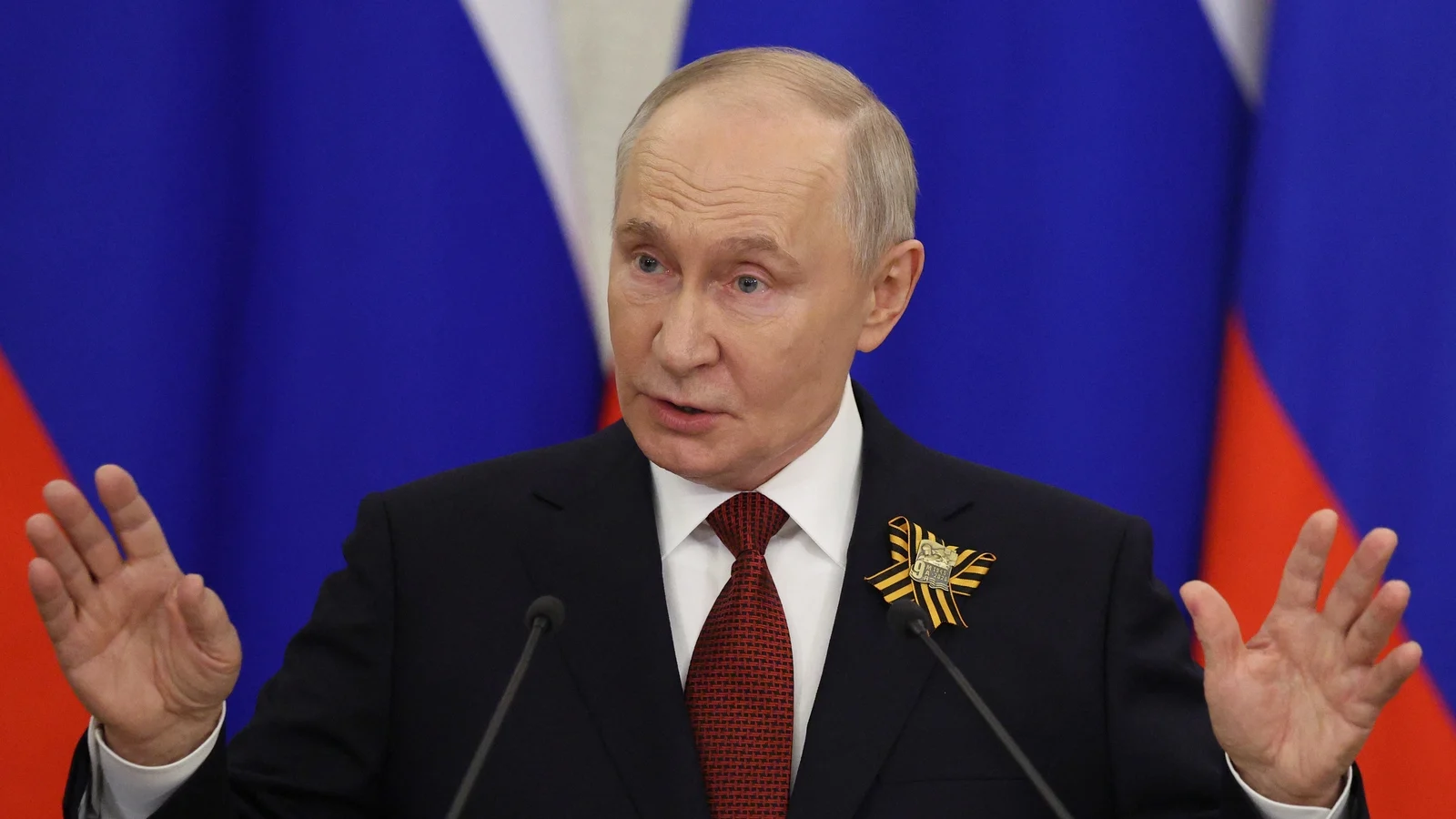
There were the veterans, stoic and small in the face of history; the young cadets, their boots synchronized on the cobbles; the orange-and-black St. George ribbons pinned to coats like stubborn talismans. But instead of the thunder of tanks and the metallic clatter of missile systems, giant screens narrated the might of the military: rolling footage, close-ups of hardware in action, the polished choreography of an army shown at a distance.
And then, in the same afternoon, President Vladimir Putin stepped into the softer light of the Kremlin press terrace and said something that landed like a pebble in a pond of long, dangerous ripples: “I think that the matter is coming to an end.”
What Did He Mean?
Those eight words have been unpacked and repacked across newsrooms and dinner tables. For some, they were a genuine olive branch; for others, a tactical pause, a headline-grabbing line meant to reset the narrative without changing the reality on the ground.
Putin did not, however, retreat from months of rhetoric that framed the campaign as a “special military operation” with aims yet to be fulfilled. He also floated an unusual preference for a negotiator: Gerhard Schröder, the former German chancellor now widely seen in Europe as a controversial Moscow ally. That choice raised eyebrows in capitals where Schröder’s close ties to Russia have long been a political red line.
If you squint at the timeline, the comments arrive at an awkward historical intersection. The invasion of Ukraine in 2022 fractured relations between Russia and the West in a way not seen since the Cold War. Since then, the conflict has stretched — as both sides alternately tightened and loosened their grips — through more than four years of fighting, draining economies, displacing millions, and leaving new scars on the European map.
Ceasefires, Exchanges, and the Politics of Pause
In recent days, diplomacy has come with short windows. The U.S. announced a three-day ceasefire that Moscow and Kyiv each appeared to support, and both sides spoke of prisoner exchanges. President Donald Trump, who has been promoting his own role as a potential broker, told reporters he wanted the pause extended: “I’d like to see it stop,” he said.
Ceasefires have punctuated this conflict before. Some have held for weeks, others for days. The pattern is familiar: a mutual easing followed by a recrudescence. That makes it essential to ask: when a leader of one of the principal parties says he believes “the matter is coming to an end,” is he describing reality, or shaping it?
Voices from the Street: Moscow, Kyiv, and Somewhere Between
“We still bring flowers to the memorials,” said Ekaterina, a 68-year-old pensioner who stood near a war memorial watching the footage on the screens. “Victory Day is the day we remember those who fought fascism. But this… I do not know what to feel. Pride? Fear? It is confusing.”
Across the border in Kyiv, a schoolteacher named Olena folded a student’s drawing of a sunny house into her palm and said, “Any talk of peace is welcome. Children have asked me if the sirens will ever stop. We want a real, lasting agreement—not a pause so someone can regroup.”
A Western diplomat in Brussels, speaking on background, summed up the dilemma: “We welcome any sign of de-escalation. But we cannot mistake a tactical lull for strategic victory. The European security architecture is damaged — trust takes years to rebuild.”
And in a makeshift kitchen near the frontlines, a medic who asked to be identified only as “Ihor” laughed bitterly when asked whether the war could end soon. “We hear these words often,” he said. “Peace always sounds close on the broadcast. Then the field hospital fills again. I want to believe it. But belief is expensive when it means buying bandages.”
The Cold Arithmetic of a Hot War
Numbers do not capture grief, but they contour the conversation. Moscow controls just under one-fifth of Ukrainian territory — a statistic that frames both bargaining chips and strategic dead ends. The war’s duration has already exceeded the length of the Soviet Union’s own Great Patriotic War campaign in 1941–45, a grim historical irony that Russians and Ukrainians know intimately.
Economically, analysts speak of pressure on a roughly $3 trillion Russian economy stretched thin by sanctions, military spending, and the long-term costs of a protracted conflict. Millions of Ukrainians have been displaced. Civilian and military deaths, widely reported as numbering in the tens of thousands and possibly far higher, remain contested and difficult to verify independently.
Negotiations, Mediators, and the Architecture of Security
When Putin mentions altering the security arrangements of Europe, he treads into territory that many Western leaders regard as non-negotiable. The post-1989 order — built on commitments, treaties, and institutions like NATO and the EU — is not simply about lines on maps. It’s about trust, predictability, and a balance of influence.
Calling Gerhard Schröder as his person of choice to mediate may have been a signpost: Russia wants interlocutors who, at minimum, are sympathetic to its view of history and of Western duplicity. For many in Europe, Schröder’s candidacy would be unacceptable. For Russia, it may have been an attempt to shift talks to a friendlier stage.
European leaders have repeatedly said that Ukraine must be able to defend its sovereignty and territorial integrity; some have even insisted that “defeat” of Russia is necessary to prevent further aggression. That rhetorical firmness is rooted in real fears: a Europe that cannot guarantee its own borders risks sliding into renewed insecurity. The specter of the 1962 Cuban Missile Crisis — when the world came close to nuclear confrontation — reminds us how quickly miscalculation can escalate.
Why This Moment Matters Beyond Eurasia
Ask yourself: why should a pause in fighting on a Ukrainian battlefield matter to someone in Lagos, São Paulo, or Seoul? Because wars disrupt markets, migration patterns, and the rules that underpin global trade. Because energy supplies and grain exports have already ripple-effected across continents, touching lives far from the Don or Dnipro rivers. Because the precedent set by this conflict — how revisionist powers are met or resisted — will shape alliances for decades.
And there is a moral dimension. The images we see on screens, the statements uttered by leaders, the displaced families arriving at borders — these are not abstractions. They are human lives in motion, quickened by fear, hope, and the need for practical remedies: shelter, education, medical care, truth.
What Comes Next?
No one can offer certainty. Negotiations could follow and falter. Ceasefires could stretch into fragile peace, or they could serve as breathing space for renewed offensives. Public opinion in Russia shows signs of strain; in Europe, political leaders juggle solidarity with Ukraine against domestic pressure to reduce exposure to an expensive, distant war.
We should listen to the people who live where the maps are changing. We should watch how the international community responds. And we should ask ourselves: what kind of world do we want when the fighting stops — one built on grudges and spheres of influence, or one that invests in institutions, accountability, and the rights of people to choose their own futures?
On a spring day in Moscow, a parade played footage of hardware and a president spoke of endings. In Kyiv, a teacher folded a child’s drawing into her palm. Between them, the work of turning pause into peace — if peace is truly on offer — will be the slow, stubborn labor of statesmen, soldiers, negotiators, and ordinary citizens alike. Will we choose to help that labor bear fruit?