Daylight Thunder: Ukraine Faces an Unprecedented Drone Barrage
On a bright spring morning that some residents remember for the smell of fresh bread and the calls of street vendors, the sky over much of Ukraine turned into a passing black blotch of metal and noise. Air raid sirens wailed, metro stations filled with hurried, bewildered people, and a new chapter in this long war unfolded — not under the cover of night, but in broad daylight.
“Since midnight, at least 800 Russian drones have already been launched,” President Volodymyr Zelensky wrote on social media, summing up an attack that killed at least six people and wounded dozens, he said. The strikes hit towns and regions as far-flung as Rivne, Zaporizhzhia, Kherson and Odesa, leaving shattered glass, damaged apartment blocks and a heightened sense of vulnerability in their wake.
What Happened — and Where
Unlike previous large-scale strikes, which often fell after dark, this assault unfolded during daytime hours. Kyiv residents reported scrambling into subway tunnels — the city’s metro again becoming both shelter and seam between everyday life and the unpredictable violence overhead.
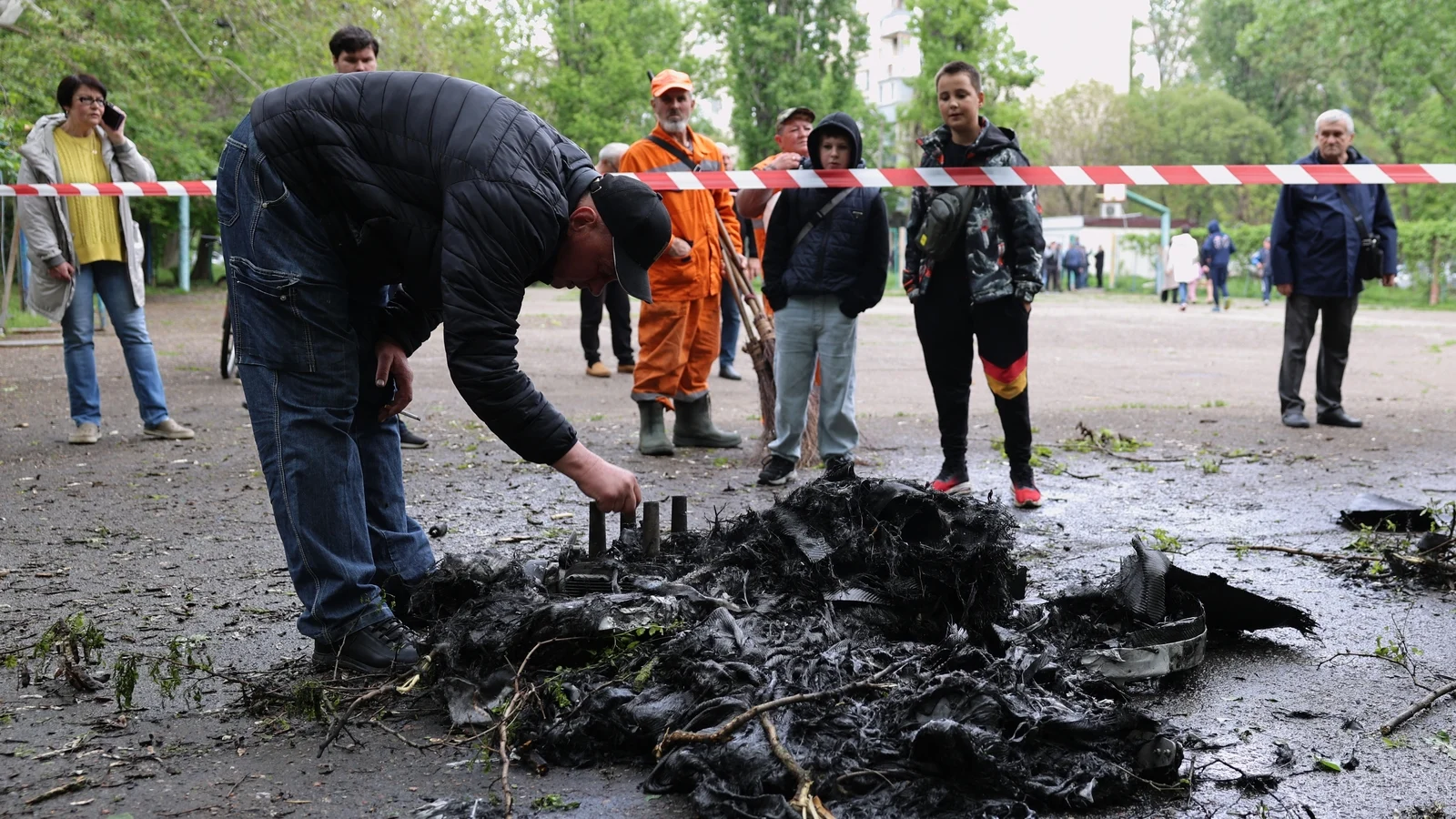
Rivne, in western Ukraine, bore some of the deadliest blows. Local authorities reported three people killed and four wounded after drones struck civilian infrastructure and a residential building. One person was killed in Zaporizhzhia, two others in Kherson, and multiple injuries were recorded in Odesa, Khmelnytskyi and Cherkasy. Ukraine’s military intelligence described a “prolonged air strike against critical facilities.”
Across the border in Russia’s Bryansk region, local officials said two people died in separate drone incidents — one in the village of Stara Pogoshch and another at a post office in Sevsk. The reciprocal casualties underscore how the conflict’s violence spills across lines with tragic, often anonymous consequences.
Voices from the Ground
“We had bread in the oven. My wife grabbed the kids and ran. The drone sirens were closer than I have ever heard them,” said a man waiting on a metro platform in Kyiv. “You think you can prepare for anything after four years, but this felt like a new kind of fear.”
In Rivne, a volunteer medic, Oleksandr, described the scene after the strike: “We arrived and there was dust everywhere, a child crying on a blanket, neighbors handing milk to firefighters. The physical damage is one thing. The hardest part is the look in people’s eyes — tired, but still stubbornly friendly.”
“This was not an accident,” President Zelensky charged, tying the timing of the barrage to the international calendar. He alleged Moscow launched the attack during U.S. President Donald Trump’s visit to China to “disrupt the overall political atmosphere” and draw attention away from the war’s true human costs.
Why This Feels Different
For more than four years, cities across Ukraine have been subject to relentless missile and drone attacks, but typically the largest-scale strikes came at night, when air defenses and civilian movement patterns can be exploited. Daytime attacks suggest a strategic shift — either an attempt to overwhelm remaining air defenses, to target infrastructure when people are at work and school, or to send a geopolitical message.
“Launching hundreds of drones during daylight signals confidence — or desperation,” said Dr. Elena Markov, a security analyst focusing on unmanned systems. “It’s a calculated gamble: drones have been adapted to penetrate layered defenses, and massing them can saturate radar and interceptor systems. The casualty toll is both tactical and psychological.”
Analysts have long warned about the democratization of aerial warfare. Since 2022, drones of many kinds — commercial quadcopters retrofitted for conflict, Iranian-made loitering munitions, and bespoke kamikaze variants — have reshaped the battlefield. The sheer volume of unmanned systems available has lowered the logistical bar for massed strikes, enabling parties that can assemble fleets to wage persistent pressure campaigns.
The Cost to Civilians and Infrastructure
Beyond the immediate toll in lives and injuries, the attacks raise long-term concerns. Power stations, water treatment facilities and critical logistics hubs have been targeted in previous waves, often causing cascading impacts that linger long after the last shell falls. Ukraine’s own estimates — reinforced by international observers — point to widespread damage to civilian infrastructure throughout the war, with tens of thousands displaced at various times and many urban neighborhoods still rebuilding.
Local shopkeeper Halyna in Kherson summed up what repeated assaults do to small businesses: “You rebuild a window three times, and finally you start saving for a new place. You never know if the next raid will be your last day open. People don’t want charity; they want a predictable tomorrow.”
Geopolitics in the Background
This attack did not occur in a vacuum. Zelensky urged U.S. President Trump to raise the issue of ending Russia’s invasion during his visit to China, signaling Kyiv’s desire to fold this tragedy into broader diplomatic currents. Whether and how great powers discuss the war behind closed doors has a direct influence on whether such strikes become more or less frequent.
Internationally, decision-makers face a knot of competing priorities: geopolitical positioning with China, domestic politics, the desire to avoid escalation, and moral pressure to push for civilian protections. Meanwhile, Ukraine’s plea is straightforward and urgent: stop the war before more lives — and cities — are lost.
Questions for the Reader
How do we reckon with a world where aerial warfare is no longer confined to military zones and nightfall offers no guarantee of safety? What do we owe civilians caught in the crossfire when the instruments of war grow cheaper and more numerous?
When the tools of violence become widely available, how do international norms and law keep pace? These are not theoretical questions. They matter in subway platforms in Kyiv and kitchen tables in Rivne, where a morning’s ordinary routine can be shattered by a buzzing machine from the sky.
Looking Ahead
The human thread running through this episode is stubborn and familiar: people attempting to carry on, to make a living, to raise children and keep hope alive amidst the rupture. Rescue crews sifting through rubble. Neighbors sharing tea. City councils tallying damage and trying to restore electricity.
“We will patch the roof, we will heal the wounds. We always do,” one volunteer said as dawn turned the dust in the air to a soft gray. “But patching is not the same as peace.”
If this barrage indicates anything, it is that the war’s technologies and tactics are evolving — and that global attention, diplomatic will, and humanitarian protections must adapt in turn. For Ukrainians, each attack brings the same question: what will be the shape of tomorrow? For the rest of the world, the question is whether we will answer.