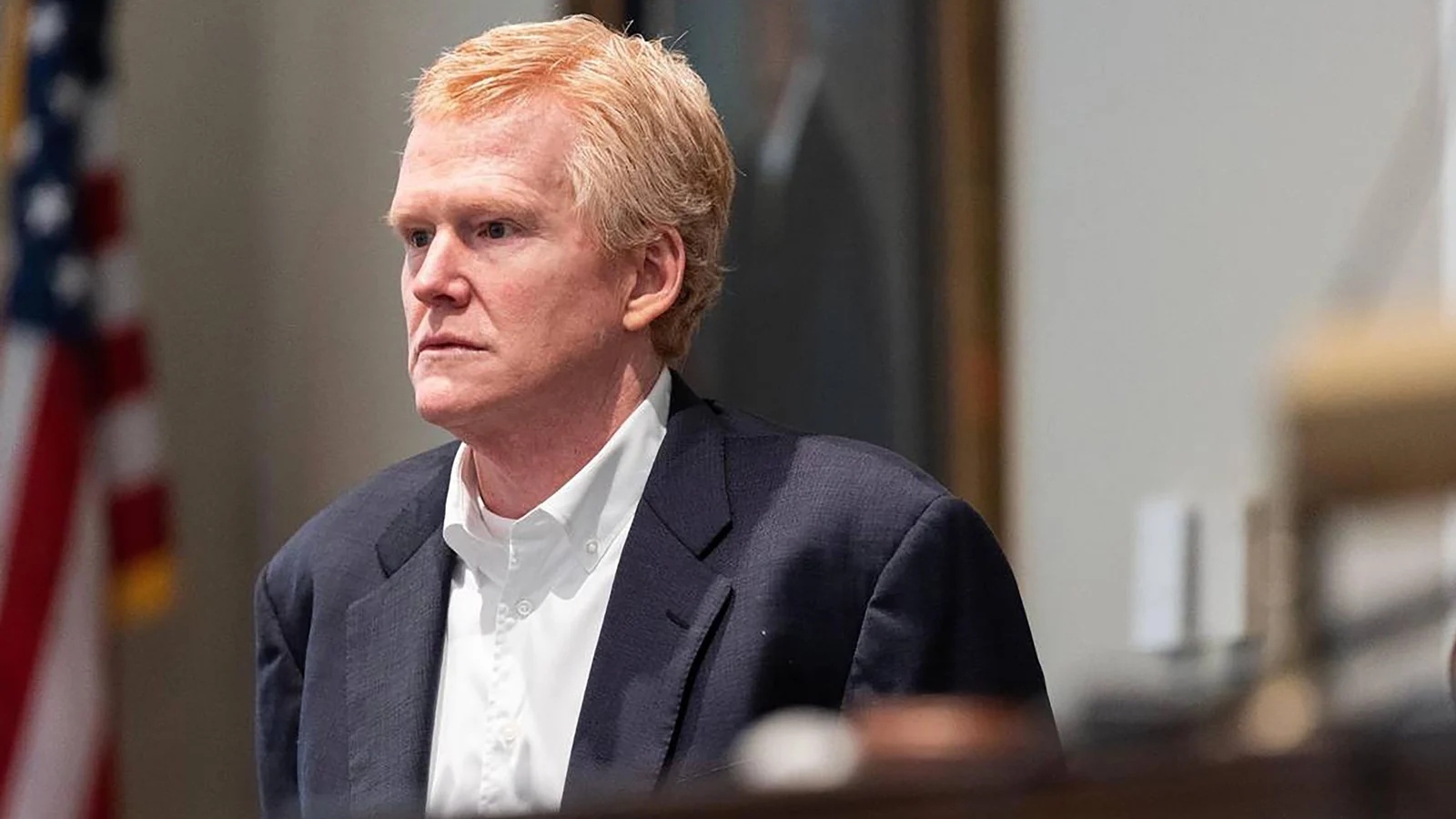
When the Scales Waver: The Overturning of the Murdaugh Murder Conviction
There are moments when a courtroom ruling sounds less like a verdict and more like an earthquake—shaking not just the people directly involved, but the ground beneath public trust. On a humid afternoon, the South Carolina Supreme Court did exactly that: it wiped away a conviction that had riveted the nation, ordering a retrial in the case of Alex Murdaugh, the once-powerful lawyer serving life behind bars for the 2021 killings of his wife and son.
For many, the decision will feel like a jolt—one part legal technicality, one part human drama, and all parts reminder that the justice system is fragile and human at every turn.
A dynasty under a storm
The Murdaughs long cast a long shadow over South Carolina’s Lowcountry: generations of prosecutors, judges and attorneys, a family name spoken with a mix of reverence and resignation in county courthouses and barbershops. Then, on a June evening in 2021, that dynasty cracked. Maggie Murdaugh, 52, and her son Paul, 22, were found slain at the family’s hunting property—an estate of pine trees and Spanish moss that seems plucked from Southern Gothic fiction.
Prosecutors said the killings occurred in the kennel area, mere minutes after Alex Murdaugh was reportedly the only adult present. The case catapulted the Murdaughs from local power to national spectacle, fueled further by allegations that Alex had been siphoning millions from clients and his law firm to feed a hidden opioid addiction. The accusations read like a cautionary tale about privilege, betrayal and addiction—ingredients that made viewers, podcasters and streaming services sit up and take notice.
How a clerk’s whisper unraveled a verdict
At the heart of the Supreme Court’s unanimous ruling was an issue that sounds deceptively small: a court clerk’s improper comments to jurors about how to watch the defendant during testimony.
The justices concluded that Rebecca Hill, a clerk at the trial, had told jurors to “watch his body language” and to “not be fooled” by the strategies of Murdaugh’s defense team—advice that, the court said, amounted to impermissible outside influence. “Hill placed her fingers on the scales of justice,” the opinion declared, “denying Mr. Murdaugh his right to an impartial jury.”
“Jurors are supposed to make decisions based on the evidence and the law, not on an official in the room pointing out nonverbal cues,” said Emily Turner, a constitutional law professor at the University of South Carolina. “When a court officer crosses that line, it corrodes the very foundation of a fair trial.”
Jurors later described feeling nudged. “We were told to really look at him when he was on the stand,” one juror told reporters. “It made us question our first impressions. It’s like someone telling you which painting to like—afterwards you wonder if you ever chose for yourself.”
What the court found
The high court found that the clerk’s comments were not harmless. The influence was external to the deliberation process and, the justices determined, substantial enough to justify overturning the murder convictions. They also signaled that the trial judge had allowed too much evidence about Murdaugh’s financial crimes—details that may have prejudiced the jury by painting a portrait of a man predisposed to wrongdoing, rather than focusing strictly on the crimes charged.
“Courts must be vigilant about the line between relevant background and prejudicial detail,” the ruling read—an admonition that will echo far beyond this case.
Confessions, contrition and contradiction
Murdaugh did not sit idly by in court. He testified in his own defense, a frail figure who admitted to stealing from clients and lying about drugs—telling the court that his addiction to opioids cost him about $50,000 a week at its worst. “I betrayed people who trusted me,” he said at the earlier trial. “I was a liar and a thief. But I did not kill Maggie and I did not kill Paul.”
Prosecutors point to phone data and other records that appeared to place him alone with his family at the estate minutes before the killings. For many viewers the televised trial felt like a slow, public unspooling of a life and career that had been teetering for years—excess, secrecy, and then, catastrophe.
Local voices, national attention
Walk through the small towns of the Lowcountry and you’ll hear this case refracted through a thousand lenses: gossip, grief, a hunt for truth. At a diner near Beaufort, a waitress named Rosa wiped her hands and said, “It’s not about rich or poor—it’s about whether the same rules apply to everyone. We’re all tired of feeling like the little folks get the short end.”
Sam Jenkins, who runs a bait shop two miles from the entrances to the Murdaugh properties, had a different read: “People loved to make TV about him, and they loved even more to watch him fall. But whether he goes to a new trial or not, those graves are still there.” His voice carried the weary skepticism of someone who has seen public passions flare and then burn out.
Universally, locals say the case exposed more than a crime: it lifted the veil off a culture where family connections can feel like unspoken immunity. “This is a small place,” a former prosecutor from the region said on the condition of anonymity. “Everybody knows somebody. That can be a blessing or a poison.”
Why this matters beyond headlines
There are legal lessons, to be sure. The standard for overturning a conviction because of outside influence is high; courts rarely grant retrials on such grounds. The Supreme Court’s decision underscores how seriously judges must guard the integrity of the jury process.
There are also broader social questions. What does accountability look like when institutions are entwined with the people they’re supposed to oversee? How does a community heal when it has been betrayed by a trusted professional? How does the opioid epidemic—responsible for roughly 100,000 overdose deaths in the U.S. in 2021, according to federal data—intersect with financial crime, mental health and family collapse?
“We are seeing a collision of public health, white‑collar crime, and criminal justice,” said Dr. Anika Patel, a sociologist who studies addiction and institutional trust. “It’s a warning sign that spilled into a violent act, and a reminder that complex social problems rarely have simple answers.”
Looking forward: retrial, reflection, repair
The court ordered a new trial, but that is not the same as an exoneration. Prosecutors can try the case again; juries will have to return, witnesses might be reconsidered, and the public will likely watch anew. For some, the decision reopens a wound; for others, it reopens a door to due process.
“My hope is fair play,” said a neighbor who asked not to be named. “Whatever happens next, let it be honest, let it be thorough, and let the victims’ names not be swallowed up by the circus.”
As readers, what should we take away? Perhaps it is the old but necessary reminder that the machinery of justice depends on the small, human things: the words of a clerk, the tone of a judge, the attention of a juror. One misplaced comment, one rushed decision, one moment of bias can tip the scales—raising questions not just about one man’s guilt or innocence, but about how we, as a society, want justice to be done.
Will the retrial bring clarity, or will it deepen the mystery? Will a community that watched a family fall apart find new ways to protect its own? These are not easy questions. They are, however, the kind that demand attention—not only from lawyers and judges, but from everyone who believes the rule of law should be more than a slogan.