Under a Fragile Quiet: Life, Fear and Fractured Diplomacy on Lebanon’s Borders
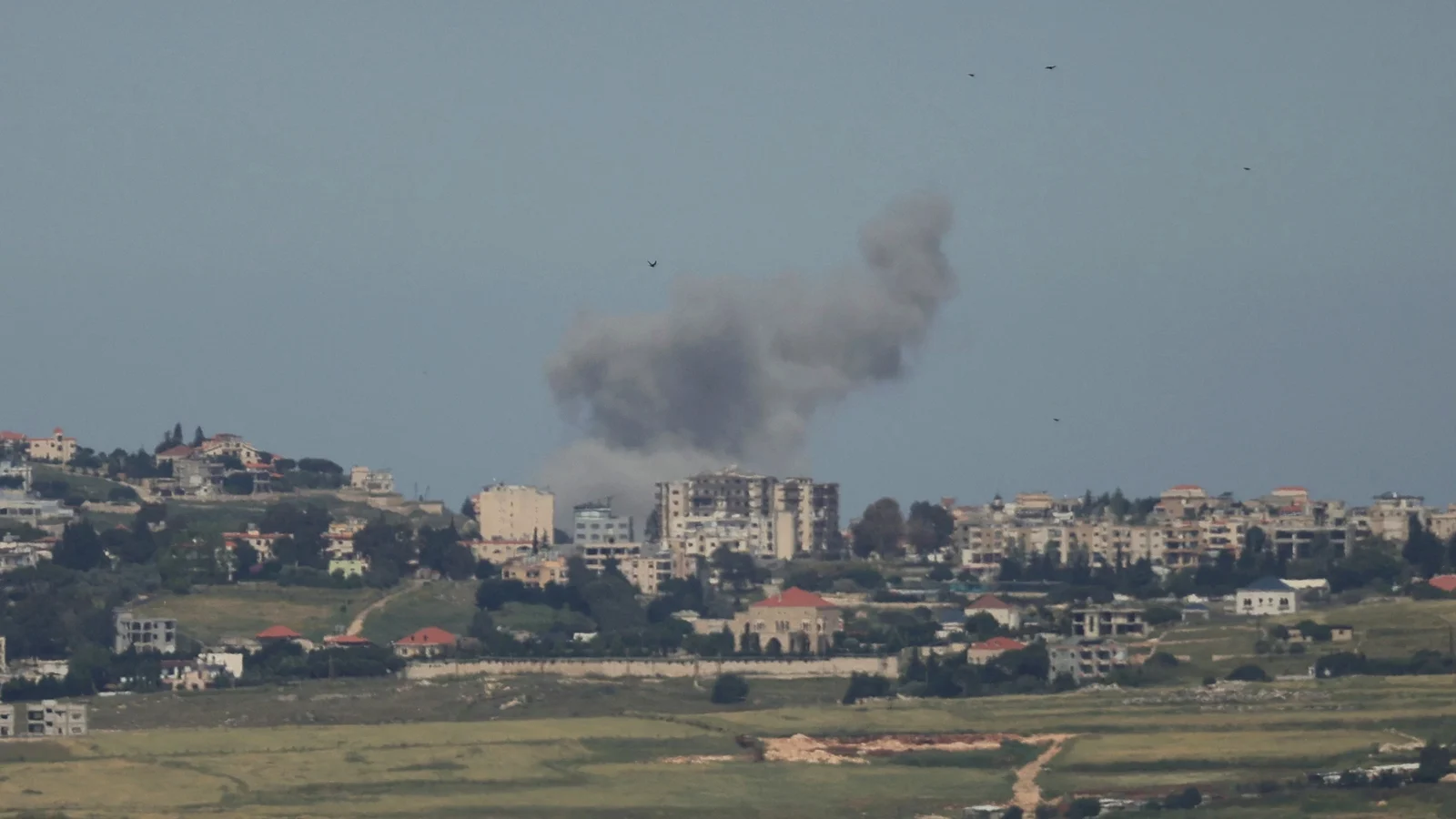
At dawn in Sohmor, a town in Lebanon’s Bekaa Valley, farmers who should have been tending winter wheat instead stood in small knots of smoke and silence, scanning the horizon. Smoke spiraled from an olive grove half a mile away, and the occasional rumble—too close to be a truck, too distant to be thunder—kept people moving from doorway to doorway like actors waiting for a cue that never comes.
“You never know where the next strike will fall,” said Amal, a woman in her fifties whose hands are as worn from harvesting as her voice is from worry. “We planted the fields in hope, but now hope burns. My grandchildren ask why their father is not home, and I do not have an answer for them.”
This is the uneasy interlude between conflict and diplomacy. Officials in Washington announced yet another extension of a delicate ceasefire after envoys from Israel and Lebanon met for a third round of talks. But the pause in large-scale combat has not been a full stop; instead it resembles a bruise that gets pressed each time skirmishes erupt. State media in Lebanon reported fresh Israeli strikes in eastern and southern parts of the country—two in Sohmor and others across southern villages—underscoring how fragile the calm is and how quickly it can splinter.
The toll so far
Lebanese authorities say these strikes, part of a wider campaign that began with a larger war, have claimed more than 2,900 lives across the country. Shockingly, more than 400 of those fatalities have been recorded since the ceasefire took effect on 17 April.
Numbers like these are not mere statistics; they are doors closed, children changed forever, and communities that will take years to stitch back together. “We count bodies, then we count rabbits, then we count what is left of our dignity,” an aid worker with a long-term NGO in south Lebanon said quietly. “These layers of loss are cumulative.”
Negotiations in the capital—and a loud disagreement at home
Diplomacy in Washington was intended to buy breath. Representatives from both sides agreed to extend the truce, creating a narrow window for negotiation over boundaries, prisoner exchanges, and security arrangements. But inside Lebanon, the mood is far less reconciliatory.
Hussein Hajj Hassan, a Hezbollah member of parliament, dismissed the idea that talks could deliver meaningful concessions without heavy cost. “The direct negotiations that the authorities in Lebanon have conducted with the Israeli enemy have… led them down a dead-end path that will result in nothing but one concession after another,” he said, as reported by state outlets.
His words illustrate an existential friction within Lebanese politics: a government striving to steer the country through international channels while the Iran-backed Hezbollah insists its arms and stance are non-negotiable. “Disarming the resistance is a line we cannot cross,” Hajj Hassan added, warning that state leaders risk dragging the country into “very big predicaments.”
What the ceasefire actually looks like on the ground
For residents near the Blue Line—the unofficial boundary monitored for decades—the ceasefire is a patchwork. One neighborhood may echo with the sound of generators and children’s laughter, while three kilometers away, a house smolders after a strike. Israeli forces maintain a presence in parts of southern Lebanon, patrols crisscross hilltops, and Hezbollah continues to launch operations it describes as defensive. The result is an uneasy geometry of control and contestation.
“We wake up, we pray, and then we check the news because we live by the headlines,” said Nabil, a shopkeeper whose café in a border town is more a communal living room than a place of commerce. “People still buy bread in the morning with one ear listening to the radio. This is the rhythm of living in limbo.”
Voices from every side and the cost beyond the headlines
Across the region, there are conflicting narratives: one side speaks of security and the prevention of cross-border attacks; the other speaks of resistance and occupation. Experts caution that neither narrative exists in a vacuum. “This is both a local and geo-strategic conflict,” said Dr. Eitan Levi, a security analyst who studies the Levant. “Iran’s support for Hezbollah, the entanglement of Lebanese domestic politics, and Israel’s security calculations create an almost classical case of a localized flare-up with regional reverberations.”
Humanitarian agencies, meanwhile, worry about needs that outlast ceasefires. Hospitals remain stressed, supply chains intermittently fray, and the long-term mental health of children in shell-shocked towns is a silent catastrophe. “You can rebuild a wall, but you cannot rebuild the years stolen from a child who cannot sleep because of night raids,” said Sarah, a psychologist volunteering with a mobile clinic.
Local color: festivals, food and the persistence of normalcy
Even amid the tension, life persists in small, telling ways. In the Bekaa Valley, lamb stews still perfume homes, and men in flannel shirts argue over the price of grapes in open-air markets. A cedar tree older than many nations still leans in the courtyard of a village mosque. Such images are a reminder: conflict overlays a living culture, not an abstract map.
“We sit and make coffee, then share stories about the harvest as if nothing will happen,” Amal said. “But when the sky is clear at night, we all listen for planes.”
What comes next?
There are several possible futures. Negotiators could hammer out a durable agreement that addresses border security and provides for a phased withdrawal of forces and international monitoring. Or the ceasefire could remain a brittle pause, punctured by the same dynamics that produced it—retaliatory strikes, local miscalculations, and the larger power plays that crisscross this region.
For ordinary people, the choice between these futures is heart-wrenchingly simple: either a return to relative normalcy or another spiral of violence. “We do not want to be pawns in a larger game,” Nabil said. “We want children to go to school again without drills.”
Questions to sit with
As you read this, consider: what responsibility do external actors have when diplomacy fails? How much room does a small state have to chart its course when powerful proxies and regional rivals cast long shadows? And, perhaps most pressingly, what would a sustainable peace look like for people who have already lost so much?
The answers will not be tidy. But if the past months have taught us anything, it is that ceasefires are not ends in themselves. They are opportunities—brief and precarious—to choose a different trajectory. Whether those in power take that opportunity remains the central question hanging over villages like Sohmor, over border hilltops, and over a region long accustomed to waking up to the sound of discord.