Alarm bells are ringing at the United Nations over Sudan’s besieged city of El-Obeid, where the UN Human Rights Council has ordered an “urgent inquiry” into alleged violations and abuses, warning that the risk of “large-scale atrocities” is growing.
The council’s move came as grim new figures emerged: at least 330 Sudanese children were killed or injured in the first six months of 2026, many of them in drone strikes.
Children “are being killed and injured in their homes, on the roads, in markets, and while attempting to access essential services such as education and healthcare”, UNICEF’s Sudan chief Sheldon Yett said.
In North Kordofan, El-Obeid has endured weeks of bombardment by paramilitary drones, with strikes hitting civilian infrastructure including power stations, water systems and schools.
The UN has issued a “red alert”, saying the Rapid Support Forces (RSF) is preparing a major offensive on the city—an escalation that could imperil half a million people.
UN officials have also warned that El-Obeid could face a replay of the atrocities committed during the RSF’s October 2025 assault on El-Fasher, which a UN inquiry found carried “the hallmarks of genocide”.
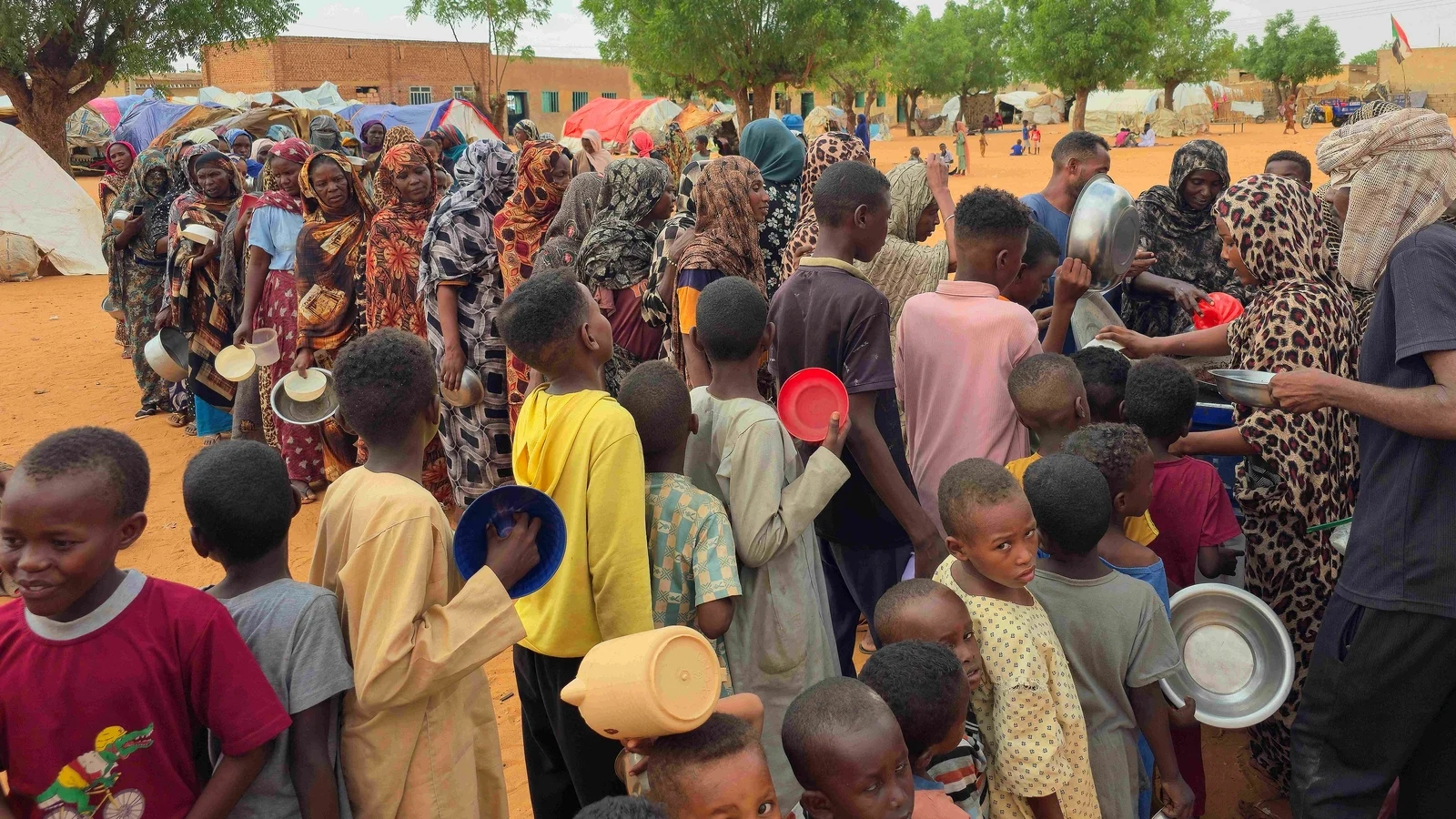
A Sudanese girl in al-Rahmaniyah camp for displaced people, near the city of El-Obeid in the Kordofan region
“Any further deterioration could expose even more children to death, injury, displacement and other grave protection risks,” UNICEF said today.
El-Obeid—an important hub in the Kordofan region—has been encircled for months by the Rapid Support Forces, the paramilitary group locked in war with Sudan’s army since April 2023.
‘Another human rights catastrophe is unfolding’
Adopted by consensus, the resolution from the 47-member UN Human Rights Council expressed “deep concern about the imminent risk of large-scale atrocities by the (RSF)… faced by hundreds of thousands of civilians, including children and internally displaced persons in and around El-Obeid”.
The text followed an urgent debate held on Friday and condemned “reports of dozens of drone strikes on El-Obeid in the last two weeks, including on hospitals and health facilities”.
It also denounced the “widespread use of rape and other forms of sexual and gender-based violence”, and voiced “alarm at reports of the use of starvation as a method of warfare”.
Introducing the resolution on behalf of multiple countries, Britain’s human rights ambassador in Geneva, Eleanor Sanders, told the council it was “not enough to express shock and concern”.
“We must take concrete action to support accountability for these crimes.”
As the capital of North Kordofan state, El-Obeid occupies a strategic position on a key route connecting RSF-held areas in the western Darfur region with army-controlled regions in the east.
Home to around half a million residents—and hosting nearly 100,000 refugees displaced by the civil war—the city has faced what the UN describes as its most intense RSF attacks yet in recent weeks.
During Friday’s debate, UN rights chief Volker Turk said “the signs from El-Obeid are clear and unmistakable: another human rights catastrophe is unfolding in Sudan”.
Monday’s resolution instructed the existing fact-finding mission to carry out “an urgent inquiry into any violations and abuses of international… law and related to international crimes, allegedly committed in and around El-Obeid”.
Investigators were asked to deliver an update to both the Human Rights Council and the General Assembly in New York at their next sessions, scheduled for September.
‘External interference’
Beyond El-Obeid, the resolution called for “an immediate and complete ceasefire by all parties” to Sudan’s war.
It also condemned “all forms of external interference that fuel the conflict, including the supply of arms and military material”.
However, it stopped short of naming any countries—an omission criticised by Sudan’s ambassador, Hassan Hamid Hassan.
The resolution, he said, “opted for relatively vague language without naming the state that has violated Security Council resolution… 1591”, adopted in 2005 to expand an arms embargo on non-government entities in Sudan’s embattled Darfur region.
“I’m speaking about the United Arab Emirates of course,” he said.
Khartoum has repeatedly accused Abu Dhabi of supplying arms to the RSF.
The UAE denies the allegations, despite a number of international reports pointing to its involvement.
Dozens of NGOs that last month urged the council to “name names” and explicitly call out the UAE also voiced disappointment.
“Evidence points to sustained UAE support to the RSF, despite knowing that such support is used to commit egregious crimes against civilians, but other actors should also be held to account,” Nicolas Agostini of DefendDefenders said in a statement.
UN figures show five million children are internally displaced across Sudan. Millions are going hungry, including more than 825,000 children under five suffering severe acute malnutrition.