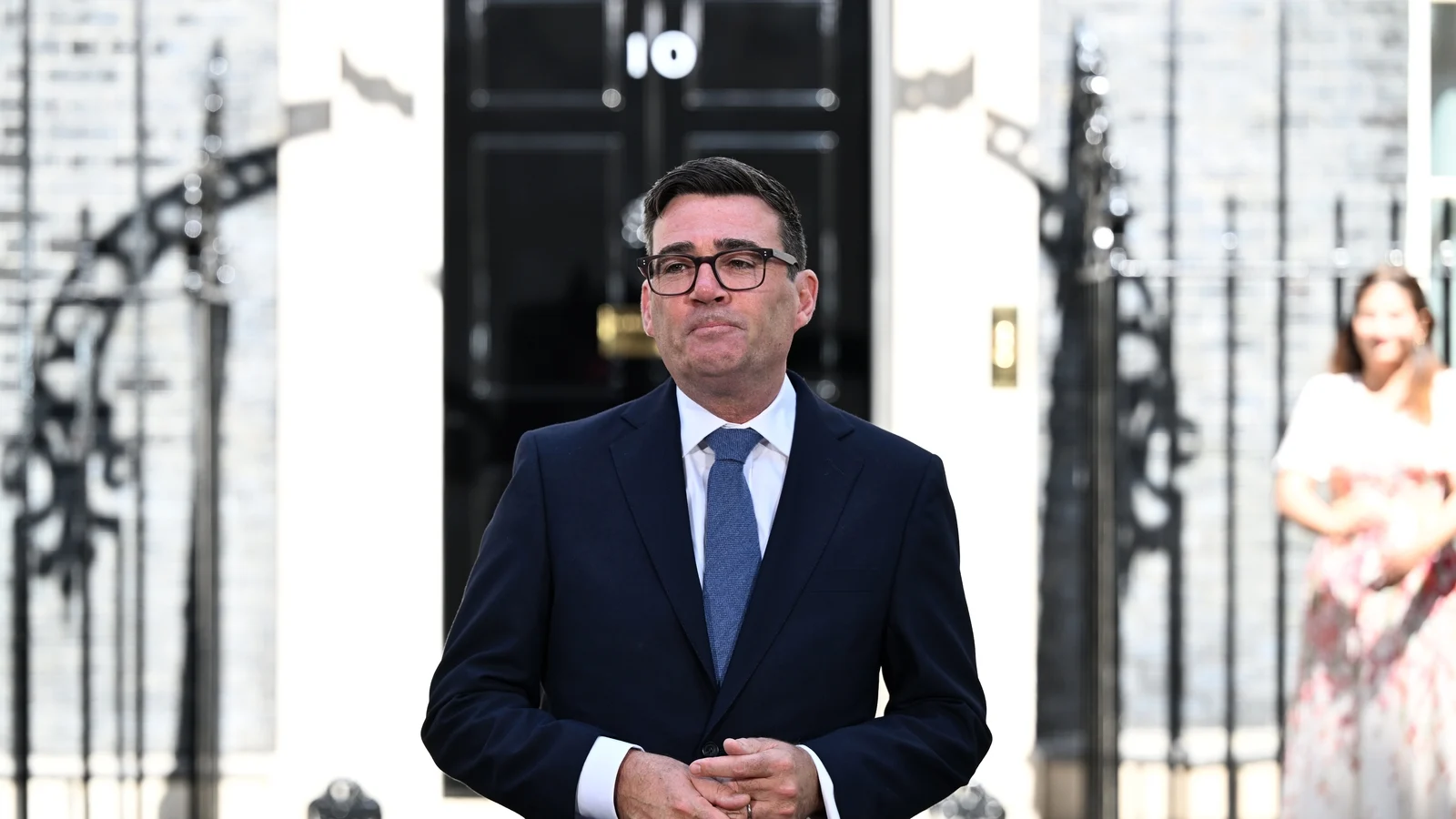
By the time Andy Burnham stepped through the gates of Downing Street on Monday, the slogans of the campaign were over and the unforgiving maths of government had begun.
A veteran of decades in public life, Britain’s new prime minister will know the old saying that a week is a long time in politics. For him, this one has already proved pivotal.
As his car pulled up outside Number 10 and he made the familiar walk to the black door, Mr Burnham finally arrived at a job he has long sought — and at a level of scrutiny he has never previously faced.
That intensity surfaced almost immediately in a question about the income tax threshold, which he had been told dominated conversations on the doorstep while campaigning for the Makerfield seat that helped carry him into Downing Street.
His answer sparked a rapid cycle of interpretation: claims he was preparing to raise the threshold, followed by reports he had ruled that out, and then suggestions that no decision had yet been made.
Watch: Burnham says Britain needs to ‘regain stability’
Pressed by reporters on the apparent confusion, Mr Burnham said it was funny that a politician cannot answer a question honestly without “people reading everything else into it”. He then said the income tax threshold would be considered in the budget “alongside everything else”.
“But you are prime minister,” came the reply a gentle but pointed reminder that his words now carry a different weight.
One of the most telling aspects of the exchange was that Mr Burnham referred to himself as “a politician”.
The reality is that he is now the politician the one with the authority to shape decisions that affect people’s daily lives.
That is why his remarks will be dissected at home and abroad in ways his previous pronouncements were not.
And there has been plenty to dissect this week.
In quick succession, the new government has set out a run of measures: cutting a tax on electricity bills from 5% to 0% from October of this year, capping most bus fares at £2, and reducing business rates by 20% for pubs and nightclubs in England.
On the surface, it reads as a sweep of relief cuts and caps aimed at households and firms squeezed by the cost-of-living crisis — the sort of agenda Downing Street might expect to generate straightforwardly positive headlines.
Read more:
Andy Burnham calls for ‘national sense of unity’ in first speech as Prime Minister
Who has Andy Burnham picked to be in his cabinet?
But the detail behind the announcements has quickly made the politics messier, and criticism has already followed.
For one thing, and for a variety of reasons, none of the policies set out so far will apply to Northern Ireland — an awkward omission for a prime minister who has framed devolving power to regions and serving every part of the United Kingdom as central to his premiership.
Even in areas where the measures will take effect, concerns have emerged.
In the hospitality sector, which has struggled, some have argued the 20% reduction in business rates offers only limited help.
By their estimates, an average pub or club will save a little over £1,000 a year a sum that, critics say, barely dents the wider costs of keeping venues viable.
Britian’s King Charles appointed Andy Burnham as prime minister on Monday
The VAT cut on electricity does not change wholesale power costs, meaning households may see little meaningful difference on bills as they head into a winter when fuel costs are being pushed up amid price rises linked to the ongoing war in Iran.
And the £2 cap on most bus fares does nothing for those who drive to work or school, as rising petrol prices continue to bite into pay packets.
Some industries and communities have welcomed the moves, treating them as a positive sign — a well-meaning gesture from a new prime minister trying to respond quickly.
Yet when supporters describe the package as either a good start or tokenistic, it underlines the dilemma Mr Burnham faces.
He has made promises to an electorate that has watched a decade of changes in Downing Street bring little change to their own lives — leaving many voters increasingly sceptical of political pledges.
If policies look piecemeal, or too modest for those who need help now, they risk sounding hollow as well.
This week Mr Burnham said his aim was to give people “breathing room” as they struggle with basic costs.
Allies of the prime minister argue the steps unveiled so far begin that work — a down payment on a broader agenda still to come.
But a down payment, by definition, is only the start.
The balance still needs to be paid and that is the test awaiting him in the weeks ahead.