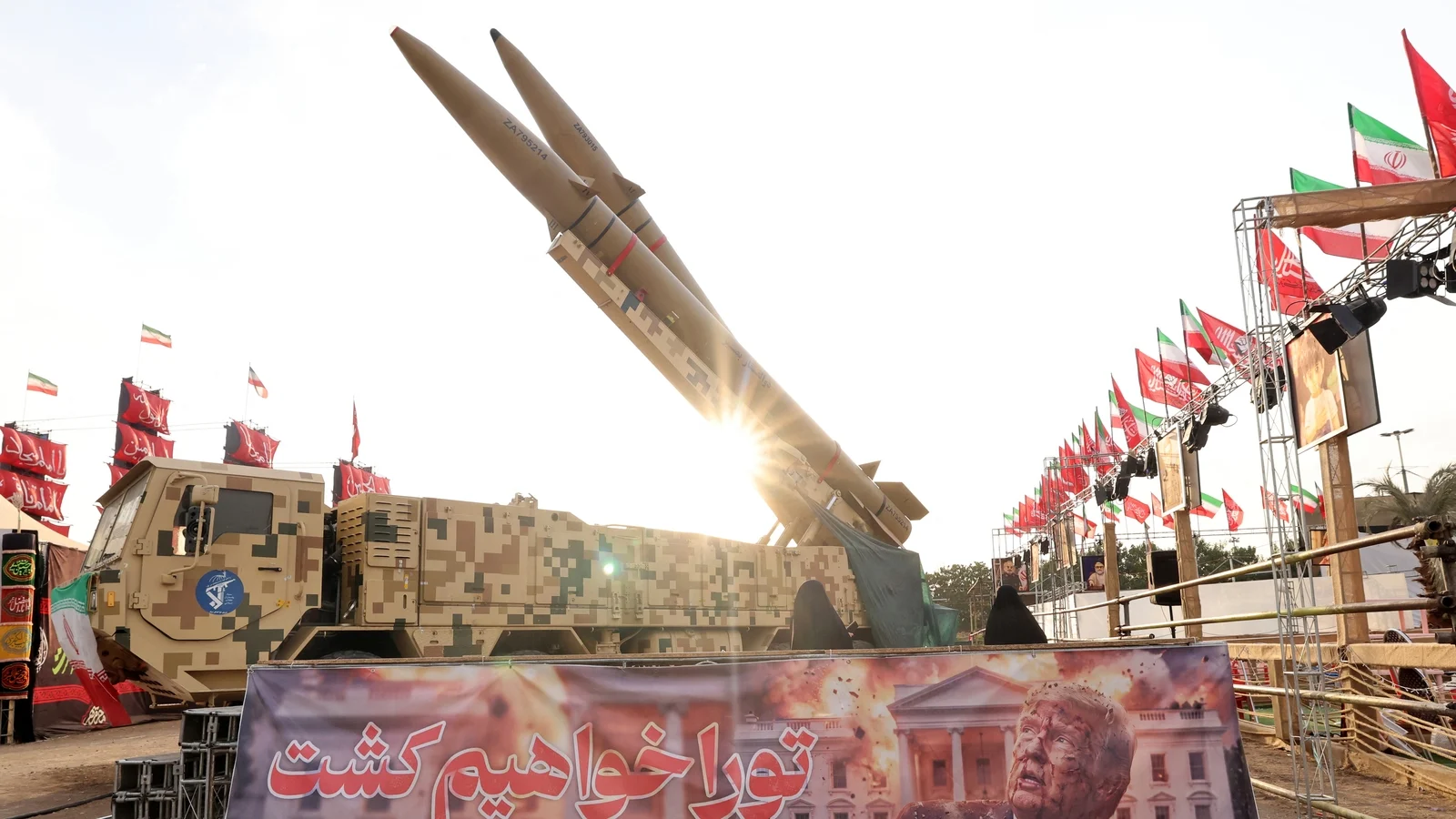
Fresh US-Iran negotiations are set to begin today after President Donald Trump said he chose diplomacy over launching new strikes on the Islamic republic, betting a deal could halt the war and defuse tensions around one of the world’s most critical shipping lanes.
Mr Trump told reporters the talks would address the Strait of Hormuz a major conduit for global energy supplies that has become a central flashpoint and would ultimately seek the denuclearisation of Iran.
Iran, meanwhile, said it was close to an agreement with Oman on a new route through the strait, where a tanker yesterday reported an explosion nearby, a reminder of the continued volatility in the strategic waterway.
Washington and Tehran have been at war since 28 February, when the US and Israel launched surprise strikes against Iran, though months of on-off diplomacy have produced intermittent lulls in fighting.
After a return to strikes last month, concerns grew that the conflict could flare again. Mr Trump had warned Iran would be hit “very hard” and was reportedly weighing renewed attacks that could include energy infrastructure, with US embassies across the region placed on alert.
The Strait of Hormuz has become a key sticking point in the conflict
Mr Trump stepped back from that threat on Saturday, saying the “perimeters” of an agreement were within reach.
“Now what we’re doing is we’re talking to them in the form of a negotiation. It begins tomorrow afternoon,” Mr Trump said aboard Air Force One, without disclosing where the meeting would take place or who would attend.
The US president said he had been urged to hold off by Iran and by regional partners Saudi Arabia, the United Arab Emirates and Qatar, arguing the strike package he had considered would have been “the biggest attack since World War II”.
Iranian media rejected the claim that Tehran had asked Mr Trump not to strike.
A previous ceasefire arrangement that included reopening the Strait of Hormuz collapsed, and Iran has since moved to tighten its grip on the passage.
At the outset of the conflict, Mr Trump said the war was necessary to confront Iran’s nuclear programme. Western nations accuse Iran of seeking a bomb, an allegation Tehran denies, insisting its programme is purely civilian.
‘Exchange of views’
Hassan Ghashghavi, a spokesman for the parliament’s national security commission, said mediators were working to resurrect a US-Iran memorandum of understanding agreed in June.
That text was not framed as a final peace settlement but as a bridge to broader negotiations on a comprehensive agreement, though it contained provisions related to Hormuz.
“They know that the main issue and, in fact, the key to the matter right now is the issue of the Strait of Hormuz, so yes, there is an exchange of views,” Mr Ghashghavi said.
In a post on X, Iranian President Masoud Pezeshkian wrote: “We must strive to compel the enemy to remain committed to what it has signed.”
Before the war, vessels moved freely through the Strait of Hormuz. During the conflict Iran shut the strait, and now says it will keep control and impose tolls a position the US rejects.
That dispute helped trigger last month’s renewed strikes after Tehran refused to allow ships to use any route except one running close to Iran’s coastline.
Iranian foreign ministry spokesman Esmaeil Baqaei said yesterday on state television that Tehran was nearing a deal with Oman — which lies on the opposite shore of the strait on a new pathway through the channel.
Iranian President Masoud Pezeshkian
“We are now going to reach an understanding on a route acceptable to both sides – neither the northern route nor the southern route – but one that respects the sovereign rights of both sides and safeguards our national interests and security,” he said.
He said such an arrangement would not amount to reopening the strait.
Shipping data firm Kpler said on Friday that traffic through Hormuz had fallen sharply.
Yesterday, the United Kingdom Maritime Trade Operations (UKMTO) Centre reported that a tanker off the coast of Oman heard an explosion near the vessel, adding that the ship and crew were safe.
Oil prices slid at the start of Asian trading after Mr Trump announced the negotiations, with West Texas Intermediate down 4.7% at $80.72 a barrel.