A fresh round of mixed messages from Washington and Tehran has deepened uncertainty over whether diplomacy is truly advancing to end their five-month-old war, even as a new shipping incident in the Strait of Hormuz underscores the danger to global energy supplies.
US President Donald Trump said yesterday that talks were in progress, casting the moment as a final opportunity for Iran to accept what he described as a good deal. Iranian officials, however, flatly rejected the idea that negotiations were taking place or even being arranged.
“They are going on right now,” Mr Trump told reporters during an Oval Office event when asked about the status of discussions. He said the exchanges were happening at the request of Iran, Saudi Arabia, the United Arab Emirates and Qatar, among others.
“This is a last chance for them (Iran) to sign a good document,” he said, before adding: “I want to give them every last chance before decapitation.”
Mr Trump’s remarks came after his weekend move to call off what he called “massive attacks” that he said he had authorised against Iran, saying talks were to be held — a familiar sequence in which he has promised major strikes and then reversed course.
Earlier yesterday, Iranian Foreign Ministry spokesman Esmail Baghaei said there were no negotiations with the United States under way and no meetings planned.
He said Iran had no intention of receiving foreign delegations or dispatching negotiators abroad in the coming days.
Donald Trump said he wanted to give Iran one more chance before ‘decapitation’
Mr Baghaei said all Iranian negotiators were inside the country, with one exception: Foreign Minister Abbas Araqchi, who he said was on a religious pilgrimage in Iraq. The only discussions currently taking place, he added, involved Oman and focused on management of the Strait of Hormuz.
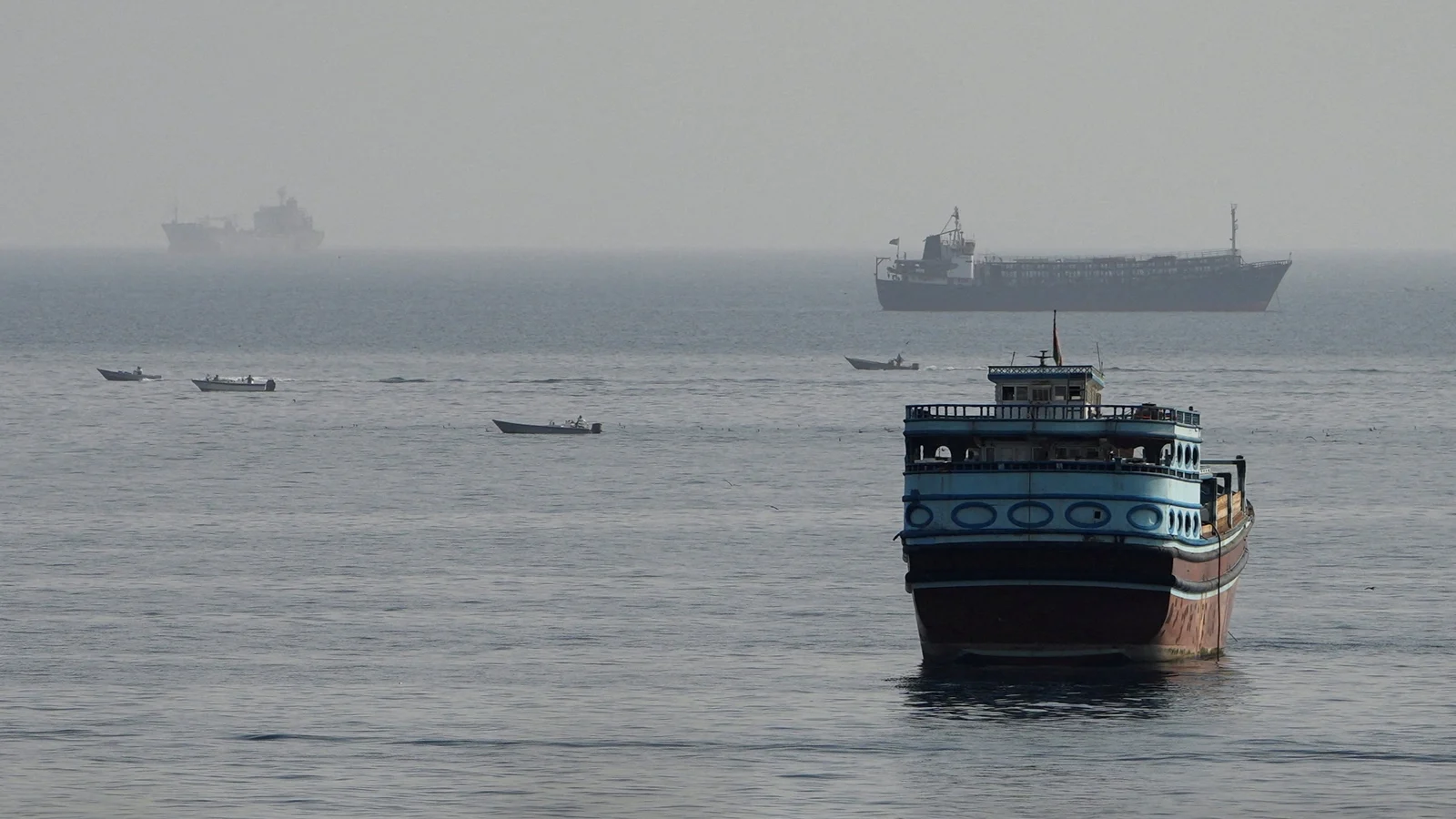
Meanwhile, activity on the Gulf’s waterways continued to reflect the broader standoff. Iran had already all but shut off transits through the critical passage — a conduit for a fifth of global shipments of crude oil and natural gas — before it was blockaded in the war.
The United Kingdom Maritime Trade Operations (UKMTO) agency said one cargo vessel reported it had been struck by an unknown projectile near the strait, off Oman’s coast.
Movement through Hormuz remained largely sluggish. Kpler data showed six vessels — three tankers and three bulk carriers — transited the strait yesterday, down from seven the day before.
Stocks rise, oil down on hopes for resolution
Even so, expectations that US-Iran tensions might be easing again pushed oil prices lower and lifted major equity benchmarks. Brent crude futures dropped about 7% to around $83.77 a barrel, while the Dow ended the day at a record high.
In Asia, shares and oil prices both inched upward. Gulf officials and analysts say Iran is betting it can outlast Washington by turning the Middle East’s trade routes, shipping lanes and energy infrastructure into pressure points that steadily raise the cost of confrontation.
Iran hopes that approach will persuade the US and its allies that containing the crisis is more expensive than accepting Iran’s demands over the Strait of Hormuz.
“Their big advantage is that they can hurt the regional states and the global economy,” said Michael Knights of the Washington Institute.
Read more:
Latest Middle East stories
Later yesterday, Mr Trump wrote on Truth Social that Iran’s leadership was “unbelievably duplicitous,” saying they had requested a meeting and that additional talks were planned for the “immediate future”.
He also повторed his claim that the US Navy held total control over the Strait of Hormuz.
“‘The United States Wall of Steel!’ Nothing gets through to Iran, unless we want it to, and nothing will get through, unless a Deal, or Total Surrender, is accomplished,” he wrote.
Repeated pattern
The day’s developments appeared to track a recurring pattern since Mr Trump launched “Operation Epic Fury” with Israel more than five months ago. On several occasions, he has publicly raised the prospect of military action and then later pointed to diplomatic outreach as grounds to pull back.
Iran, for its part, has publicly ruled out negotiations with Washington since the collapse in early July of a memorandum of understanding, signed the month before, that had been intended to end the conflict.
Mr Trump has not yet met the goals he set at the start of the war: dismantling Iran’s nuclear program, limiting its capacity to attack regional rivals and creating conditions for Iranians to topple their clerical leaders.
US moves have repeatedly been answered by escalating Iranian actions targeting US forces in the region, Washington’s Gulf Arab allies and shipping, and each time has ended with Mr Trump stepping back.
The dispute over Hormuz remains at the heart of the confrontation. Washington says the June memorandum required Iran to open the strategic waterway, while Tehran argues the text explicitly preserved its authority over shipping traffic.