Britain must “stand for something” in a world marked by conflict and injustice, Prime Minister Andy Burnham told parliament as he defended his government’s decision to block imports from Israeli settlements in the occupied West Bank.
Mr Burnham, who has been in the job since July, said the UK had long supported a two-state solution in the Middle East — but argued that statements of principle had to be matched by policy.
“Leadership is about taking action where there is injustice, where we need to correct unfairness, people being driven out of their homes,” he said.
“In this difficult and dangerous world, Britain has to stand for something.”
The import ban represents one of the sharpest shifts in British policy toward Israel in years.
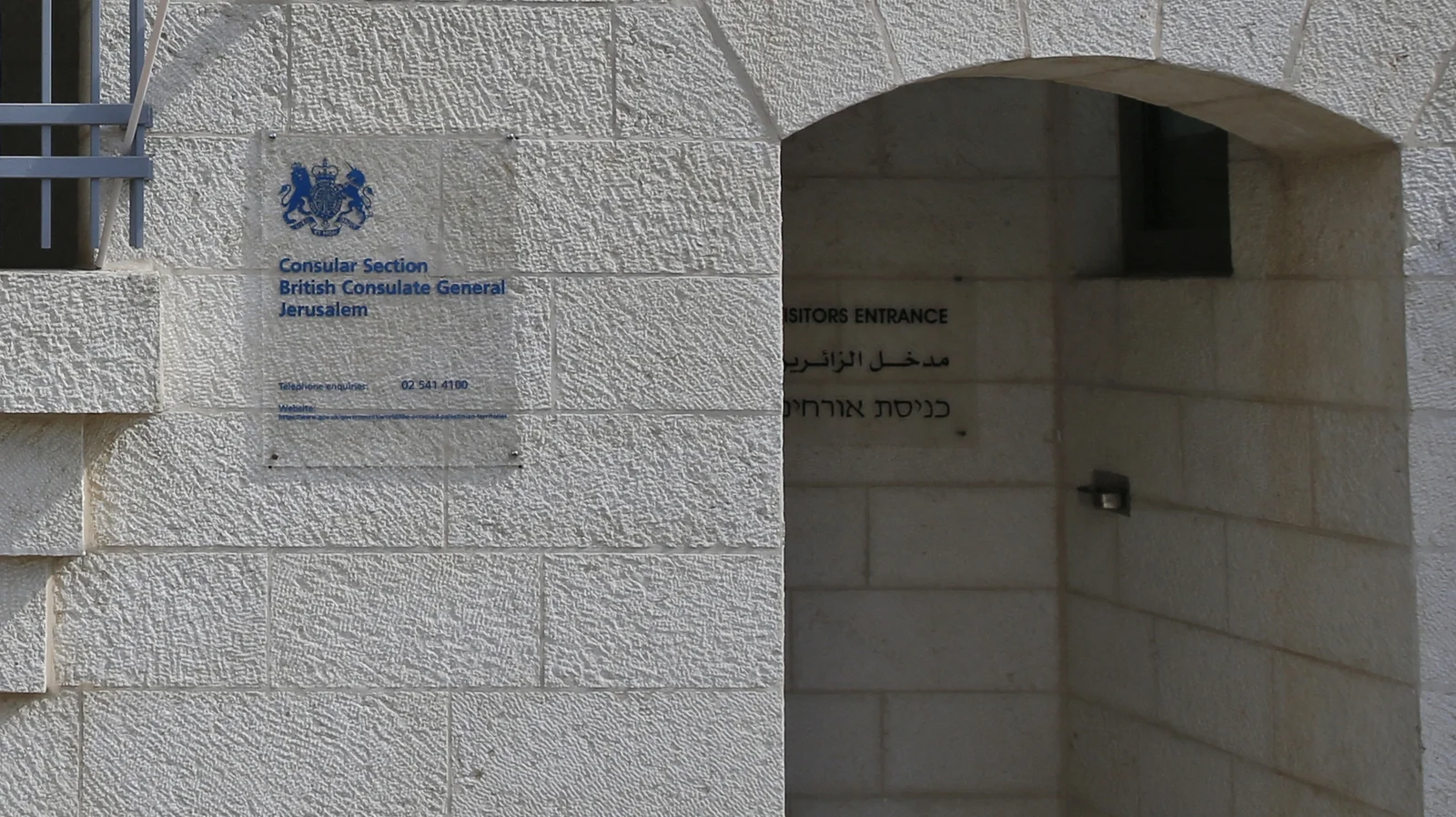
Israel responded angrily, telling the United Kingdom it must close its consulate in East Jerusalem within 30 days, according to two Israeli officials and two sources familiar with the matter.
“We will always stand with the underdog and take what action we can to support them,” Mr Burnham said.
“That is leadership on the world stage, Britain being true to what it has always been about,” he added.
The consulate — which represents the British government in Jerusalem, the occupied West Bank and Gaza on Palestinian issues — is set to be shut as part of a broader package of Israeli retaliatory steps after the UK, France and Canada announced sanctions on Israeli settlements yesterday.
The sanctions were announced as 12 countries moved in concert against Israeli settlements in the West Bank, citing an escalation in attacks by Israeli settlers on Palestinian villages across the occupied territory.
Israeli settlements in the West Bank are illegal under international law.
That stance was reinforced by a 2024 International Court of Justice advisory opinion which found Israel’s occupation of Palestinian territory unlawful.
Ed Miliband said the UK ‘could not stand by’ amid increasing Israeli settler violence in the occupied West Bank
Foreign Secretary Ed Miliband said he regretted Israel’s order to close the consulate, though he said the decision did not come out of the blue.
“We weighed the costs and benefits of acting (…) and we thought we simply could not stand by because we feared Israeli action,” he told BBC television.
Mr Miliband said yesterday that Israel had “turned a blind eye” to violence carried out by settlers against Palestinians.
He also dismissed claims that the sanctions could undermine intelligence cooperation between the two countries.
“We have important intelligence and security relationships with Israel, and I’m confident they will continue,” he said, declining to go into details.
“And I was very clear yesterday that we do believe in working with our Israeli partners when it comes to the threats they face from Iran,” he added.
British diplomats at the consulate — whose presence in Jerusalem dates back to 1839 — will also lose their diplomatic status in 30 days, the Israeli officials and two sources said.
UK personnel assigned to a US-led Gaza coordination mission in Israel, along with British diplomats based in Ramallah, have been told they have seven days to leave, one of the Israeli officials and the two sources said.
Israel also said Britain would no longer be permitted to train Palestinian security forces in the West Bank. In addition, 12 British politicians and other nationals — including former Labour Party leader and outspoken critic of Israel Jeremy Corbyn — would be barred from entering the country.
Prime Minister Benjamin Netanyahu’s office did not respond to a request for comment on the consulate closure.
Badenoch criticises sanctions
Israel’s Foreign Minister Gideon Saar said on X that he had thanked Conservative Party leader Kemi Badenoch for speaking out against the sanctions.
Writing in the Sun newspaper, Ms Badenoch said the Labour government was “putting its own party-political-interests ahead of our national interest”.
Mr Miliband said that beyond banning imports of goods from Israeli settlements in the West Bank, the UK would also act against companies and individuals providing services to settlements — including “construction, infrastructure, financing, or real estate”.
France and Canada said they, too, would prohibit the import of products from Israeli settlements, while nine other countries — including Denmark and Portugal — backed the British move.
Kemi Badenoch, leader of the Conservative Party, was critical of the UK’s move
In response, Mr Saar described Britain’s action as “morally distorted” and accused the UK of “blatant interference in the affairs of a sovereign state and its electoral process” ahead of next month’s Israeli election.
The sanctions are the latest in a series of measures aimed at Israel’s settlement policy and highlight what diplomats describe as a widening diplomatic chill between Israel and some long-standing allies.
Read the latest Middle East stories
The United States response has been subdued. US Secretary of State Marco Rubio said Washington did not want to see “anything destabilising” in the West Bank, while declining to comment directly on the Sanctions.
In Britain, Chief Rabbi Ephraim Mirvis condemned the measures as a “truly dark day”. British Jewish group Yachad took a different view, saying the announcement was “not anti-Israel, and it is certainly not antisemitic,” and accusing Israel’s “extremist government” of crossing almost every “red line” to entrench its “occupation”.
Mr Miliband rejected the rabbi’s criticism of the sanctions.
Diplomats widely see the sanctions as an important but largely symbolic move, since goods from Israeli settlements account for only a small share of Israel’s exports — though the step also draws attention to Israel’s growing diplomatic isolation.
Israel’s government has come under intensifying international condemnation over its conduct in the war in Gaza.
Israeli attacks have killed tens of thousands of Palestinians in Gaza since October 2023, while Israel’s settlement expansion and rising settler violence against Palestinians in the West Bank have also drawn international condemnation.
Britain, France and Canada were among the countries that formally recognised the State of Palestine in 2025, and they have previously imposed sanctions aimed at settlements and Israeli ministers amid accusations of inciting violence against Palestinians.