Ten days in a flooded tunnel left Nepali hydropower worker Sanjay Sah clinging to life in total darkness, sipping muddy water and counting time by prayer as he waited for someone to find him.
By the time a disaster response team finally brought him out on 4 September, the experience had scrambled his sense of reality so completely that his first words captured the disorientation.
“When I was rescued I first asked, how many days has it been?” Mr Sah, 30, said in an interview, while on his way back home in the Saptari district.
“He said that it has been 10 days. I thought it had been just a few days.”
Mr Sah was one of hundreds of workers stationed across a string of hydropower projects struck by the catastrophic 26 August flood, unleashed after a glacial mountain collapse on the China-Nepal border.
His survival became a rare bright spot after a calamity that killed at least 1,429 people and left more than 5,640 missing, most of them in Nepal.
The disaster killed least 1,429 people and left more than 5,640 missing
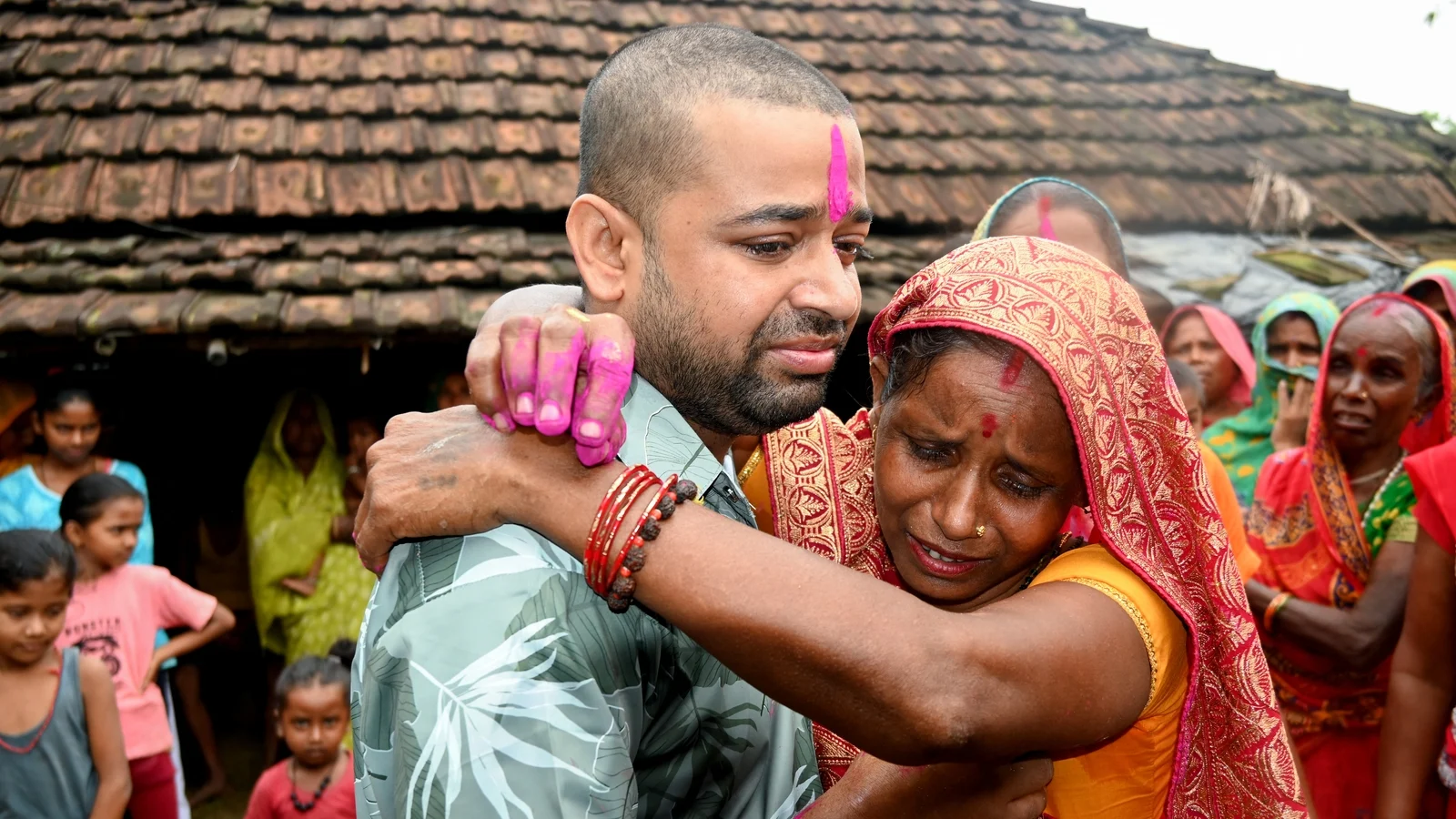
Fighting back tears as relatives and friends greeted him with garlands and a cake, Mr Sah described how quickly the situation spiralled.
“I was on duty, and then suddenly an unthinkable flood hit us, with tsunami-like waves that were several metres tall,” he said.
He said workers were alerted that floodwaters were on the way, but the warning came with too little time to get clear.
“We did get information to stay alert, that a big flood is coming. As much as possible, we tried to be alert and evacuate our friends,” Mr Sah said.
“But the water did not give us much time … we shut down everything, and tried to rescue and evacuate our friends.”
Within minutes, the tunnel filled as the torrent surged through.
Witnesses described a deluge on a scale they had never seen, while the government pointed to the severe effects of rising global temperatures on Nepal’s Himalayan mountains.
‘Divine energy’
Cut off from his co-workers, Mr Sah found himself trapped and uncertain whether help would ever reach him.
He said his Hindu faith became a crucial anchor during the long hours of isolation.
“I survived because of my deep belief and confidence,” Mr Sah said
“I was chanting Maha Mantra (Hindu prayers), and the divine energy I received because of that allowed me to not be scared or despair,” he said.
“I was able to stay there.”
With no supply of clean drinking water, he said he relied on what was available.
“There was water, but it was muddy,” he said. “I only had that.”
Even so, he was not completely alone in the darkness.
A second worker, Kabir Maharjan, 45, was also alive nearby.
“We were separated but speaking to each other.”
For Mr Sah, the sound of another person in the tunnel became a thread of connection—and a source of resolve.
Search teams brought the trapped men out alive after days of rescue efforts
After days of digging and painstaking work, search teams finally broke through and led both men out alive.
Mr Sah’s wife, Lakshmi Kumari Sah, said she held on to hope throughout the ordeal.
“God has helped us, we had our hopes,” she said, holding her daughter in her arms.
Mr Sah, who spent several days recovering in a Kathmandu hospital, said relief is tempered by grief.
“I am happy, but I feel sad too,” he said. “I was able to get a second life, to survive there. But many of our friends were there.”
With rescuers still pushing through the tunnels, he appealed for the operation to continue.
A Chinese worker was rescued on 5 September, a day after Mr Sah, but officials have not heard any further signs of life since.
“I hope the government continues its search and rescue. It is possible there might still be someone alive,” he said.
“Or they will be able to find bodies of friends who have passed away and hand them over to their families.”