Iran’s top security official has slammed the door on any renewed dialogue with Washington, pushing back after President Donald Trump signalled he could be open to talks amid the widening Middle East war.
“Don’t get distracted by the US president’s mixed signals – from ‘no negotiations’ to ‘we’re ready to talk’,” Mohsen Rezaei, the secretary of Iran’s Supreme National Security Council, wrote on X.
“The stakes around oil and the straits have changed. Damage control won’t stop what’s coming. No talks until Iran’s conditions are met. Period!” he added.
Mr Trump said yesterday that he would consider holding talks with Iran, following weeks in which he argued it was too soon for any deal that could end the conflict.
“The failing Nation of Iran wants to make a deal, quickly and badly. I will determine whether or not the U.S.A. will choose to engage – The concept of which we are open to,” he said on his Truth Social network.
Iran has repeatedly set out demands it says must be met before the war can end and before it would lift its blockade of the Strait of Hormuz, including war reparations and the removal of sanctions.
The latest exchange comes as Gulf Arab states delayed planned talks with Iran, deepening worries that the conflict could spill further across the region and rattle global energy markets.
Oman had been scheduled to host Iran and Gulf states for discussions aimed at reopening the Strait of Hormuz, which before the war carried 20% of the world’s oil exports.
But Oman said the meeting had been postponed, with Iran saying the delay came at the request of Saudi Arabia.
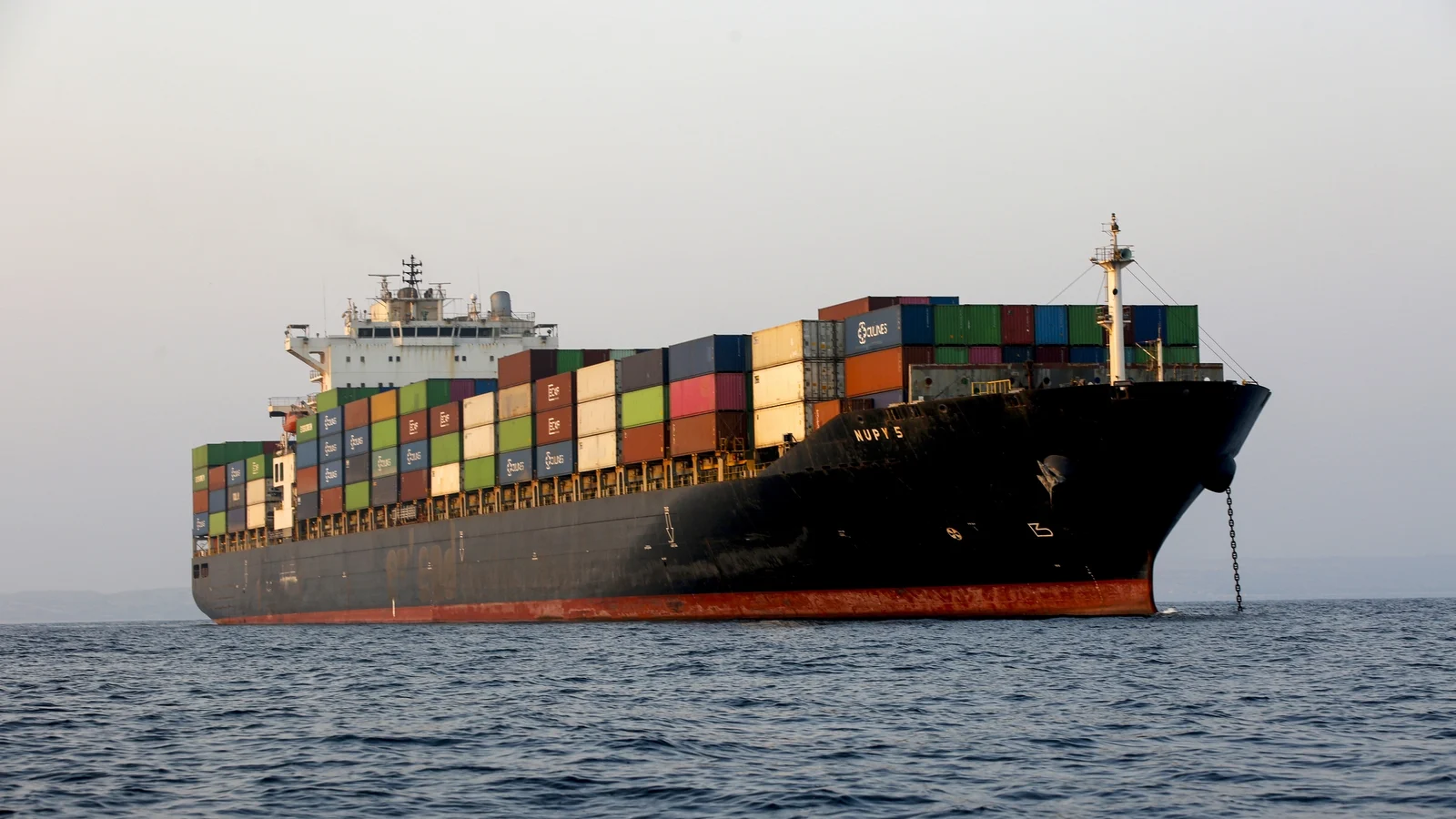
The world’s most important oil shipping lane has been largely disrupted since the war began on 28 February, as Iran has warned vessels against using the waterway without its approval.
“The IRGC Navy firmly declares that the Strait of Hormuz is closed and still under our smart control,” Iran’s Revolutionary Guards said in a statement.
A commercial vessel is anchored off Yemen’s coast at Bab al-Mandab, in the straits connecting the Red Sea with the Gulf of Aden and the Indian Ocean
UN Security Council to meet over Houthi control of Bab al-Mandab Strait
The UN Security Council will meet today after Yemen’s Houthis seized control last week of the country’s Red Sea coastline and the Bab al-Mandab Strait, according to diplomatic sources.
France, which holds the Security Council presidency this month, asked for the session to take place at 3pm local time in New York, one of the sources said.
Bab al-Mandab is a critical maritime corridor linking Europe and Asia via the Red Sea, and has taken on added importance as the broader US-Iran war squeezes traffic through the Strait of Hormuz.
Qatar, meanwhile, cautioned that closing Bab al-Mandab would carry severe consequences, with the Strait of Hormuz already under blockade for months and the Houthis making recent gains along the Red Sea.
“The world is suffering enough with the closure of the Strait of Hormuz, so we cannot also afford to add the Bab al-Mandab into that equation,” Qatar foreign ministry official Ibrahim Al Hashmi told reporters.
He said shutting the southern gateway to the Red Sea would be “catastrophic for the entire world. and we are already seeing the consequences… so Qatar is pushing for diplomacy, dialogue”.
We need your consent to load this rte-player contentWe use rte-player to manage extra content that can set cookies on your device and collect data about your activity. Please review their details and accept them to load the content.Manage Preferences
Houthis launch new wave of strikes on Saudi Arabia
Yemeni officials said the Houthis have unleashed another wave of strikes on Saudi Arabia while entrenching along Yemen’s western Red Sea coastline, as leaders in Riyadh held urgent discussions on how to respond to the group’s rapid advance.
The Houthis said they launched dozens of missiles and drones at a military airbase in Khamis Mushait in southern Saudi Arabia, aiming at aircraft hangars, radar systems, runways and ammunition depots, describing the attack as retaliation for Saudi airstrikes in Yemen.
Saudi Arabia also issued brief warnings over possible attacks in the holy city of Mecca and in the Jeddah and Taif governorates.
Damage caused to the East-West pipeline pumping station in Saudi Arabia
According to the Saudi civil defence, the alerts — including the first issued in Mecca since the Middle East war began — were quickly lifted.
The warnings followed a day after ballistic missile and drone attacks launched from Yemen injured 13 people in the kingdom’s south.
In recent days, Houthi battlefield gains — including the seizure of Perim Island at the entrance to the Red Sea — have added fresh strain to Saudi oil exports after an aerial attack on Thursday forced Saudi Arabia’s east-west pipeline offline. Riyadh blamed that pipeline strike on Iranian-backed militias in Iraq.
Saudi Arabia built the 1,200km pipeline across its territory from the Gulf to the Red Sea in the 1980s to bypass the Strait of Hormuz when it faced threats during the Iran-Iraq war.
Traders said an extended outage of the Saudi pipeline could remove as much as 4% of global oil supply while the strait remains largely blockaded. Riyadh has not indicated when operations might resume.
Yemeni officials from the internationally recognised government said Saudi and Yemeni air forces have intensified bombardment of Houthi positions, including around the historic Red Sea port of Mocha. They said the Houthis have nevertheless retained effective control of almost the entire western coast along the Red Sea.
“The Houthis are being put under heavy pressure. They in turn are putting more and more pressure on the Saudis, increasing their campaign of missile and drone attacks,” one Yemeni official said.
Crude oil prices jumped by more than 4% on Monday before easing to settle about 1% higher.
US hesitant to step in
The revived fighting in Yemen is also creating a new test for Mr Trump.
Three sources said Washington has so far pushed back against Saudi requests for direct military involvement beyond providing intelligence support.
Mr Trump said over the weekend that he spoke with the Saudi crown prince, and said the Houthis had also contacted Washington urging it to stay out of the conflict.
Latest Middle East stories
Saudi state media reported Crown Prince Mohammed bin Salman met US regional commander Admiral Brad Cooper in Jeddah.
Saudi Arabia has led a coalition fighting the Houthis since 2015, though the conflict had largely subsided under a ceasefire in recent years.
Fighting flared again this month, with the Houthis pushing back forces aligned with the internationally recognised government.