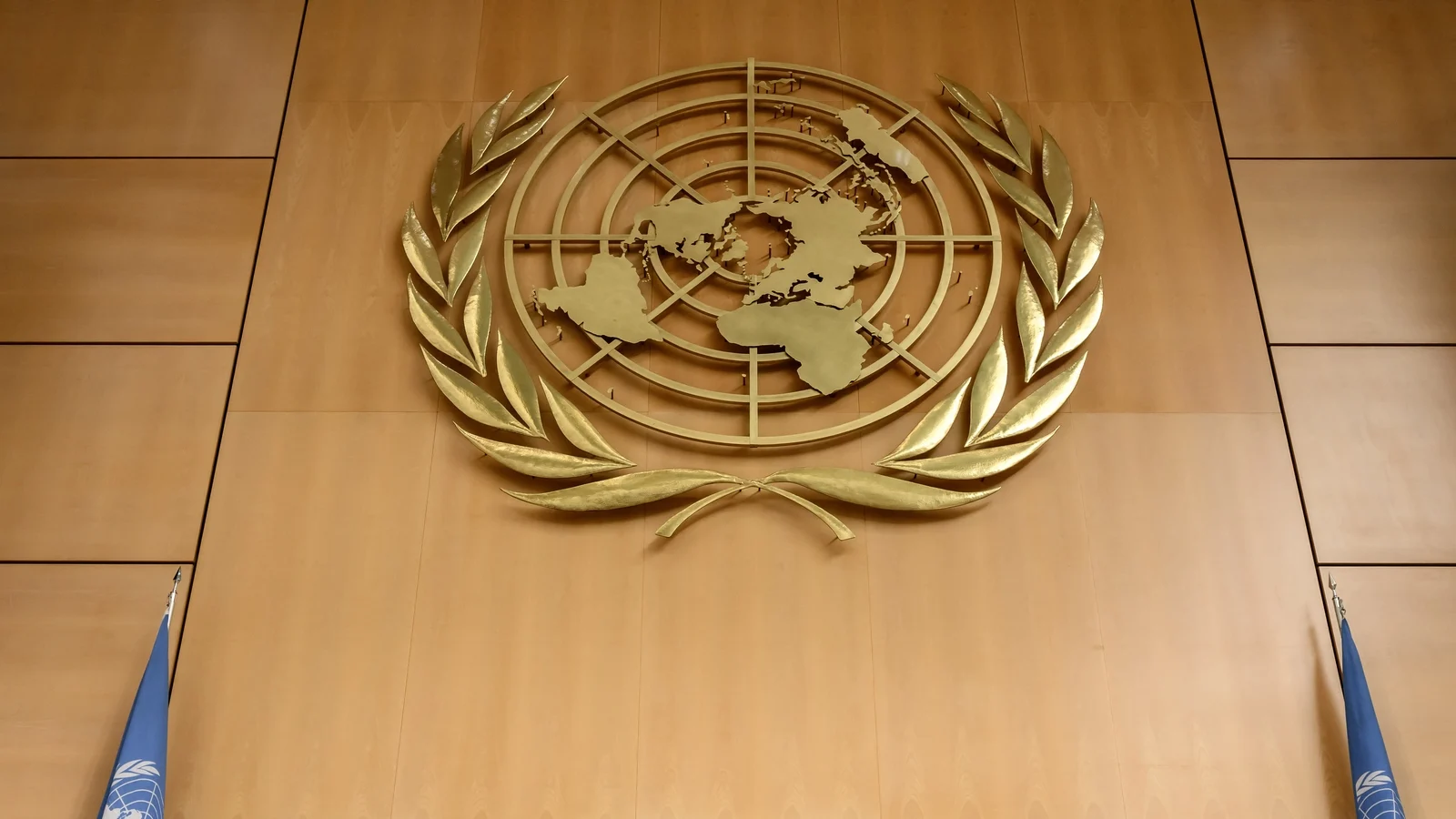
Behind closed doors and under intense diplomatic scrutiny, the UN Security Council met today to take another temperature check on who might next lead the world body, as heads of state and government prepare to descend on New York for the organization’s annual marquee week.
The outcome of the latest secret “indicative” ballot remained under wraps after a vote that stretched beyond an hour. France’s UN ambassador and the council’s rotating president, Jerome Bonnafont, offered only a brief confirmation: “the third round of straw polls has taken place.”
After two earlier informal rounds failed to produce a clear standout, eight contenders are now competing to succeed Secretary-General Antonio Guterres, whose term ends at the close of December.
Secretary-General Antonio Guterres concludes his term at the end of December
Several Security Council members have openly signaled they want the embattled UN to break precedent by choosing its first woman leader.
In the second round of the confidential process, Guyanese former foreign minister Carolyn Rodrigues-Birkett edged into first place, followed by Costa Rica’s Rebeca Grynspan in second. Argentina’s Rafael Grossi, the current head of the UN nuclear watchdog, placed third.
Guyana’s ex-foreign minister Carolyn Rodrigues Birkett
The remaining candidates are Macky Sall of Senegal, Ecuador’s Ivonne A-Baki, Chile’s Michelle Bachelet, Ecuador’s Maria Fernanda Espinosa and Uganda’s Olara Otunnu.
Diplomats have also been watching for signs that the race could be reshaped by the intervention of the five permanent, veto-wielding powers — Britain, China, France, Russia and the United States — including the possibility that a compromise figure is inserted late in the process.
“If that happens in a way that’s not transparent… then we have a problem,” one diplomat said, requesting anonymity because of the sensitivity surrounding the talks.
Under the rules of the selection, even a hopeful who secures the required nine votes among the 15 council members must still steer clear of a veto from any of the five permanent members, a group now marked by deep divisions.
Once a candidate clears the Security Council, the name is forwarded to the full General Assembly for confirmation by all UN member states.
Without endorsing any individual, a US State Department official said Thursday the next leader must bring the UN “back to basics and publicly commit to the changes we require.”
“Any new secretary-general must return the UN to its primary purpose of maintaining peace and security in the world, rather than the absurd, politicized, woke ideology that has undermined the institution’s effectiveness,” the official said.
– ‘Muddled picture’ –
Daniel Forti, the International Crisis Group’s head of UN affairs, said attention is now focused on whether the field begins to narrow or remains fragmented.
“We’ll be watching out for… whether any one or two candidates consolidate support from the council, or whether we sort of continue to be in a pretty muddled picture that gives more avenues for other potential contenders to jump into the race,” Forti said.
In each straw poll, every council member privately assigns each candidate one of three ratings: “encourage,” “discourage,” or “no opinion.”
After an unspecified number of rounds, the process shifts so that ballots cast by the five permanent members appear on differently colored paper — a tweak designed to flag potential veto threats while still masking which country opposed which candidate.
Forti said it was believed another straw poll could come at the end of the UN’s signature high-level week, though he stressed that remains unconfirmed.
Guterres ‘deeply regrets’ US visa refusal to Abbas for annual meeting
Mahmoud Abbas was forced to address the General Assembly by video last year
UN Secretary-General Antonio Guterres “deeply regrets” Washington’s decision to deny a visa — for the second consecutive year — to Palestinian leader Mahmoud Abbas, a UN spokesman said today, a move that will keep Abbas from attending the UN General Assembly.
The US State Department said yesterday it would not issue visas to Mr Abbas and other Palestinian officials for next week’s gathering.
Only members of the Palestinian mission to the UN will be permitted to attend the meeting, which begins on Tuesday.
“The Secretary-General is concerned about the impact of this decision on the ability of the State of Palestine to participate fully in the work of the United Nations,” Mr Guterres’s spokesman Stephane Dujarric said in a statement.
“The full participation of all delegations in the work of the Organization is essential to its proper functioning.”
Mr Guterres continues to urge the United States, as the host country, “to ensure that visas are issued to all delegations in accordance with its obligations,” the spokesman said.
The Trump administration also denied visas for the Palestinian delegation last year, a break from past practice that forced Mr Abbas — typically a fixture at the General Assembly — to deliver his address by video.
On Thursday, the General Assembly voted 152-3 to allow him to appear virtually again this year.
The United States and Israel have objected to the Palestinian Authority’s long-standing payments to families of imprisoned or slain Palestinians, including those who carried out attacks against Israelis.
The PA has recently changed the policy, shifting welfare payments to a needs-based system rather than tying benefits to political affiliation or prisoner status.
The State Department said Washington also opposed Palestinian “actions to internationalize the Israeli-Palestinian conflict including through the International Criminal Court (ICC) and International Court of Justice (ICJ), seeking to bypass negotiations through seeking unilateral recognition.”