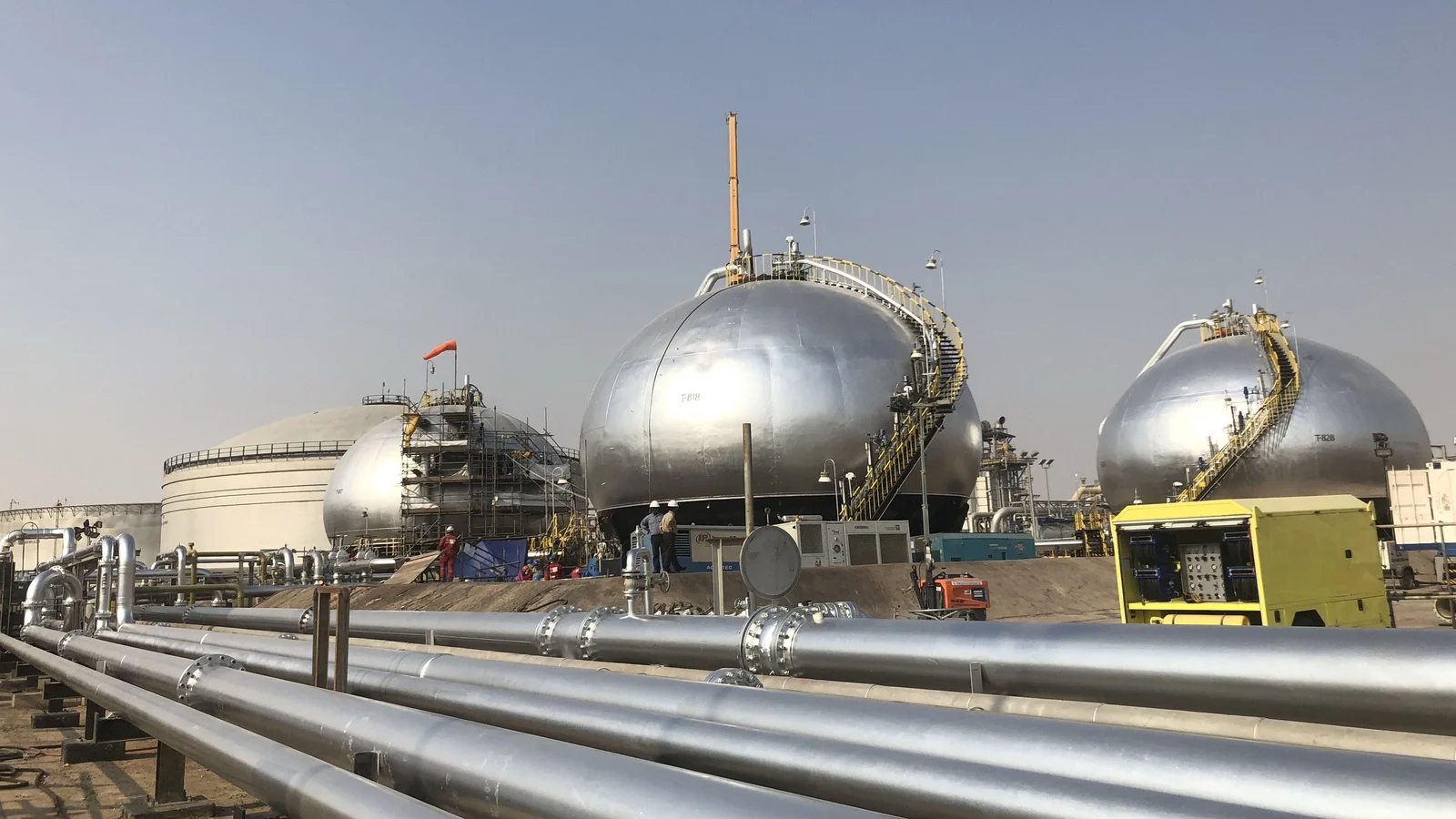
Saudi Arabia has brought its crucial East-West Pipeline back online, a move that could see crude exports restart from the Red Sea port of Yanbu later today, according to three sources briefed on the situation.
The pipeline had been taken offline after drone attacks on 13 September forced the shutdown, stopping crude loadings at Yanbu and tightening supply routes at a sensitive moment for global energy markets.
News of the restart immediately rippled through trading floors, with the return of Saudi supply prompting renewed selling, traders said.
Brent crude futures dropped by more than $2 a barrel, sliding to their lowest level since 8 September.
The East-West Pipeline has taken on outsized importance since disruption to oil flows through the Strait of Hormuz following the US-Israeli war on Iran. In that period, OPEC’s leading oil exporter has relied on the line to redirect roughly 4 million barrels per day — about 4% of global supply — toward Yanbu, bypassing the chokepoint.
After the restart, the pipeline was operating at a low pumping rate, two of the sources said.
State oil company Saudi Aramco did not immediately respond to a request for comment.
One source said Aramco was working to restore throughput to 4 million bpd, while a security source cautioned that getting back to full flows could take weeks.
The revived line is set to resume crude supply to Aramco refineries along the Red Sea coast, one source said, adding that one cargo was scheduled to load at Yanbu later today.
The source said the shipment was destined for China.
In anticipation, two trading sources said market participants were positioning vessels for Saudi loadings by shifting tankers to Egypt’s Mediterranean Port Said for ship-to-ship transfers, as well as to Sidi Kerir.
The restart comes as the foreign ministers of the G7 issued a blunt rebuke of the “unacceptable continued strikes” launched from Yemen against Saudi Arabia, calling on the Iran-backed Houthi rebels to immediately halt their attacks.
“We call on the Houthis to immediately cease all military actions, all threats and attacks against civilian shipping, and to return to the political process in good faith,” the leaders representing Canada, France, Germany, Italy, Japan, the United Kingdom and the United States said in a statement.
The group also urged Iran “to end its arming of and support for the Houthis,” alleging Tehran is violating earlier UN Security Council resolutions.
On the ground in Yemen, military sources from both sides said fighting between the Houthis and government forces backed by Saudi Arabia has killed 154 people over the past two days.
“The death toll from Saudi airstrikes, clashes and artillery fire in the governorates of Taiz, Al-Jawf, Marib and Saada stands at 118,” Houthi military sources said, while government sources reported 36 killed in their ranks.
Earlier, Saudi strikes on the strategic Red Sea port city of Mokha killed at least six people and wounded eight others, according to the Houthi-affiliated news agency Saba.
The Iran-backed Houthi movement has surged in recent weeks with a lightning offensive aimed at taking control of Yemen’s entire Red Sea coast, including Mokha, forcing the Saudi-backed government into a hurried response.
Rashad al-Alimi, the head of Yemen’s governing body, held a call with US President Donald Trump to seek US support against the pro-Iranian fighters, a source in Mr Alimi’s office said.
Mr Trump did not pledge military assistance, the source added, saying the call on Sunday was intended as a demonstration of solidarity with Yemen’s besieged government.
US media has reported that Saudi Crown Prince Mohammed bin Salman has also pressed Mr Trump to strike the Houthis.
Yesterday, media reports said that British Prime Minister Andy Burnham agreed to give military support to Saudi Arabia.
Tehran hints at Hormuz talks with US as leaders gather at UN
Meanwhile, a senior Iranian official said Tehran could reopen the Strait of Hormuz to Gulf shipping within days if the US lifts its blockade, framing this week’s UN gathering as a “golden opportunity” to restart diplomacy with Washington.
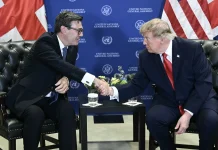
US President Donald Trump and Iranian President Masoud Pezeshkian are both expected at the UN General Assembly in New York — the first time they will attend the same event since Mr Trump launched “Operation Epic Fury” against Iran in February.
Although no direct meeting between the two presidents was planned, the Iranian official said Iran’s delegation had full authority to revive talks.
No face-to-face meetings between Iran and the United States are known to have occurred since July, when an interim deal intended to end the war fell apart only weeks after it was signed by Mr Trump and Mr Pezeshkian.
“The US needs to announce that it wants to resolve the issue diplomatically, make that official, and then agree on a timeline for how the process will move forward,” the Iranian official said.
“The UN General Assembly is a golden opportunity for the US to return to diplomacy,” the official said. He said Iran had sent its latest proposal to Washington via mediators on 16 September.
US Secretary of State Marco Rubio told NBC’s “Today” show that Washington was open to talks with Iran at the General Assembly, “especially if it has the prospects of leading to something positive and ultimately achieving the goal of what this is all about”.
Mr Trump is due to meet with the leaders of the six Gulf Arab states: Bahrain, Kuwait, Qatar, Oman, Saudi Arabia and the United Arab Emirates.
The Gulf states want shipping restored through the Strait of Hormuz but remain wary of allowing their longtime rival Iran to gain additional leverage.
All except Oman host large US military bases that have come under repeated Iranian attack during the war, putting strain on their decades-old security partnerships with Washington.