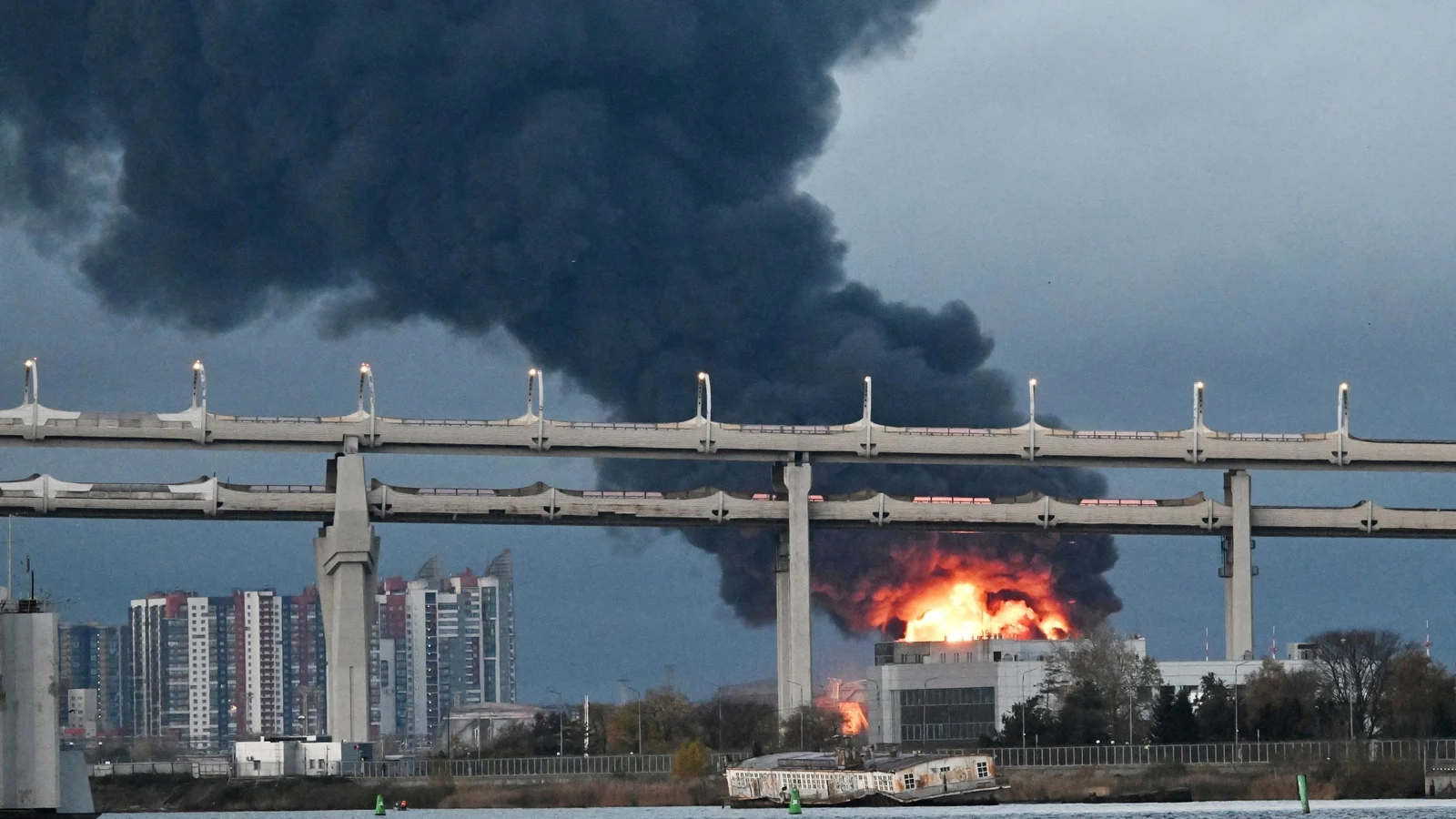
Flames and smoke rose over Saint Petersburg overnight after Ukraine launched what Russia described as a large-scale drone assault, igniting blazes at an oil refinery and depot in President Vladimir Putin’s hometown.
The strike unfolded as Kyiv accused Moscow of repeatedly breaking US President Donald Trump’s so-called “energy ceasefire” and plunging tens of thousands of Ukrainians into darkness.
Last week, Mr Trump announced an “energy ceasefire” – which neither side said they agreed to beforehand – but it quickly unravelled, with Moscow continuing attacks on Ukraine’s power grid and Kyiv later resuming strikes on Russian oil refineries.
Mr Trump has been angered by Kyiv’s strikes on Russian refineries – which he says are contributing to a surge in global fuel prices.
Today, Ukraine hit Russia’s second city as its ties with Washington strained in recent days.
Kyiv argues the counterstrikes are justified payback after years of Russian offensives and the systematic damage inflicted on Ukraine’s energy infrastructure.
Watch: Eyewitness footage shows fire near Saint Petersburg oil terminal
Ukrainian President Volodymyr Zelensky said today that since Mr Trump announced his ceasefire, Russia has struck Kyiv’s energy, oil and gas facilities 76 times.
Saint Petersburg governor Alexander Beglov said the night-time strikes killed one person and left five others hospitalised.
Emergency crews were battling fires at the Saint Petersburg oil terminal, the Ruchyi oil depot and several industrial warehouses, Mr Beglov said.
He also reported restrictions on flights at the city’s Pulkovo airport and said 12 housing blocks sustained damage.
Russia’s VKontakte social network said its data centre in the city was hit, and Ozon – Russia’s second largest retailer – said its logistics centre was also struck.
Alexander Drozdenko, who leads the wider Leningrad region, said air defences shot down 144 Ukrainian drones, with state media calling it the largest attack on the city since the 2022 war began.
Ukraine has attacked Moscow and Saint Petersburg throughout the Kremlin’s dragging offensive, but large-scale strikes on Russia’s largest urban centres remain uncommon.
US-led peace talks have not produced a breakthrough. In a fifth year of war, few see a way out.
Mr Drozdenko said 20,000 people were left without power in the town of Yanino after a substation was hit.
He added that in the region a woman and three children were hospitalised “with symptoms of carbon monoxide poisoning” after drone debris fell onto a house and sparked a fire.
Smoke could be seen above Saint Petersburg’s shipyards and from the historic city centre on the banks of the Neva River.
Read more: Trump paused Russia sanctions to ‘analyse’ impact – Rubio
Earlier this week, Mr Putin appeared in military uniform and said Moscow intended to seize the rest of eastern Ukraine by force.
The latest attack followed a day after Mr Zelensky urged allies to maintain pressure on Moscow to end the war, while criticising Mr Trump’s decision to block new sanctions on Russia.
Today, Mr Zelensky said Russian strikes hit substations in four Ukrainian regions, leaving “tens of thousands of families without power”.
He has warned that Moscow is trying to deprive Ukrainians of heat and electricity ahead of winter.
Mr Zelensky also said Russian strikes today killed two people at an “agricultural enterprise” in the western Volyn region, which borders NATO member Poland.
“America should see that Russia is not taking any reciprocal steps in response to sanctions relief or agreements.
“On the contrary, they take every signal of an opportunity to make money as proof that their bet on war is paying off and they can keep fighting,” Mr Zelensky said.
This week, Mr Trump blocked a package of new sanctions on Russia intended to target Mr Putin and Russia’s energy and defence sectors.
The US leader also signed an agreement with Moscow this month to buy diesel, a move seen as aimed at easing fuel prices for American consumers ahead of elections.
Kyiv and its European allies worry the White House is taking Russia’s side in Europe’s worst conflict since World War Two.
“It is Russia that must face pressure for peace to have a chance,” Mr Zelensky said.