The question is not a philosophical inquiry, nor does it require a serious thinker to come up with an appropriate answer. The simple answer to the question (presumably according to Somali political elites) is that Hassan Sheikh II is a child (the product) of his predecessor, the former president of Somalia, Mohamed Abdullahi Farmaajo.
In other words, President Farmaajo was the real architect of the political circumstances that enabled Hassan Sheikh Mohamud II to return to power and become the president of the Federal Republic of Somalia for a second term. The current president seized that opportunity and made it a reality.
Today, we are confronted with that reality: Hassan Sheikh Mohamud II sits in Villa Somalia without a legitimate mandate, challenging the status quo—the federal system, the corrupt electoral process that used to take place once every four years, the so-called 4.5 power-sharing formula, and the Constitution.
President Farmaajo: The Scapegoat in our time?
Before applying the scapegoat theory to the former president, let me explain the historical context in which this theory originated. In her book Fields of Blood: Religion and the History of Violence, Karen Armstrong writes: “Every year in ancient Israel, the high priest brought two goats into the Jerusalem temple on the Day of Atonement.
He sacrificed one to expiate the sins of the community and then laid his hands on the other, transferring all the people’s misdeeds onto its head, and sent the sin-laden animal out of the city. In this way, it was explained, ‘the goat will bear all their faults away with it into a desert place” (Armstrong, 2014: 3). Armstrong concludes that this was literally meant as “placing the blame elsewhere”.
Is Farmaajo being blamed for what he did not do while he was in Villa Somalia? Let us examine the question and determine whether Farmaajo fits the context of a scapegoat.
An examination of the political behavior, mindset, and rhetoric of Hassan Sheikh Mohamud II suggests that these can be attributed to his predecessor, Mohamed Abdullahi Farmaajo. Farmaajo appears to be the political role model whom Hassan Sheikh looks up to and mimics. In short, Hassan Sheikh is following in the footsteps of his predecessor.
In this regard, Farmaajo is not the scapegoat of our time but rather the real architect behind the political drama that Hassan Sheikh is playing out today.
Midwifery of a New Political System
It is not so easy to predict the next leader of this weak postcolonial so-called federal state now. When we look at the dimensions of the state—government, nationhood, economy, and sovereignty—the characteristics of a weak post-colonial state are, according to Caramani, as follows: “Inefficient and corrupt administrative and institutional structures” in terms of government; “weak bonds of loyalty to the state and low levels of state legitimacy” in terms of nationhood; “strong dependence on the global economy” in terms of the economy; and “negotiated intervention, donor control of aid, and supervision by international society” in terms of sovereignty (Caramani, 2017: 443).
This, however, does not prevent us from using our “creative imagination,” an imagination that Jean-Paul Sartre defined as “the ability to think what is not present.” So, we exercise our creative imagination. We imagine a political redeemer whose work will be to clean up the political mess that Hassan Sheikh II and his role model left behind and, at the same time, work on laying the foundations of a new political system for Somalia. We imagine the midwifery of a new political system.
In any mission aimed at achieving the desired end, the most difficult aspect is said to be finding a solution to the ‘how question’ rather than the ‘what question.’ In other words, the “how” is more difficult than the ‘what,’ for the latter is more concrete than the former. Any politician may have a political vision in mind, but once he or she embarks on actualizing that vision, a “how question” manifests itself.
To come to the subject at hand, laying the foundation for a new political system is the simpler part of a political vision. But the question remains: HOW? Having imagined a political redeemer, we can now establish the criteria for identifying one capable of fulfilling the task before him. But before establishing these criteria, we have another significant question to address: the nature of the task that any political redeemer is required to carry out.
There is a point I want to make clear here, and that is that a political redeemer is understood in the precise sense of the Romantic point of view, not the Enlightenment point of view, which is a great difference between them. What these two schools of thought, Romanticism and Enlightenment, have in common is that they are both anti-pathetic to the status quo, but the difference lies in how this status quo is engaged with or approached.
The Enlightenment perspective advocates change through reform, while the Romantic view suggests revolution, radical change—laying down a new foundation by rooting out the whole vulnerable system: the federal system, the corrupt electoral process that used to take place once every four years, the so-called 4.5 power-sharing system, and the Constitution that produced Farmaajo, Hassan Sheikh II, and may also produce the likes of them.
According to Viroli, the task assigned to any political redeemer is a revolutionary mission. He adds that it is “revolutionary in the precise sense of a man who breaks the law, the laws as a whole, in order to replace it with a new law which he believes to be better than the old law.”
On the one hand, the question of who will be entrusted with this national project remains open, but NOT Farmaajo or Hassan Sheikh II. On the other hand, I cannot leave it to my readers to establish the criteria for the political redeemer that Somalia (the state) and Somalis (the nation) need in this time of uncertainty.
The political redeemer should, at the very least, be able to find answers to how questions—for instance, how can he lay the foundations for a new political system before becoming president?—rather than merely answering what questions, such as what changes he will bring to this 25-year-old, vulnerable political system that has produced Farmaajo and Hassan Sheikh II.
To avoid repeating this setback, any what question posed to a presidential candidate should follow a how question.
Farmaajo and Hasan Sheikh II— Like Father, Like Son
No expert political scientist with extensive knowledge of the subject would ever question that Somalia needs a reconfiguration of its current political system—one born in Arta, Djibouti, and bred in Mbagathi, Kenya. Somalia needs a radical change in its political system simply because all four core features that the so-called political elites have elucidated as the foundations of the Third Somali Republic—the federal system, the corrupt electoral process that has taken place once every four years, the so-called 4.5 power-sharing system, and the Constitution—are vulnerable and can easily be manipulated.
This is a system designed to produce its own manipulators. It is the very system that gave birth to Hassan Sheikh II and his role model. Therefore, Somalia needs a radical transformation of this system. A new political reality must be created in Somalia, and Hassan Sheikh Mohamud is neither the right president nor the right politician to materialize or actualize this vision.
He is incapable of leading this revolution for two main reasons. First, Hassan Sheikh II has a very limited, if any, understanding of the nature of what, in political science, we call a weak postcolonial state, which I illustrated in the preceding section of this text with the help of Caramani. Regarding the aggressive political behaviour he has exhibited lately, he has no idea of the features that constitute a weak postcolonial state.Second, he is himself a product of the very political system that needs to be transformed. He is, therefore, part of the system rather than a political force capable of fundamentally changing it. Moreover, because of his old age, Hassan Shiekh II cannot remake himself to overcome his ego.
Convinced of the importance of role models for personal survival and the achievement of political objectives, Jared Diamond and Niccolò Machiavelli have devoted considerable attention to this subject in their respective works, Upheaval: How Nations Cope with Crisis and Change and The Prince. Hassan Sheikh Mohamud II, who originally emerged from The Civil Society, has unfortunately chosen the wrong political role model: former President Mohamed Abdullahi Farmaajo. Consequently, he is already repeating the political mistakes of his predecessor. The same political approach that failed Farmaajo, the father, is unlikely to succeed under Hassan Sheikh Mohamud II, the son.
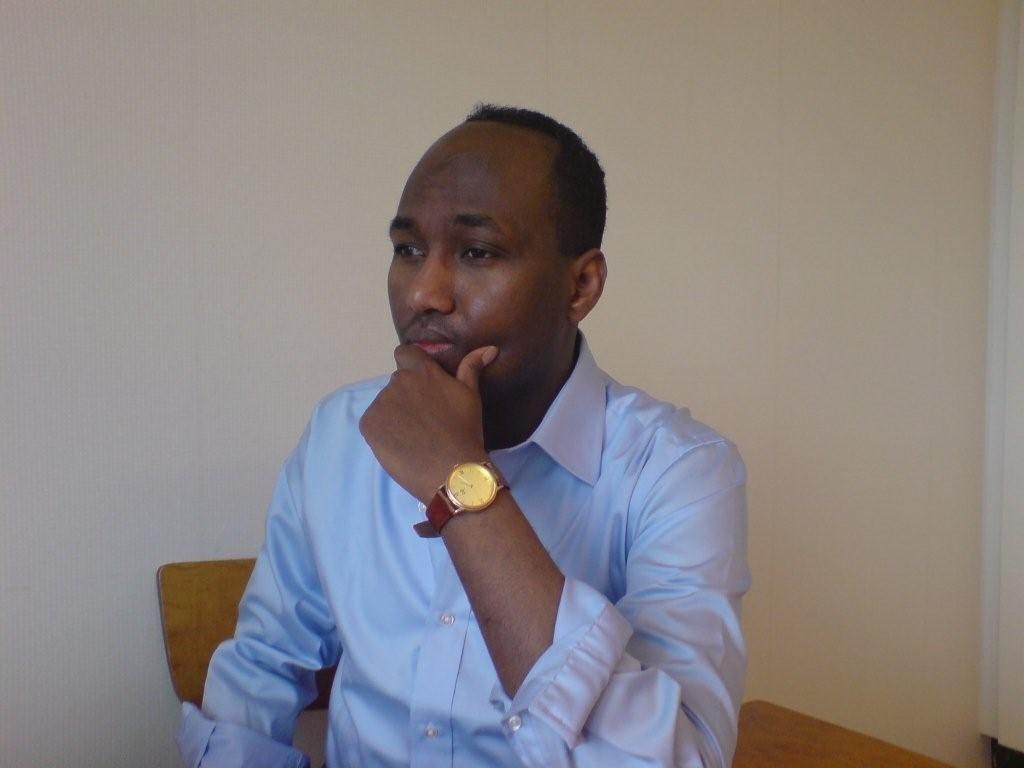
By Cismaan Cali Amiin
Cismaan Cali Amiin is the author of A Crying Somali Citizen and Somalia: A Manipulated and Vulnerable Nation, published in Sweden in 2020. He studied the International Programme in Politics and Economics (IPPE) at University West in Sweden, majoring in Political Science. His fields of study are Politics, Philosophy, and Economics.
cismaancaliamiin@gmail.com
Tlf: +46760882518 (WhatsApp)
References:
Armstrong, Karen. (2014). Fields of Blood: Religion and the History of Violence. United States.
Armstrong, Karen. (2000). Islam: A Short History. United States.
Caramani, Daniele. (2017). Comparative Politics. Great Clarendon Street, Oxford, United Kingdom.
Diamond, Jared. (2019). Upheaval, How Nations Cope with Crisis and Change. Great Britain.
Kenny, Anthony. (2019). An Illustrated Brief History of Western Philosophy. Great Britain.
Machiavelli, Niccolo. (2008). The Prince. Hackett Publishing.
Viroli, Maurizio. (2014). Redeeming The Prince: The Meaning of Machiavelli’s Masterpiece. United Kingdom.