UK advocacy group urges stronger, closer ties with the European Union
 Caalamka
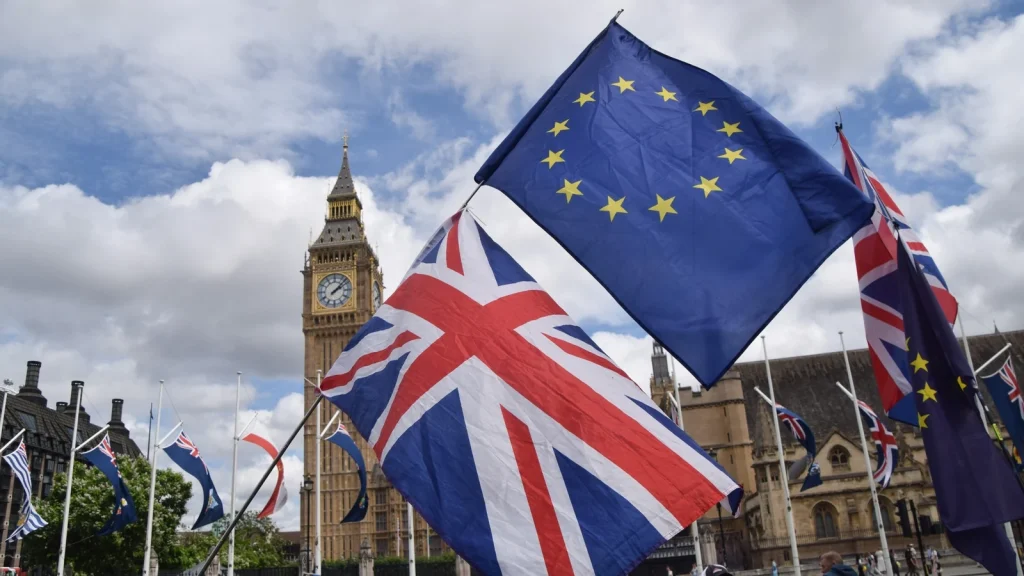
With an EU-UK summit set to open today, a newly formed centre-right pressure group led by former senior Conservatives is urging Britain to chart a steadier, closer course with Brussels — and to keep every long-term option, including full EU membership, in play.
In a report published today, Prosper UK argues that a tighter relationship with the European Union would strengthen both economic prosperity and national security, and says no model for the future relationship should be ruled out.
Pointing to what it says is public frustration with the current post-Brexit arrangements, the group said a large majority of the British electorate believes the relationship with the EU is not working and should be closer.
Prosper UK added that a majority of Conservative Party voters also share that view.
The movement describes itself as centre-right and is headed by former Conservative Mayor of the West Midlands Andy Street and former Scottish Conservatives leader Ruth Davidson.
Its founding figures include former Conservative ministers Amber Rudd, David Gauke and David Liddington.
Former UK Secretary of State for Justice David Gauke said: “Prosper UK believes that the issues of economic prosperity and national security should be at the heart of our politics, and we believe that a closer relationship with the European Union can assist on both those routes.
It can make us more prosperous. It can make us more secure in an uncertain world. The question, though, is what does that relationship look like?”
Former Secretary of State for Justice David Gauke
Speaking to RTE News, Mr Gauke — Prosper UK’s deputy chairman — said the organisation wants to lay out a range of choices for the public on the future EU relationship, including what each option would mean in terms of cost and sovereignty.
“I think we’d like to build a broad consensus towards a sustainable relationship with the European Union that works for the UK, makes us grow more economically, and also ensures that we are more secure,” Mr Guake said.
The report sketches a pathway of potential steps the UK could take over the coming years, from reversing the “reset” launched by the Labour government two years ago — a process it notes was given tangible momentum by Friday’s agreement to end physical checks on food and drink exports from Britain — through to the possibility of rejoining the EU.
Prosper UK says the trade-offs increase with each move toward deeper integration, arguing that “each step closer brings a larger economic gain in return for following more EU rules and paying more.
“Any economically substantial improvement in the terms of the relationship also requires accepting the free movement of people. EU membership has the important difference that, rather than following sections of EU rules, the UK would again have a leading voice in making them,” it added.
One of the report’s headline suggestions is a version of the so-called Swiss model: single market access for goods negotiated sector by sector, alongside free movement of citizens, adherence to EU rules in covered areas and proportionate contributions to the EU budget — a package it says could strike a workable balance between benefits, obligations and autonomy.
An EU-UK summit will take place today
Mr Gauke said: “we make the case that it is possible that a Swiss-type deal that builds on those areas and potentially finds other areas, then that is all very encouraging. But look, this is a debate that is going to run for some years yet.
“I don’t think it needs to consume the country in the way that Brexit did previously, but if we are looking at ways in which the economy can grow, we can’t ignore this particular issue.”
Asked how he judged the national mood on reopening the EU question, Mr Gauke said: “I think the public looks at Brexit and feels it hasn’t worked as well as many people had hoped it would.”
“That is not to say there’s a full determination to pick one particular model over the other, but I do think that the public is prepared to listen to the arguments again.”
Mr Gauke resigned from the British government in July 2019 after Boris Johnson ousted Theresa May as Tory leader and Prime Minster, and was part of a group of 20 MPs who voted against Mr Johnson’s Brexit policy.
He resigned from the Conservative Party that autumn to stand as an independent. He rejoined the Conservative Party in 2024, but said he is not thinking of standing for Parliament again.
The Prosper UK report also catalogues what it describes as the economic costs of Brexit across the past decade:
“The UK economy is smaller than it would have been inside the EU, and there is broad agreement that leaving has cost between 4% and 8% of GDP.
The trade agreements signed since are worth fractions of a percentage point of GDP,” the report said.
“According to HM Revenue and Customs data, 39,000 small and medium-sized businesses that exported only to the EU in 2018 had stopped doing so by 2024,2 and where the UK has established regimes of its own, businesses have often ended up complying with two regulatory systems.”
The report highlighted British exporting firms saying Brexit has had a negative impact
It says survey evidence continues to show more exporters reporting harm than benefit from the post-Brexit trading framework:
“In 2025, only 16% of exporters surveyed by the British Chambers of Commerce said the Trade and Cooperation Agreement was helping them grow their sales in the EU, while 54% said it was not, up from 41% a year earlier. Customs declarations alone have cost exporters an extra £1.8bn since 2022.”
“In May 2026, 34% of small businesses trading with the EU told the Federation of Small Businesses that they expected to reduce or stop that trade if the rules did not change, while only 6% expected to grow it,” the report said.
Prosper UK also points to polling it says indicates shifting sentiment among business leaders in favour of prioritising Europe:
“By April 2026, 52% of directors surveyed by the Institute of Directors wanted the EU to be the Government’s top trading priority, up from 35% a year earlier.”
Beyond trade, the group is calling for a new architecture for European security shaped by the lessons of the Ukraine war.
Prosper UK said Britain should “propose a European Defence Treaty, drawing on the 1954 treaty that created the Western European Union, anchored in NATO and open to every European democracy, including Ukraine, with the EU as a party.
It would provide a standing framework through which coalitions of the willing can act when NATO as a whole does not, with no member obliged to take part and none able to stop the others”.
Prosper UK said it is not taking a position on whether there should be a future referendum — or referendums — on rejoining the EU or pursuing other major changes that would involve costs and sovereignty implications.
It also argues that any substantive shift is unlikely to be actively pursued before 2030, citing election cycles in the EU, its largest member states, and in the UK.