Rafah at the Threshold: A Border, a Lifeline, and the Weight of Waiting
There is a particular kind of silence that sits heavy at a closed border. It is not the quiet of peace, but the expectant hush of a place that should be humming — engines, footsteps, voices bargaining in several languages — and instead keeps its breath. At Rafah, that silence has been a strangling presence for months: the busiest artery linking Gaza with the outside world, reduced to an intermittent rumor of movement, a promise made and remade at negotiation tables thousands of miles away.
Now, officials say, that silence may break. Israel has announced that the Rafah crossing will be opened in the coming days to allow thousands of Palestinians needing urgent medical care to leave Gaza via Egypt. The opening, authorities say, will be coordinated with Egyptian counterparts and supervised by the European Union mission — a blueprint resembling the arrangements used during a previous ceasefire in January.
Why Rafah matters
Before the war, Rafah was more than asphalt and fences; it was the narrow throat through which Gazans traveled for work, study, family visits and medical treatment. It was also the principal route for humanitarian aid. For a territory of more than two million people, where hospitals have been stretched beyond imagination and supply lines repeatedly frayed, the crossing’s closure has meant delayed care, interrupted cancer treatments, and the slow administrative death of hope.
According to UN figures, at least 16,500 patients in Gaza require treatment outside the Strip. Some have managed to leave through Israel. Many more remain in makeshift wards, hospital corridors, or at home with medicine long out of stock. “We have been waiting for the Rafah opening for months,” said Gaza businessman Tamer al-Burai, whose own respiratory condition requires treatment unavailable locally. “At last, I and thousands of other patients, may have a chance to receive proper treatment.” His voice carries both relief and an exhausted caution — a sentiment echoed across tented clinics and ruined neighborhoods.
Layers of politics and human desperation
Access is never only about gates and visas. It is freighted with politics, retribution, negotiation. Israel has kept Rafah shut in both directions since a ceasefire came into effect in October, citing the need for Hamas to comply with the agreement to return all hostages. That remains a raw, unresolved wound in the talks: Hamas handed over 20 living hostages in an exchange that freed around 2,000 Palestinian detainees and prisoners, yet two deceased captives remain unaccounted for — an Israeli police officer and a Thai agricultural worker.
Islamic Jihad, which also held some hostages in the October raids that precipitated the war, has said it is working with the International Committee of the Red Cross to search for the body of one of the remaining deceased captives. The painstaking forensic work has already underscored the difficulty of certainty in conflict: remains handed over by Hamas were examined and determined not to belong to the two missing deceased, Prime Minister Benjamin Netanyahu’s office said.
The implication is stark. Even when boxes are exchanged and agreements signed, the human ratios of loss, label and proof complicate the simplest acts of closure. Families yearn for answers; negotiators haggle over details. Meanwhile, people who need dialysis, chemotherapy, or a surgical procedure cannot wait for diplomatic neatness.
Inside Gaza: The human geography of waiting
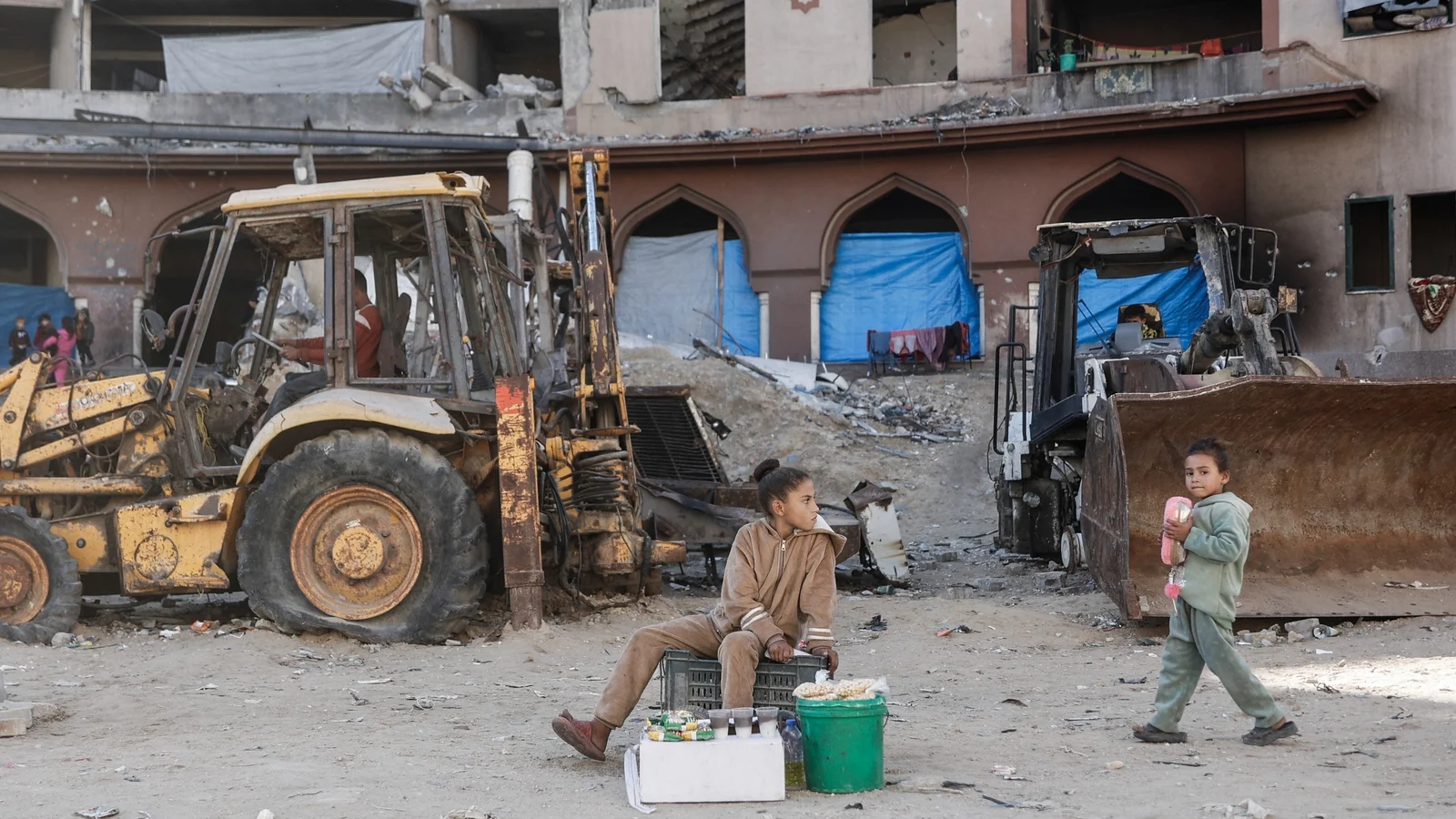
Walk through Nuseirat refugee camp and you encounter the ruins as punctuation to daily life. Children play in the spaces between collapsed walls, threaded through with the scent of cooking fires and the omnipresent dust of demolition. Shops that once sold biscuits and tea are now flattened storefronts where neighbors queue for a bottled water ration and a share of medical advice scribbled on a scrap of paper.
A nurse working in one of Gaza’s hospitals — who asked that her name not be used for safety reasons — described triage that feels like moral arithmetic. “We count the hours, the syringes, the oxygen cylinders,” she said. “You learn to decide who gets a machine today and who waits for tomorrow that may not come. If Rafah opens, it will not cure our system overnight, but it will be a crack where light can get in.”
At the border itself, Egyptian border staff and EU monitors prepare for logistics that are deceptively complex: transport corridors, lists vetted by multiple parties, assurances about medical escorts and follow-up care. An EU mission official told a reporter that their role is “to ensure that these lifelines operate with transparency and respect for humanitarian principles.” The official spoke on condition of anonymity because the talks are ongoing.
Numbers on a page and lives they represent
Figures can feel abstract — 16,500 patients, thousands waiting — until they become names and stories. An elderly man with a stroke that has left one side of his body immobile; a young woman with an ovarian tumor; a child whose leg needs reconstructive surgery after blast trauma. Each statistic stands in for a family ledger of missed wages, borrowed money, sleepless nights and the logistics of crossing borders that are as political as they are practical.
How many of these patients will be able to leave? Who will pay for transport, visas, host-country treatment? These are not merely bureaucratic questions. They are moral ones. They speak to the global challenge: how to keep humanitarian corridors open amid geopolitics that treat civilian movement as leverage.
Looking beyond the crossing: fragile ceasefires and harder questions
Opening Rafah for medical evacuations is overdue relief, but it is not a solution to the broader, thornier issues that lie ahead. The next phase of any lasting deal will have to confront questions of disarmament, Israeli withdrawal from Gaza, local governance, and an international security architecture to prevent future eruptions. These are debates that touch sovereignty, dignity and the right of a population to live without the constant terror of bombing and blockade.
“Humanitarian openings cannot substitute for political solutions,” said an independent analyst focused on Middle East conflict resolution. “They are essential stopgaps. But unless political actors address root causes — occupation, governance, security guarantees — the cycle repeats.”
What does this mean for readers far from Rafah? It is a reminder that borders are not just lines on maps; they are the seam where geopolitics meets daily survival. The way those seams are stitched matters to lives, to families, to the possibility of peace. It matters whether a mother can get her child to a hospital that will accept a foreign patient, whether an aging man can complete a chemotherapy cycle, whether a grieving family can obtain the dignity of final identification.
Hope, hazard, and the work ahead
Ask yourself: what would you do if the only route out of your besieged city opened for a few days? Would you risk the journey without guarantees of follow-up care? Would you leave behind the rest of your life? These are choices that Gazans are making now, under the calculus of survival.
Rafah’s opening could be a narrow window to air, a way to extract the most urgent cases from a collapsing system. It could also become another bargaining chip unless there is careful oversight, funding for referrals abroad, and a political will to protect humanitarian space. For now, hope flickers in ambulances loading stretchers and in the weary smiles of those who dare to plan travel documents, flights, and the fragile itinerary of recovery.
In the weeks to come, the crossing will reveal more than the success of an operational plan: it will reveal whether the world can honor the difference between humanitarian need and political expediency. For the patients waiting at Rafah, the answer is not academic. It is life or death.