When a President’s Words Cross a Border: The Jaguar, the Missile, and the Question of Sovereignty
On a humid evening along Colombia’s Pacific coast, fishermen pull in their nets beneath a sky bruised purple by sunset. Children chase a stray dog past a church whose bell has rung for generations. It is a scene ordinary enough to belong in any travelogue. Yet beneath that ordinary life, a far more dangerous conversation hums: who has the right to strike, to patrol, to punish, or to cross a neighbor’s line in the name of stopping drugs?
Last week, a White House cabinet-room comment rippled through Latin America: “Anybody that’s doing that and selling it into our country is subject to attack,” the U.S. president told reporters, pointing to cocaine shipments as justification. The bluntness of the sentence—international policy spoken like a headline—forced an immediate response from Bogotá.
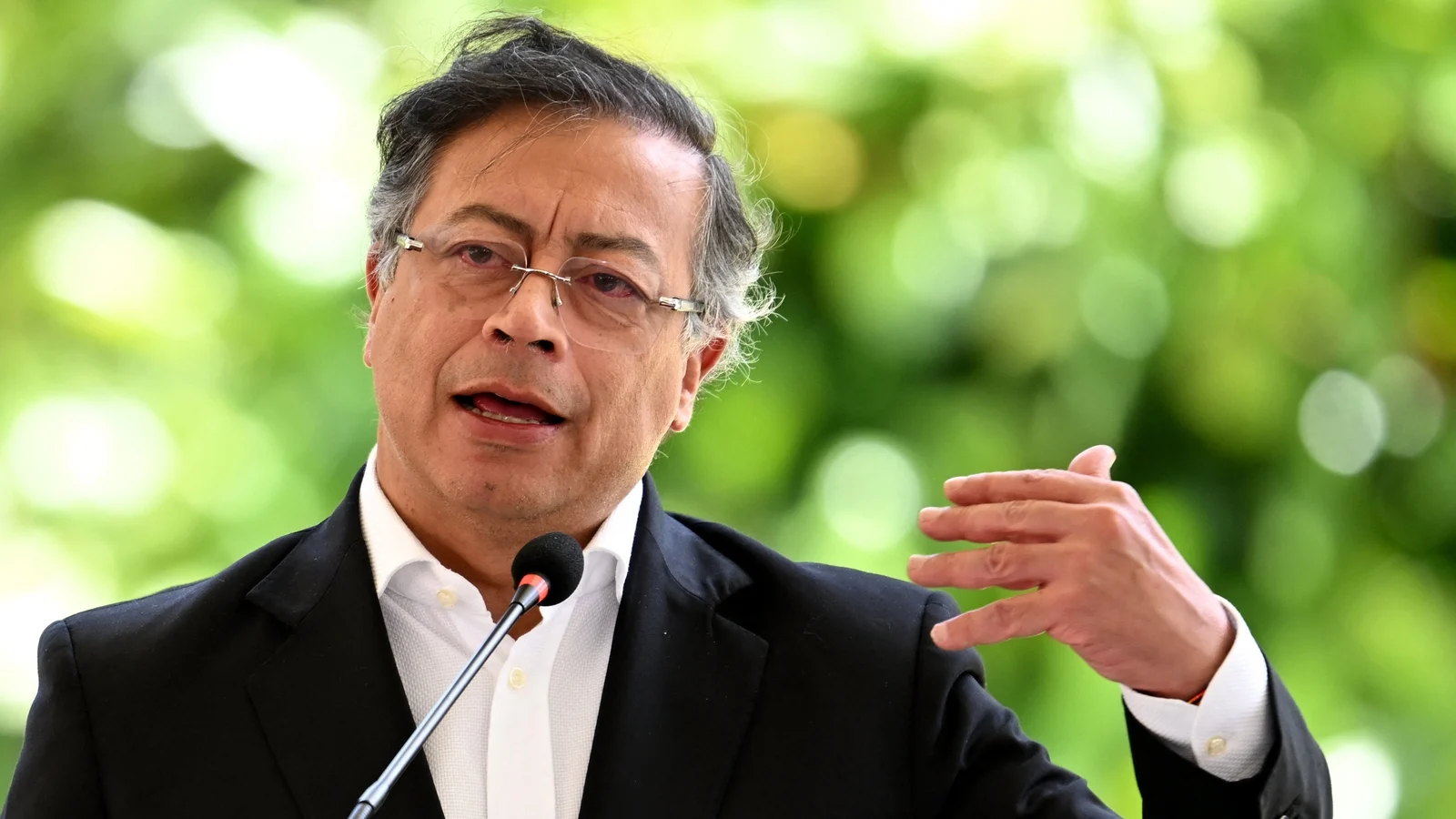
“Do not threaten our sovereignty, or you will awake the Jaguar,” Colombia’s president shot back on X, warning that any assault on Colombian territory would amount to a declaration of war. “Attacking our sovereignty is declaring war,” he added, a line that landed like a stone dropped into an already choppy regional pond.
A conflict that is both immediate and symbolic
The rhetoric is not abstract. Over recent months, U.S. forces have intensified strikes in the Caribbean and eastern Pacific against vessels the administration says are drug-running. Some of those strikes have been devastating: a campaign that has, by official and independent tallies, been linked to scores of deaths, with one wave of attacks earlier this year followed by more than 80 fatalities. In one recent episode, two sequential strikes on the same alleged smuggling boat reportedly killed 11 people.
“We are not seeking to pick fights with our neighbors,” a U.S. official said on background. “But we face a crisis of overdose deaths at home and we will deny traffickers the safe harbor they have exploited.” The unspoken fact behind that statement is familiar to many Americans: the U.S. has suffered more than 100,000 drug-overdose deaths per year in recent statistics—numbers that shape public sentiment and policy urgency.
Yet legality remains contested. The White House said a U.S. admiral, acting under the authority of the Pentagon leadership, ordered the “double-tap” operation—the tactic of striking survivors after an initial attack. “The action was conducted in compliance with the law of armed conflict,” a senior Pentagon spokesperson claimed. But international law experts point to a stark line in the Pentagon’s own Law of War Manual: orders to fire upon the shipwrecked or the rescued would be clearly illegal. “If true, a second strike on people in the water violates the most basic protections of humanity,” said Dr. Ana Morales, a professor of international humanitarian law. “There are legal norms precisely to prevent the sort of escalation we saw.”
Local voices: fear, frustration, and fragile livelihoods
In coastal hamlets where boats are as common as buses, conversations are raw and personal. “We’ve seen drones, we’ve seen helicopters,” said Marco, a 46-year-old fisherman who asked that only his first name be used. “Sometimes we don’t know who is chasing whom. My brother was once chased. He says they shoot at anything that moves.”
Those who live amid coca fields offer a different perspective. “You think people plant coca because they love it?” asked María Torres, a farmer from a hillside village in Nariño. “There are no factories here for making clothes, no big employers. You grow a crop and feed a family. And then the planes come and say we are criminals.” Her voice was steady, the kind worn from years of explaining to strangers why choices are sometimes a matter of survival.
President Gustavo Petro—himself no stranger to confrontation with Washington and subject to his own run-ins with U.S. measures—pointed to Colombia’s anti-drug operations, declaring that Colombia destroys a drug-producing laboratory “every 40 minutes” without missiles. For Petro, the point is both practical and principled: Colombia will fight drugs, but not at the cost of its territorial sovereignty.
Beyond borders: Venezuela, politics, and regional fault lines
Complicating the geography is Venezuela. The U.S. administration has publicly accused President Nicolás Maduro of involvement in the trafficking networks that feed U.S. drug markets—an allegation Maduro vehemently denies. “There is no drug cultivation in Venezuela,” he told state media earlier this year, insisting that his country is a forced transit route for Colombian production. Tensions between Caracas and Washington have spiked, and the build-up of U.S. military assets in the Caribbean has only narrowed political breathing room.
“This is not merely a Colombia-U.S. issue,” said Diego Fernández, a regional security analyst. “When one neighbor’s policy is to use force offshore, it changes diplomatic calculus for all littoral states. Nations like Panama, Costa Rica and the island states of the Caribbean—many of which have limited naval capacity—are watching closely.”
Questions of law, morality, and strategy
Experts debate not just whether particular strikes were legal, but whether this approach can succeed. Military action may interrupt flows temporarily, but underlying demand—inside the United States, among other countries—remains. “We are trying to treat a public-health and economic problem with a kinetic tool,” said Dr. Lucia Valenzuela, a public policy scholar who studies drug markets. “Without reducing demand or investing in alternative livelihoods, we risk a cycle: more violence, more impunity, more displacement.”
There is also an irony: measures meant to secure domestic safety abroad can deepen insecurity at home. When foreign strikes generate civilian deaths or are perceived as overreach, they can fuel narratives used by cartels, insurgent groups, and even anti-U.S. politicians—giving them recruitment and legitimacy.
What does sovereignty mean in a hyper-connected world?
Ask yourself this: when cross-border harms are real—when drugs made in one country help tear families apart in another—what’s the right response? Do states have the moral license to pursue perpetrators across borders? Or does sovereignty retain a sacrosanct shield, even when a neighbor’s failure to control criminal networks has cascading effects?
There are no easy answers. The story unfolding off Colombia’s coasts is a messy intersection of human suffering, law, geopolitics and the everyday needs of people like Marco and María. It forces us to weigh urgency against caution, security against the sanctity of national borders.
In the end, the image that lingers is small and human: a child on a seaside stoop watching a distant light blink on the horizon, not knowing whether it signifies a patrol, a rescue, or something more ominous. That is the world policy debates are supposed to protect—but sometimes, paradoxically, they put directly at risk.
How would you weigh these competing claims? What mix of diplomacy, justice, aid, and enforcement would you trust to resolve them? The answers we choose will determine not only the fate of states, but the daily lives of those who simply want to fish, farm, and raise their children in peace.